T.T. Chang Genetic Resources Center, International Rice Research Institute Los Baños, Laguna, Philippines ; Biosystematics Group, Wageningen University and Research Center Wageningen, The Netherlands.
Ecol Evol. 2013 Sep;3(9):3047-62. doi: 10.1002/ece3.689. Epub 2013 Aug 1.
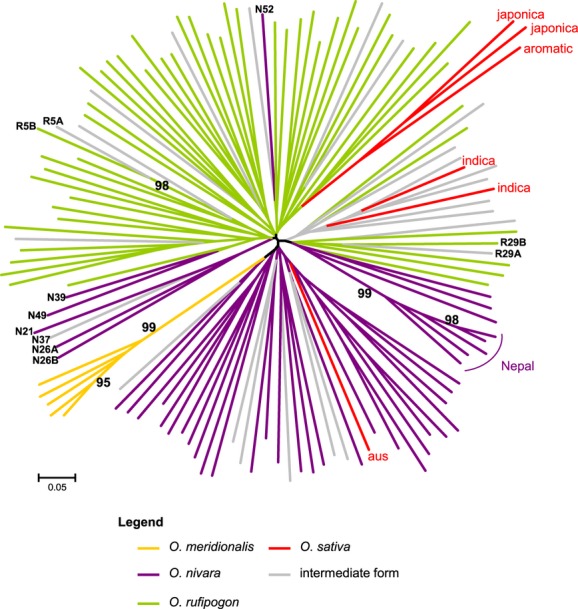
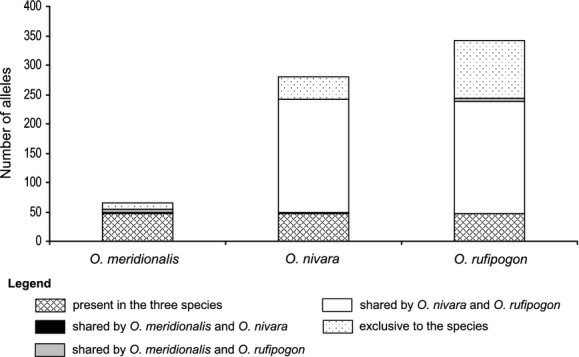
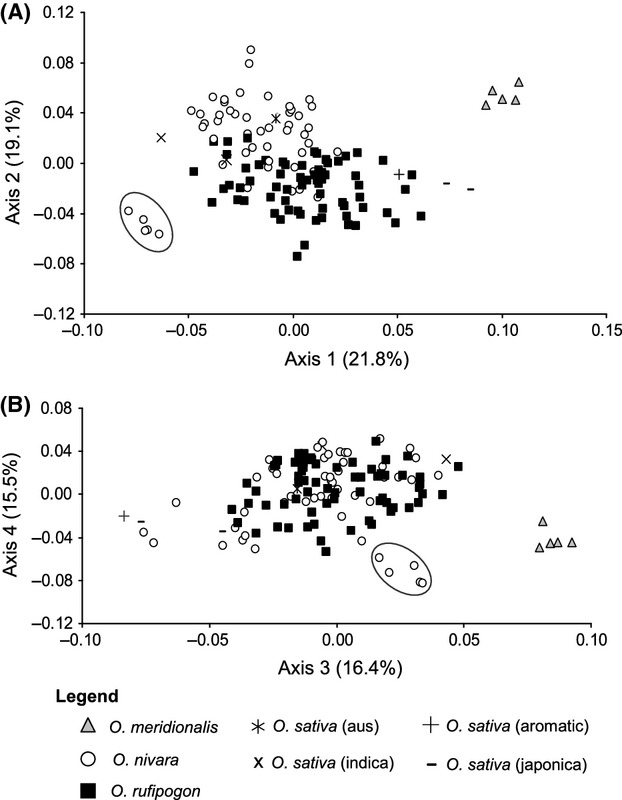
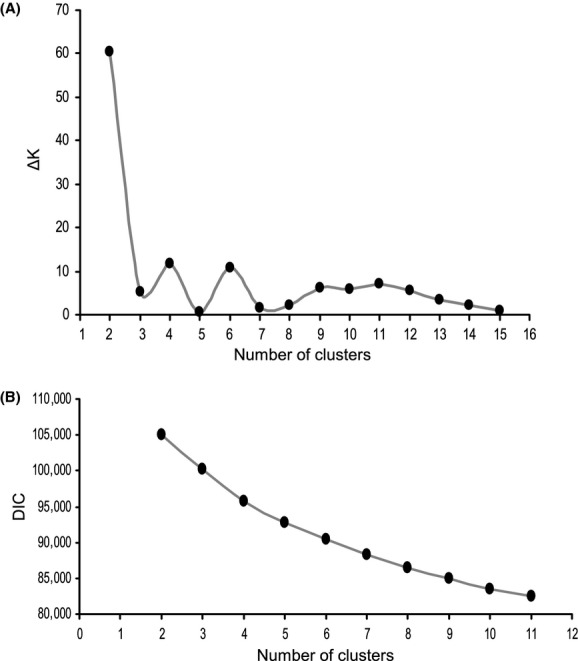
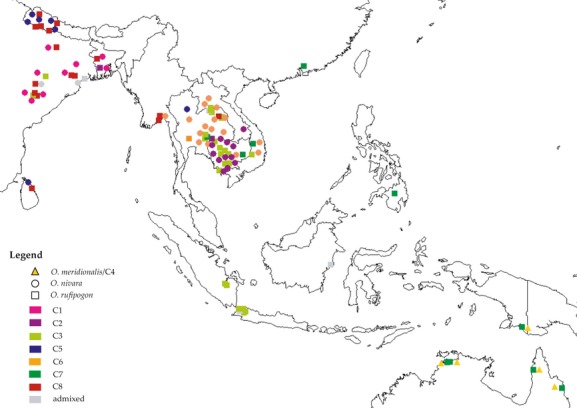
Genetic variation patterns within and between species may change along geographic gradients and at different spatial scales. This was revealed by microsatellite data at 29 loci obtained from 119 accessions of three Oryza series Sativae species in Asia Pacific: Oryza nivara Sharma and Shastry, O. rufipogon Griff., and O. meridionalis Ng. Genetic similarities between O. nivara and O. rufipogon across their distribution are evident in the clustering and ordination results and in the large proportion of shared alleles between these taxa. However, local-level species separation is recognized by Bayesian clustering and neighbor-joining analyses. At the regional scale, the two species seem more differentiated in South Asia than in Southeast Asia as revealed by F ST analysis. The presence of strong gene flow barriers in smaller spatial units is also suggested in the analysis of molecular variance (AMOVA) results where 64% of the genetic variation is contained among populations (as compared to 26% within populations and 10% among species). Oryza nivara (H E = 0.67) exhibits slightly lower diversity and greater population differentiation than O. rufipogon (H E = 0.70). Bayesian inference identified four, and at a finer structural level eight, genetically distinct population groups that correspond to geographic populations within the three taxa. Oryza meridionalis and the Nepalese O. nivara seemed diverged from all the population groups of the series, whereas the Australasian O. rufipogon appeared distinct from the rest of the species.
种内和种间的遗传变异模式可能会沿着地理梯度和不同的空间尺度发生变化。这是通过在亚太地区的三个亚洲稻种系列 Sativae 物种中的 119 个个体中获得的 29 个微卫星位点的遗传数据揭示的:Oryza nivara Sharma 和 Shastry、O. rufipogon Griff. 和 O. meridionalis Ng。在聚类和排序结果以及这些类群之间共享等位基因的比例较大的情况下,O. nivara 和 O. rufipogon 之间在其分布范围内的遗传相似性显而易见。然而,通过贝叶斯聚类和邻接聚类分析可以识别出局部水平的物种分离。在区域尺度上,F ST 分析表明,这两个物种在南亚的分化程度似乎高于东南亚。在分子方差(AMOVA)结果的分析中,较小的空间单元中存在强烈的基因流动障碍,这也表明了这一点,其中 64%的遗传变异存在于种群之间(而不是种群内的 26%和种间的 10%)。与 O. rufipogon(H E = 0.70)相比,O. nivara(H E = 0.67)表现出略低的多样性和更大的种群分化。贝叶斯推断确定了四个,在更精细的结构水平上确定了八个,与三个类群中的地理种群相对应的遗传上不同的群体。Oryza meridionalis 和尼泊尔的 O. nivara 似乎与所有种群群体都有所分化,而澳大拉西亚的 O. rufipogon 则与其他物种明显不同。