Shanghai Key Laboratory of Stomatology, Shanghai Research Institute of Stomatology, Shanghai, China; Department of Oral and Maxillofacial-Head & Neck Oncology, Ninth People's Hospital, Shanghai Jiao Tong University School of Medicine, Shanghai, China.
J Cell Mol Med. 2013 Nov;17(11):1422-33. doi: 10.1111/jcmm.12129. Epub 2013 Sep 23.
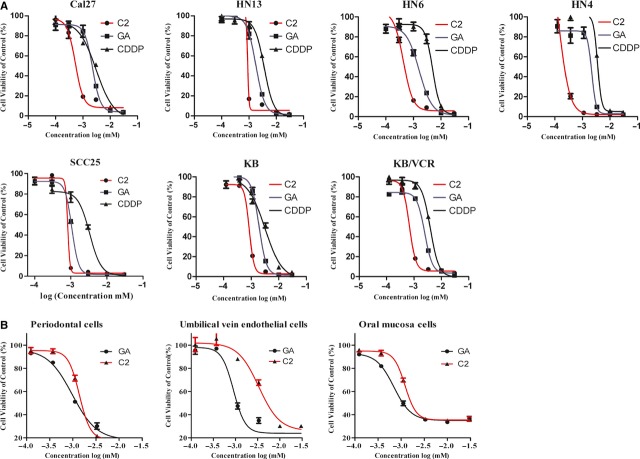
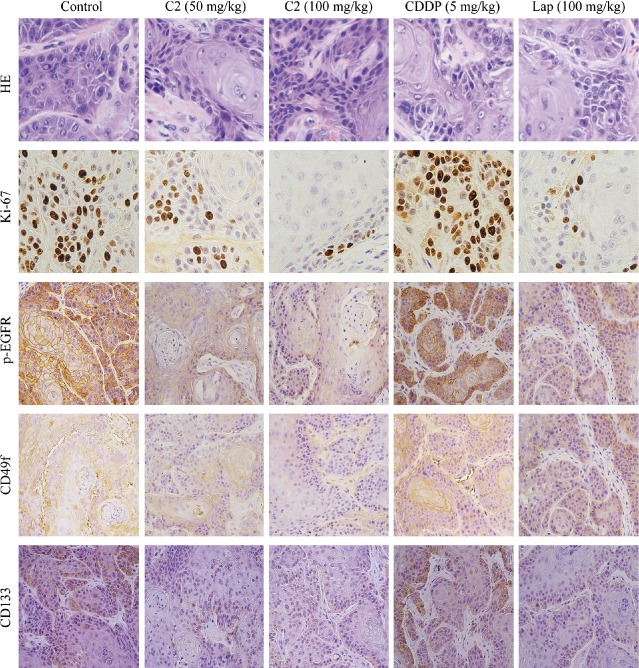
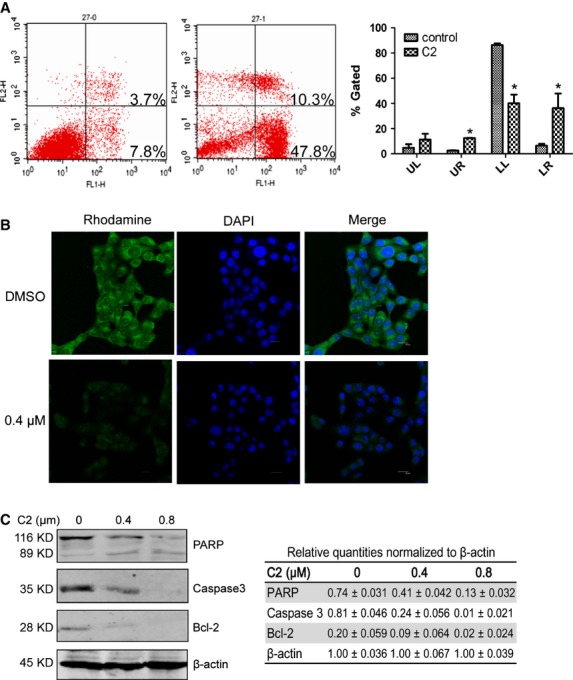
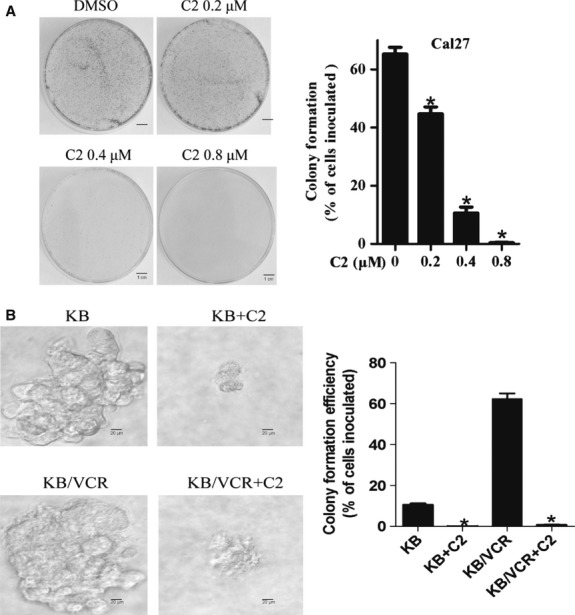
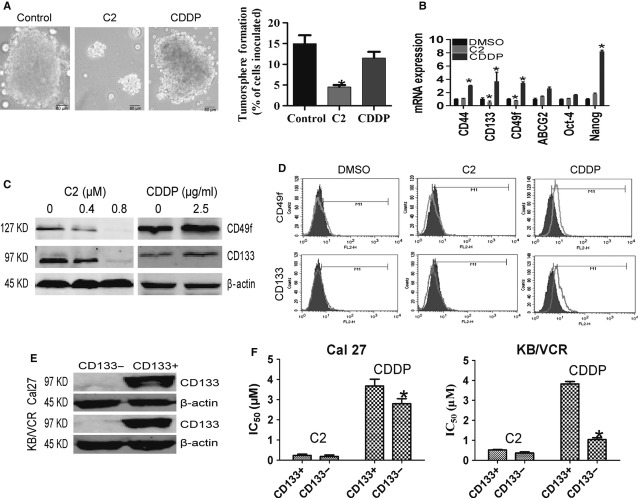
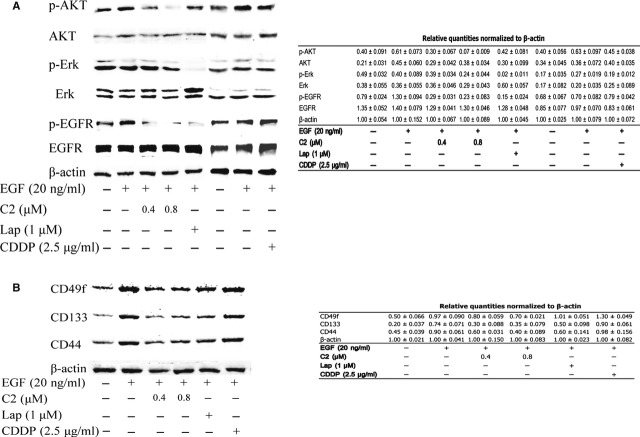
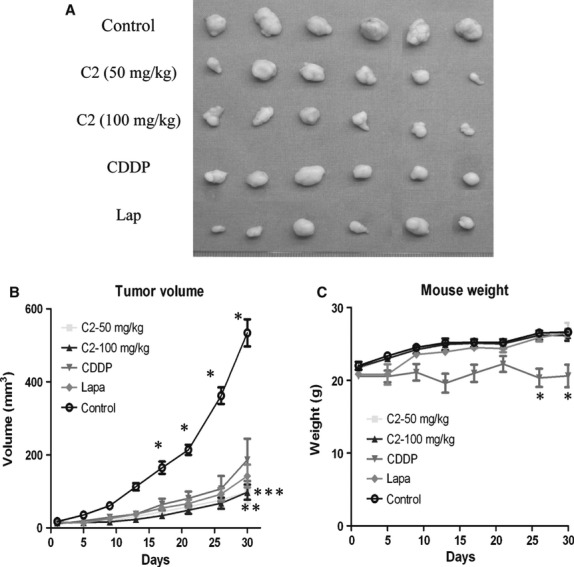
Cancer stem-like cells represent a population of tumour-initiating cells that lead to the relapse and metastasis of cancer. Conventional anti-cancer therapeutic drugs are usually ineffective in eliminating the cancer stem-like cells. Therefore, new drugs or therapeutic methods effectively targeting cancer stem-like cells are in urgent need to successfully cure cancer. Gamboge is a natural anti-cancer medicine whose pharmacological effects are different from those of conventional chemotherapeutical drugs and they can kill some kinds of cancer cells selectively. In this study, we identified a new gamboge derivative, Compound 2 (C2), which presents eminent suppression effects on cancer cells. Interestingly, when compared with cisplatin (CDDP), C2 effectively suppresses the growth of both cancer stem-like cells and non-cancer stem-like cells derived from head and neck squamous cell carcinoma (HNSCC), inhibiting the formation of tumour spheres and colony in vitro, resulting in the loss of expression of multiple cancer stem cell (CSC)-related molecules in HNSCC. Treating with C2 effectively inhibited the growth of HNSCC in BALB/C nude mice. Further investigation found that C2 notably inhibits the activation of epithelial growth factor receptor and the phosphorylation of its downstream protein kinase homo sapiens v-akt murine thymoma viral oncogene homolog (AKT) in HNSCC, resulting in down-regulation of multiple CSC-related molecules in HNSCC. Our study has demonstrated that C2 effectively inhibits the stem-like property of cancer stem-like cells in HNSCC and may be a hopeful targeting drug in cancer therapy.
肿瘤起始细胞是导致癌症复发和转移的一类细胞,肿瘤干细胞样细胞就是其中的一种。传统的抗癌治疗药物通常无法有效消除肿瘤干细胞样细胞。因此,需要新的药物或治疗方法来有效地针对肿瘤干细胞样细胞,从而成功治愈癌症。藤黄是一种天然抗癌药物,其药理作用与传统化疗药物不同,可选择性地杀死某些类型的癌细胞。在这项研究中,我们鉴定了一种新的藤黄衍生物,化合物 2(C2),它对癌细胞具有显著的抑制作用。有趣的是,与顺铂(CDDP)相比,C2 能有效抑制头颈部鳞状细胞癌(HNSCC)来源的肿瘤干细胞样细胞和非肿瘤干细胞样细胞的生长,抑制肿瘤球和集落的形成,导致 HNSCC 中多种肿瘤干细胞(CSC)相关分子的表达丢失。用 C2 治疗能有效抑制 HNSCC 在 BALB/C 裸鼠中的生长。进一步的研究发现,C2 能显著抑制 HNSCC 中表皮生长因子受体的激活及其下游蛋白激酶 homo sapiens v-akt 鼠胸腺瘤病毒癌基因同源物(AKT)的磷酸化,导致 HNSCC 中多种 CSC 相关分子的下调。我们的研究表明,C2 能有效抑制 HNSCC 中肿瘤干细胞样细胞的干性,可能是癌症治疗中有希望的靶向药物。