
埃博拉病毒 RNA 编辑依赖于初级编辑位点序列和上游二级结构。
Ebola virus RNA editing depends on the primary editing site sequence and an upstream secondary structure.
机构信息
Department of Medical Microbiology, University of Manitoba, Winnipeg, Manitoba, Canada ; Laboratory of Virology, Rocky Mountain Laboratories, Division of Intramural Research, National Institute of Allergy and Infectious Diseases, National Institutes of Health, Hamilton, Montana, United States of America.
出版信息
PLoS Pathog. 2013;9(10):e1003677. doi: 10.1371/journal.ppat.1003677. Epub 2013 Oct 17.
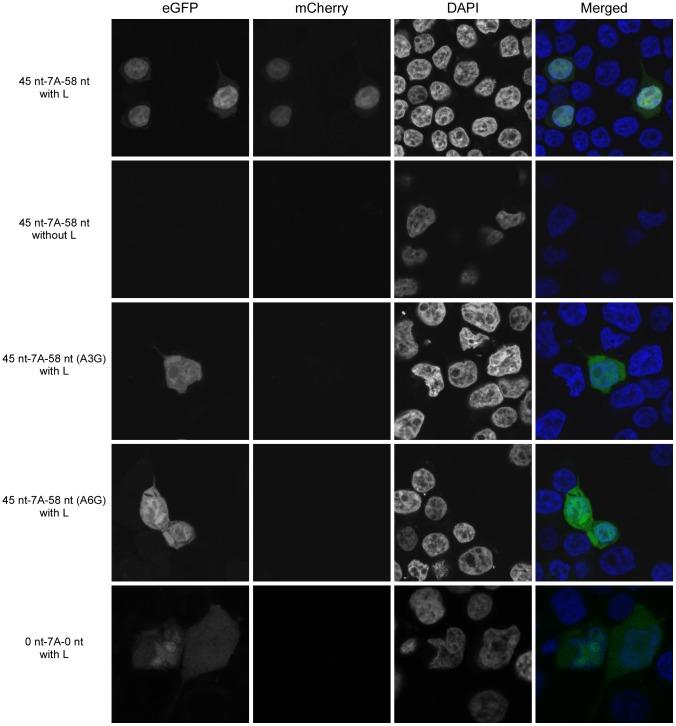
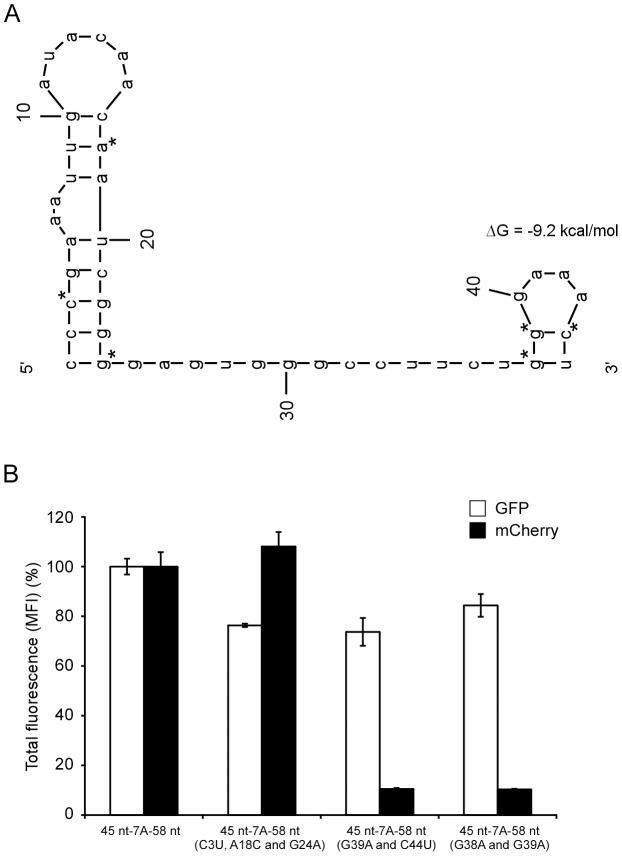
Ebolavirus (EBOV), the causative agent of a severe hemorrhagic fever and a biosafety level 4 pathogen, increases its genome coding capacity by producing multiple transcripts encoding for structural and nonstructural glycoproteins from a single gene. This is achieved through RNA editing, during which non-template adenosine residues are incorporated into the EBOV mRNAs at an editing site encoding for 7 adenosine residues. However, the mechanism of EBOV RNA editing is currently not understood. In this study, we report for the first time that minigenomes containing the glycoprotein gene editing site can undergo RNA editing, thereby eliminating the requirement for a biosafety level 4 laboratory to study EBOV RNA editing. Using a newly developed dual-reporter minigenome, we have characterized the mechanism of EBOV RNA editing, and have identified cis-acting sequences that are required for editing, located between 9 nt upstream and 9 nt downstream of the editing site. Moreover, we show that a secondary structure in the upstream cis-acting sequence plays an important role in RNA editing. EBOV RNA editing is glycoprotein gene-specific, as a stretch encoding for 7 adenosine residues located in the viral polymerase gene did not serve as an editing site, most likely due to an absence of the necessary cis-acting sequences. Finally, the EBOV protein VP30 was identified as a trans-acting factor for RNA editing, constituting a novel function for this protein. Overall, our results provide novel insights into the RNA editing mechanism of EBOV, further understanding of which might result in novel intervention strategies against this viral pathogen.
埃博拉病毒(EBOV)是一种严重的出血性发热的病原体,也是生物安全 4 级病原体,它通过产生多个转录本,从单个基因编码结构和非结构糖蛋白,从而增加其基因组编码能力。这是通过 RNA 编辑实现的,在此过程中,非模板腺苷残基被掺入到 EBOV mRNA 中,该 mRNA 编码 7 个腺苷残基的编辑位点。然而,EBOV RNA 编辑的机制目前尚不清楚。在这项研究中,我们首次报道了含有糖蛋白基因编辑位点的小基因能够进行 RNA 编辑,从而消除了在生物安全 4 级实验室中研究 EBOV RNA 编辑的需求。我们使用新开发的双报告小基因,对 EBOV RNA 编辑的机制进行了表征,并鉴定出了位于编辑位点上下游 9 个核苷酸的顺式作用序列,这些序列是编辑所必需的。此外,我们还表明,上游顺式作用序列中的二级结构在 RNA 编辑中发挥着重要作用。EBOV RNA 编辑是糖蛋白基因特异性的,因为位于病毒聚合酶基因中的编码 7 个腺苷残基的一段序列不能作为编辑位点,这很可能是由于缺乏必要的顺式作用序列。最后,我们鉴定出 EBOV 蛋白 VP30 是 RNA 编辑的反式作用因子,这是该蛋白的一个新功能。总之,我们的研究结果为 EBOV 的 RNA 编辑机制提供了新的见解,进一步的研究可能会为针对这种病毒病原体的新的干预策略提供依据。




 Zotero 插件