Department of Molecular Pharmacology, University of Groningen, Antonius Deusinglaan 1, 9713 AV Groningen, The Netherlands.
Respir Res. 2013 Oct 23;14(1):113. doi: 10.1186/1465-9921-14-113.
Glycogen synthase kinase-3 (GSK-3) is a constitutively active kinase that regulates multiple signalling proteins and transcription factors involved in a myriad of cellular processes. The kinase acts as a negative regulator in β-catenin signalling and is critically involved in the smad pathway. Activation of both pathways may contribute to pulmonary features of chronic obstructive pulmonary disease (COPD).
In the present study, we investigated the effect of the selective GSK-3 inhibitor SB216763 on pulmonary pathology in a guinea pig model of lipopolysaccharide (LPS)-induced COPD. Guinea pigs were instilled intranasally with LPS or saline twice weekly for 12 weeks and pre-treated with either intranasally instilled SB216763 or corresponding vehicle 30 min prior to each LPS/saline challenge.
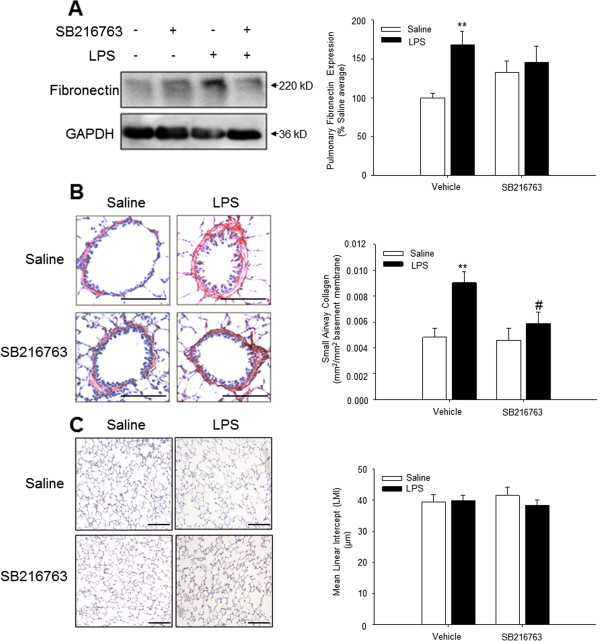
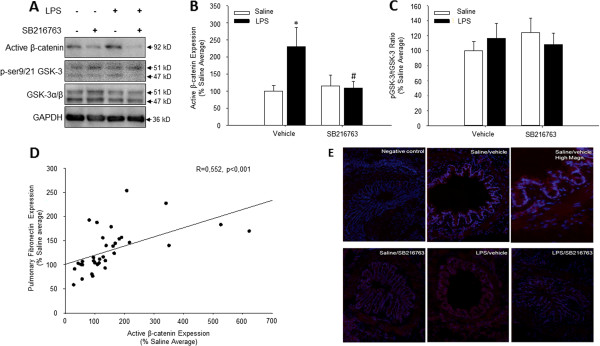
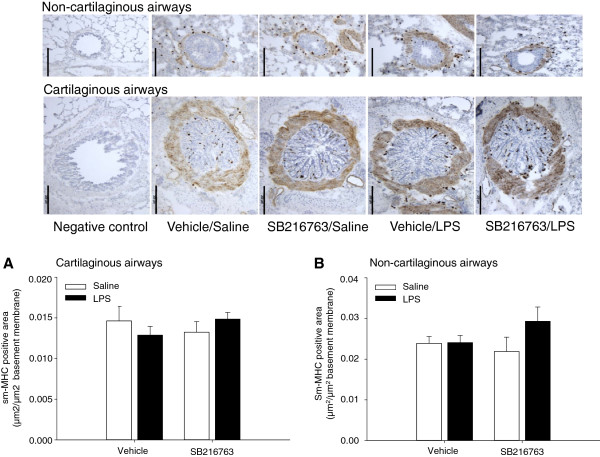
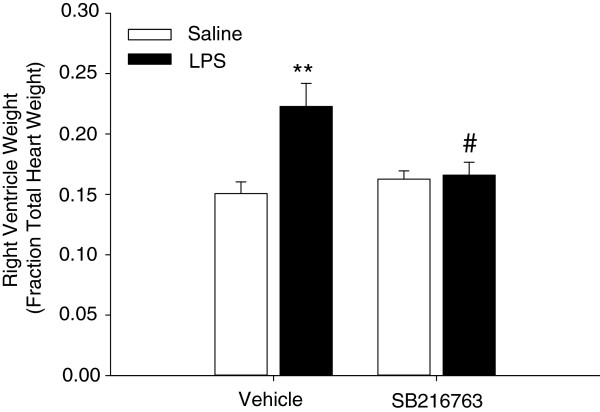
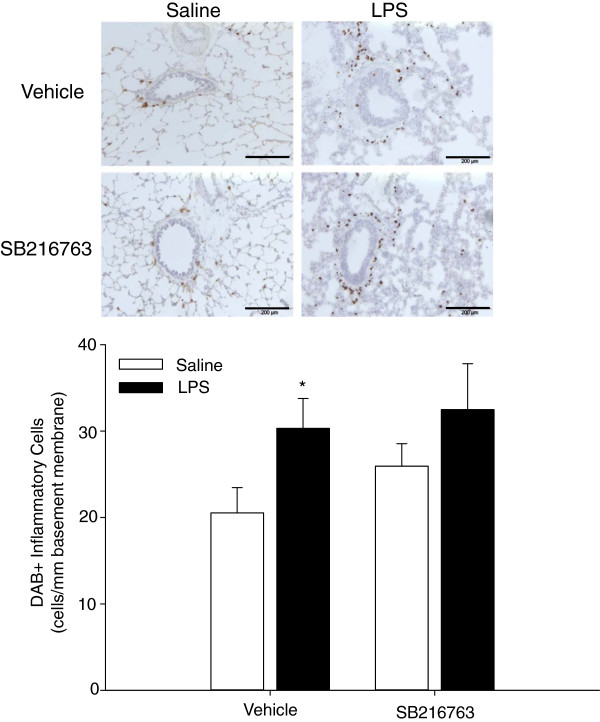
Repeated LPS exposures activated β-catenin signalling, primarily in the airway epithelium and submucosa. LPS also induced pulmonary inflammation and tissue remodelling as indicated by inflammatory cell influx, increased pulmonary fibronectin expression and enhanced small airway collagen content. Inhibition of GSK-3 by SB216763 did not affect LPS-induced inflammatory cell influx, but prevented the small airway remodelling and, unexpectedly, inhibited the activation of β-catenin in vivo. LPS or SB216763 treatment had no effect on the airway smooth muscle content and alveolar airspace size. However, GSK-3 inhibition prevented LPS-induced right ventricle hypertrophy.
Our findings indicate that GSK-3 inhibition prevents LPS-induced pulmonary pathology in guinea pigs, and that locally reduced LPS-induced β-catenin activation appears in part to underlie this effect.
糖原合酶激酶-3(GSK-3)是一种组成性激活的激酶,可调节多种信号蛋白和转录因子,参与多种细胞过程。该激酶作为β-连环蛋白信号的负调节剂,在 smad 途径中起着关键作用。两条途径的激活可能导致慢性阻塞性肺疾病(COPD)的肺部特征。
在本研究中,我们研究了选择性 GSK-3 抑制剂 SB216763 对脂多糖(LPS)诱导的 COPD 豚鼠模型中肺部病理学的影响。豚鼠每周两次经鼻内滴注 LPS 或生理盐水 12 周,并在每次 LPS/生理盐水攻击前 30 分钟,经鼻内滴注 SB216763 或相应的载体进行预处理。
反复 LPS 暴露激活了β-连环蛋白信号,主要在气道上皮和黏膜下。LPS 还诱导了肺部炎症和组织重塑,表现为炎症细胞浸润增加、肺成纤维细胞表达增强以及小气道胶原含量增加。GSK-3 的抑制作用并未影响 LPS 诱导的炎症细胞浸润,但可防止小气道重塑,出乎意料的是,抑制了体内β-连环蛋白的激活。LPS 或 SB216763 处理对气道平滑肌含量和肺泡气腔大小均无影响。然而,GSK-3 抑制可防止 LPS 诱导的右心室肥大。
我们的研究结果表明,GSK-3 抑制可预防豚鼠 LPS 诱导的肺部病理学改变,局部减少 LPS 诱导的β-连环蛋白激活可能部分导致这种效应。