Sevy A M, Healey J F, Deng W, Spiegel P C, Meeks S L, Li R
Aflac Cancer and Blood Disorders Center, Children's Healthcare of Atlanta, Department of Pediatrics, Emory University School of Medicine, Atlanta, GA, USA.
J Thromb Haemost. 2013 Dec;11(12):2128-36. doi: 10.1111/jth.12433.
The development of anti-factor VIII antibodies (inhibitors) is a significant complication in the management of patients with hemophilia A, leading to significant increases in morbidity and treatment cost. Using a panel of mAbs against different epitopes on FVIII, we have recently shown that epitope specificity, inhibitor kinetics and time to maximum inhibition are more important than inhibitor titer in predicting responses to FVIII and the combination of FVIII and recombinant FVIIa. In particular, a subset of high-titer inhibitors responded to high-dose FVIII, which would not be predicted on the basis of their inhibitor titer alone. Thus, the ability to quickly map the epitope spectrum of patient plasma with a clinically feasible assay may fundamentally change how clinicians approach the treatment of high-titer inhibitor patients.
To map the epitopes of anti-FVIII mAbs, three of which are classic inhibitors and one of which is a non-classic inhibitor, by the use of hydrogen-deuterium exchange coupled with mass spectrometry (HDX-MS).
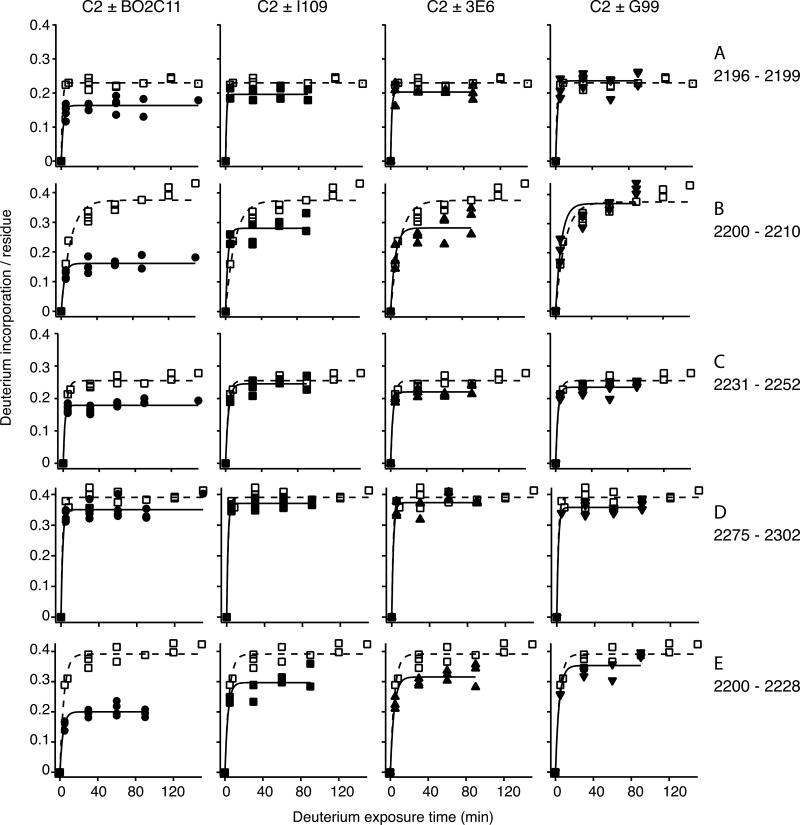
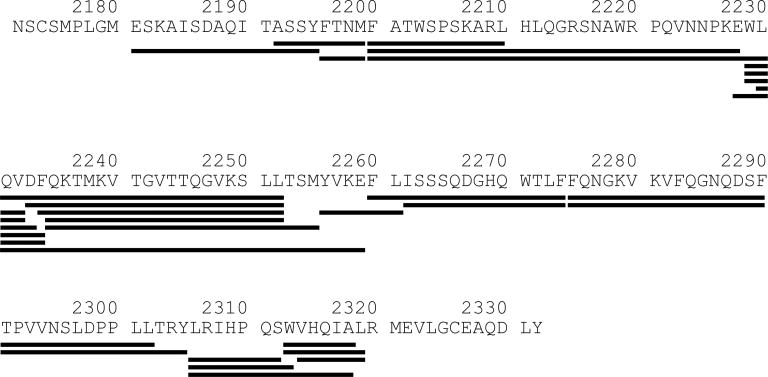
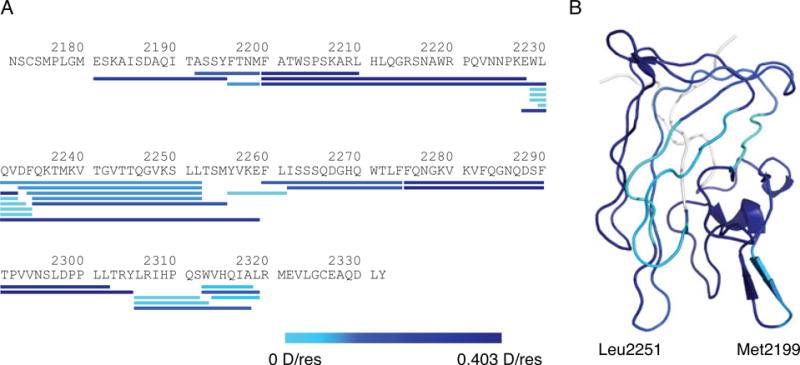
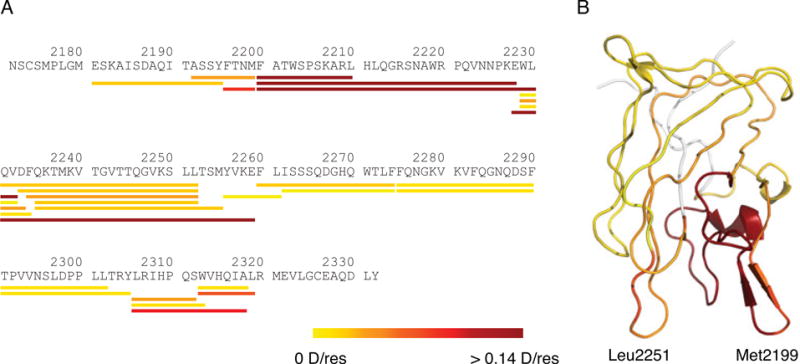
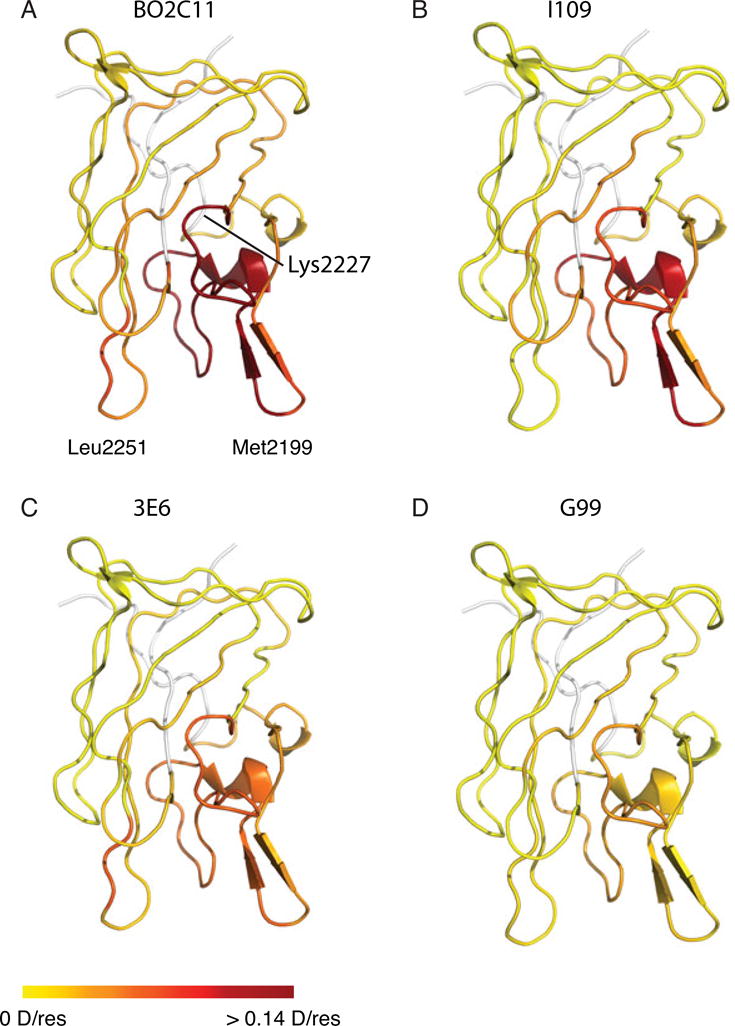
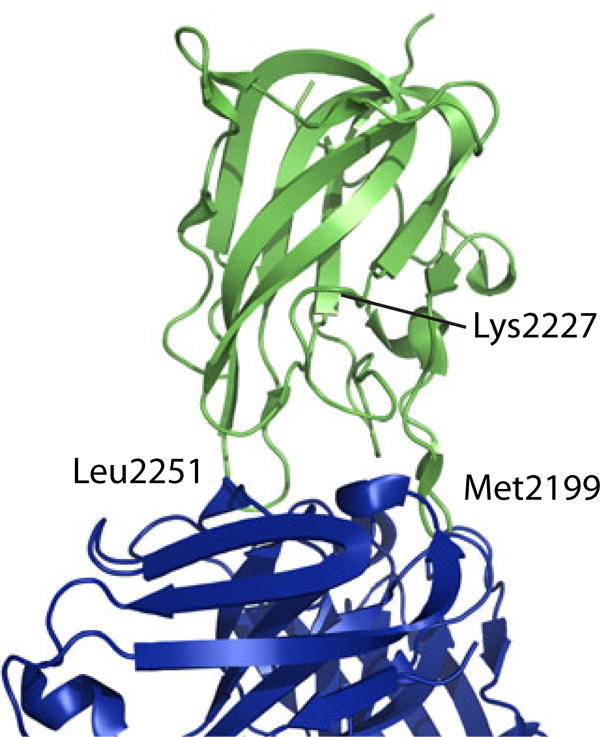
The binding epitopes of four mAbs targeting the FVIII C2 domain were mapped with HDX-MS.
The epitopes determined with HDX-MS are consistent with those obtained earlier through structural characterization and antibody competition assays. In addition, classic and non-classic inhibitor epitopes could be distinguished by the use of a limited subset of C2 domain-derived peptic fragments.
Our results demonstrate the effectiveness and robustness of the HDX-MS method for epitope mapping, and suggest a potential role of rapid mapping of FVIII inhibitor epitopes in facilitating individualized treatment of inhibitor patients.
抗凝血因子VIII抗体(抑制剂)的产生是A型血友病患者治疗过程中的一个重大并发症,会导致发病率和治疗成本显著增加。我们最近利用一组针对FVIII不同表位的单克隆抗体表明,在预测对FVIII以及FVIII与重组FVIIa联合用药的反应时,表位特异性、抑制剂动力学和最大抑制时间比抑制剂滴度更为重要。特别是,一部分高滴度抑制剂对高剂量FVIII有反应,而仅根据其抑制剂滴度无法预测这一情况。因此,通过一种临床可行的检测方法快速绘制患者血浆表位谱的能力可能会从根本上改变临床医生治疗高滴度抑制剂患者的方式。
通过氢-氘交换结合质谱法(HDX-MS)绘制三种为经典抑制剂和一种为非经典抑制剂的抗FVIII单克隆抗体的表位。
用HDX-MS绘制四种靶向FVIII C2结构域的单克隆抗体的结合表位。
用HDX-MS确定的表位与早期通过结构表征和抗体竞争试验获得的表位一致。此外,通过使用有限的一组C2结构域衍生的消化片段可以区分经典和非经典抑制剂表位。
我们的结果证明了HDX-MS方法用于表位作图的有效性和稳健性,并表明快速绘制FVIII抑制剂表位在促进抑制剂患者个体化治疗方面的潜在作用。