Food Science, School of Veterinary Sciences, University of Extremadura; 10003 Caceres, Spain.
Molecules. 2013 Oct 10;18(10):12538-47. doi: 10.3390/molecules181012538.
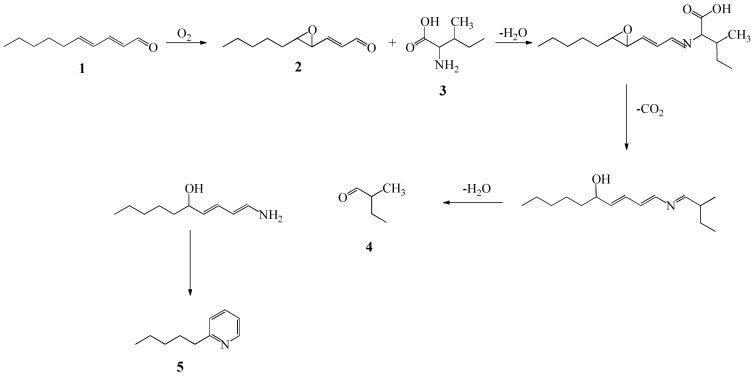
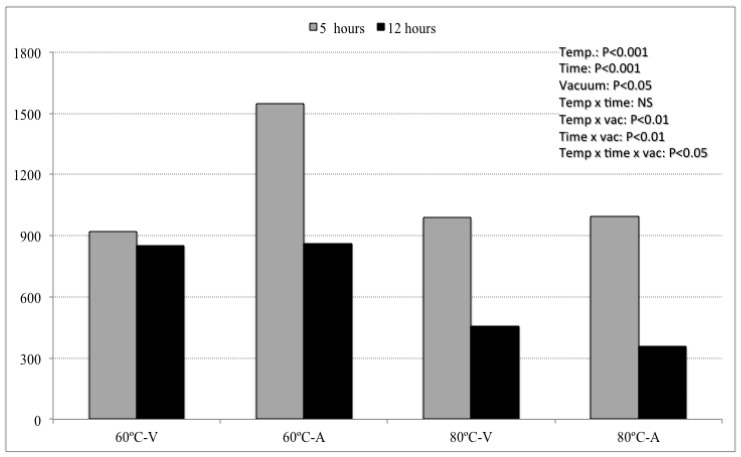
The volatile organic compound (VOC) profile of pork cheeks as affected by the cooking conditions was investigated. Pork cheeks were cooked under different combinations of temperature (60 °C or 80 °C), time (5 or 12 h) and vacuum (vacuum or air-packaged). As a general rule, the VOCs originating from lipid degradation were positively affected by the cooking temperature and negatively by the cooking time, reaching the highest amounts in pork cheeks cooked at 80 °C during 5 h and the lowest in samples cooked at 80 °C during 12 h. On the contrary, VOCs originated from amino acids and Maillard reactions were positively affected by both factors. The proportion between lipid degradation and amino acids reactions was estimated by the hexanal/3-methylbutanal ratio, which reached its highest values in samples cooked at 60 °C during 5 h in the presence of air and the lowest values in samples cooked at 80 °C during 12 h, regardless of the vacuum status.
研究了烹饪条件对猪颊肉挥发性有机化合物(VOC)谱的影响。猪颊肉在不同的温度(60°C 或 80°C)、时间(5 或 12 小时)和真空(真空或气调包装)条件下进行烹饪。一般来说,源自脂质降解的 VOC 受烹饪温度的影响为正,受烹饪时间的影响为负,在 80°C 下烹饪 5 小时的猪颊肉中含量最高,在 80°C 下烹饪 12 小时的样品中含量最低。相反,源自氨基酸和美拉德反应的 VOC 则受这两个因素的影响。通过己醛/3-甲基丁醛的比例来估计脂质降解和氨基酸反应之间的比例,在空气存在下于 60°C 下烹饪 5 小时的样品中达到最高值,在 80°C 下烹饪 12 小时的样品中达到最低值,而与真空状态无关。