Department of Pathophysiology, Southern Medical University, Guangzhou, China.
PLoS One. 2013 Oct 14;8(10):e76289. doi: 10.1371/journal.pone.0076289. eCollection 2013.
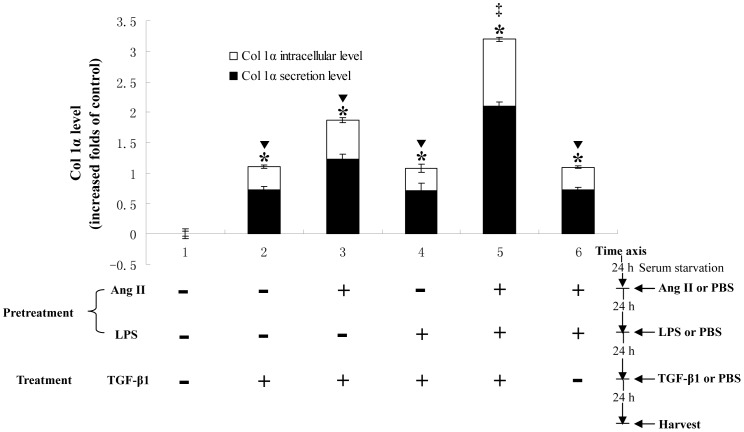
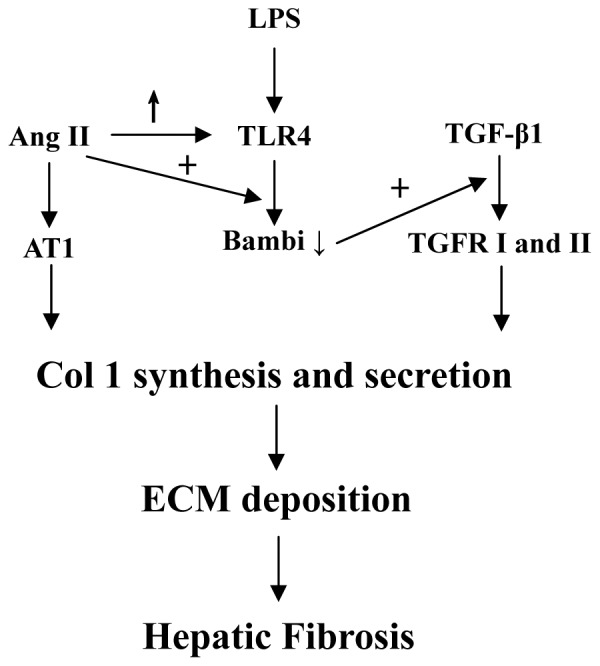
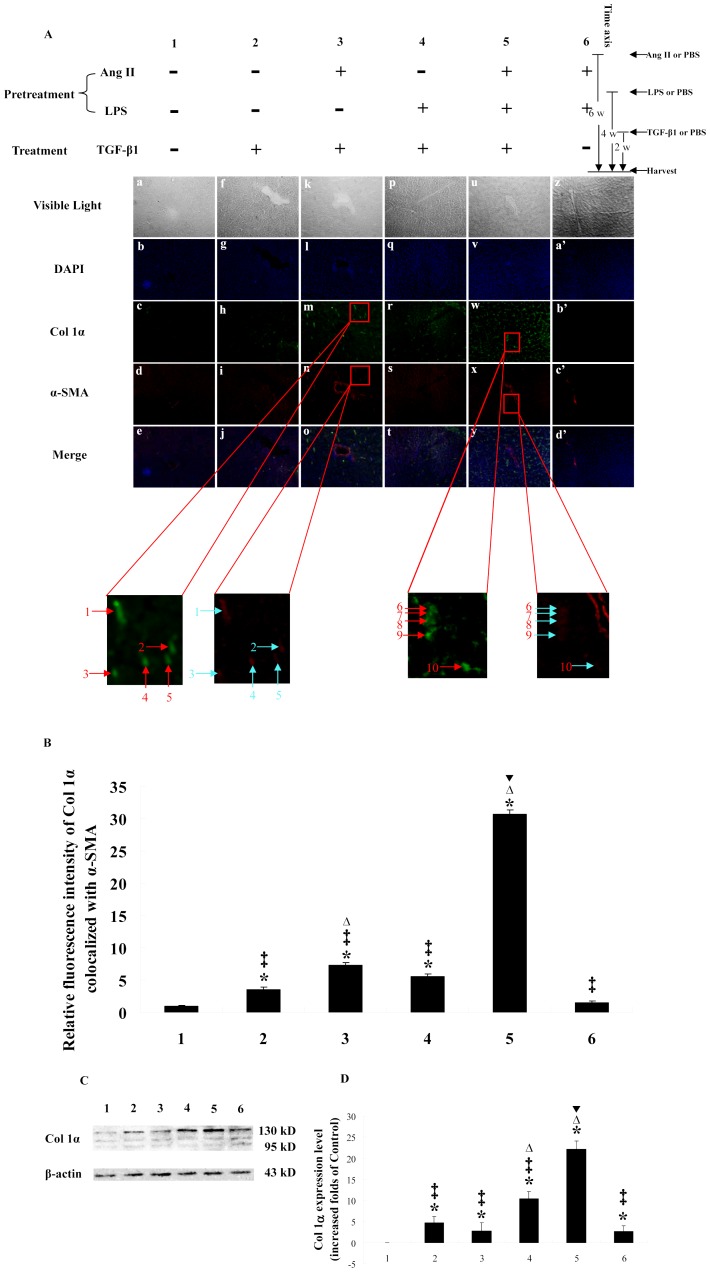
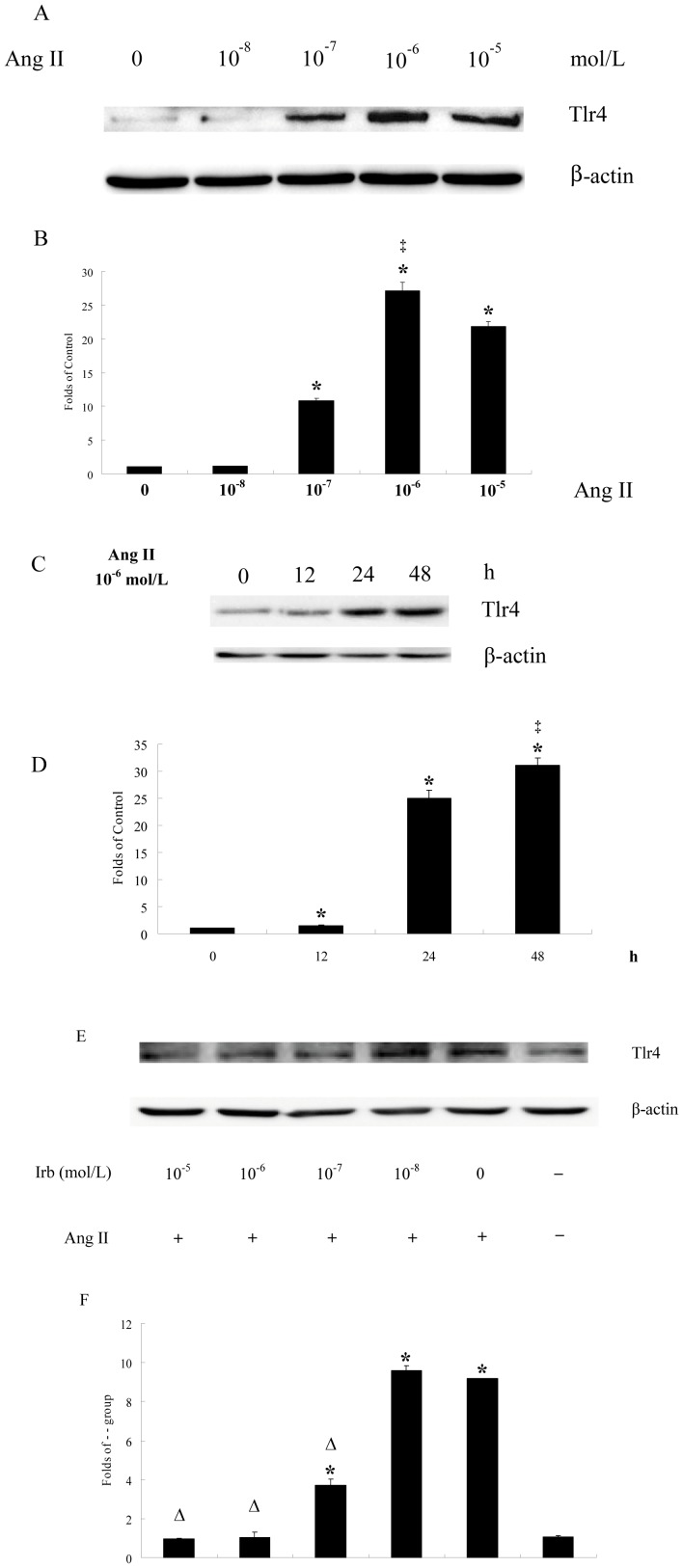
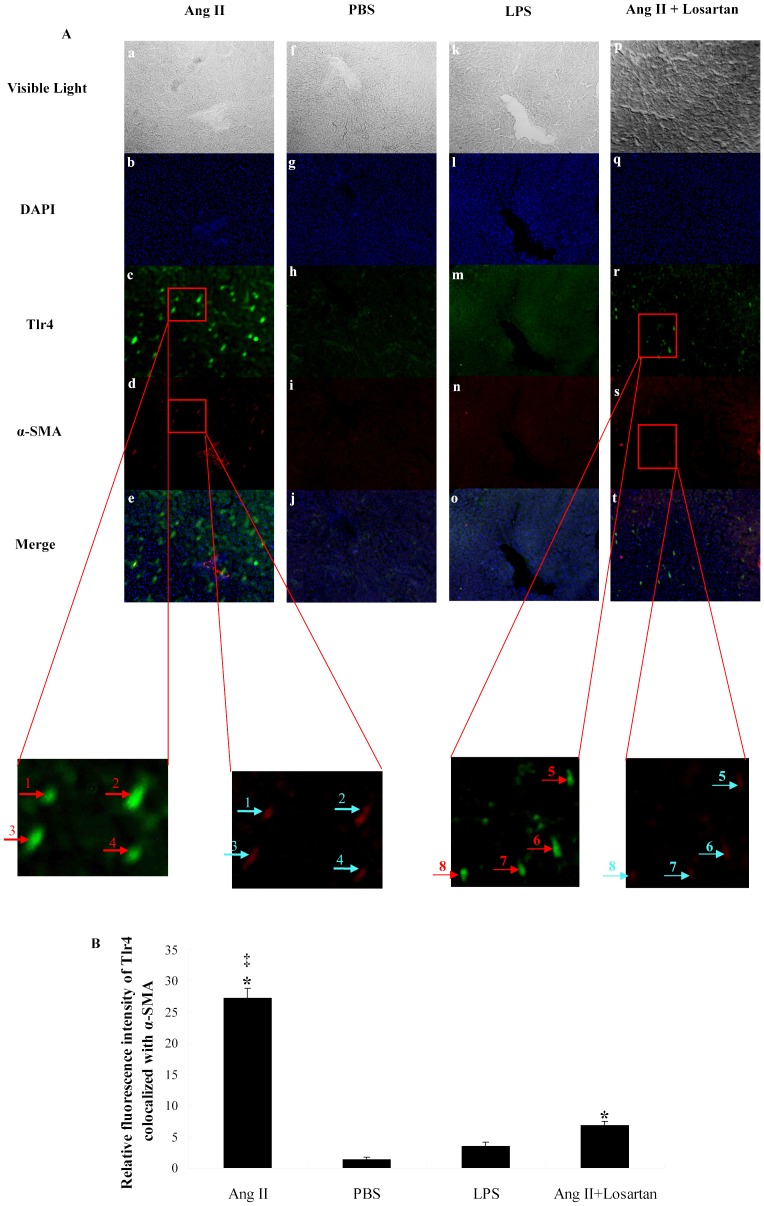
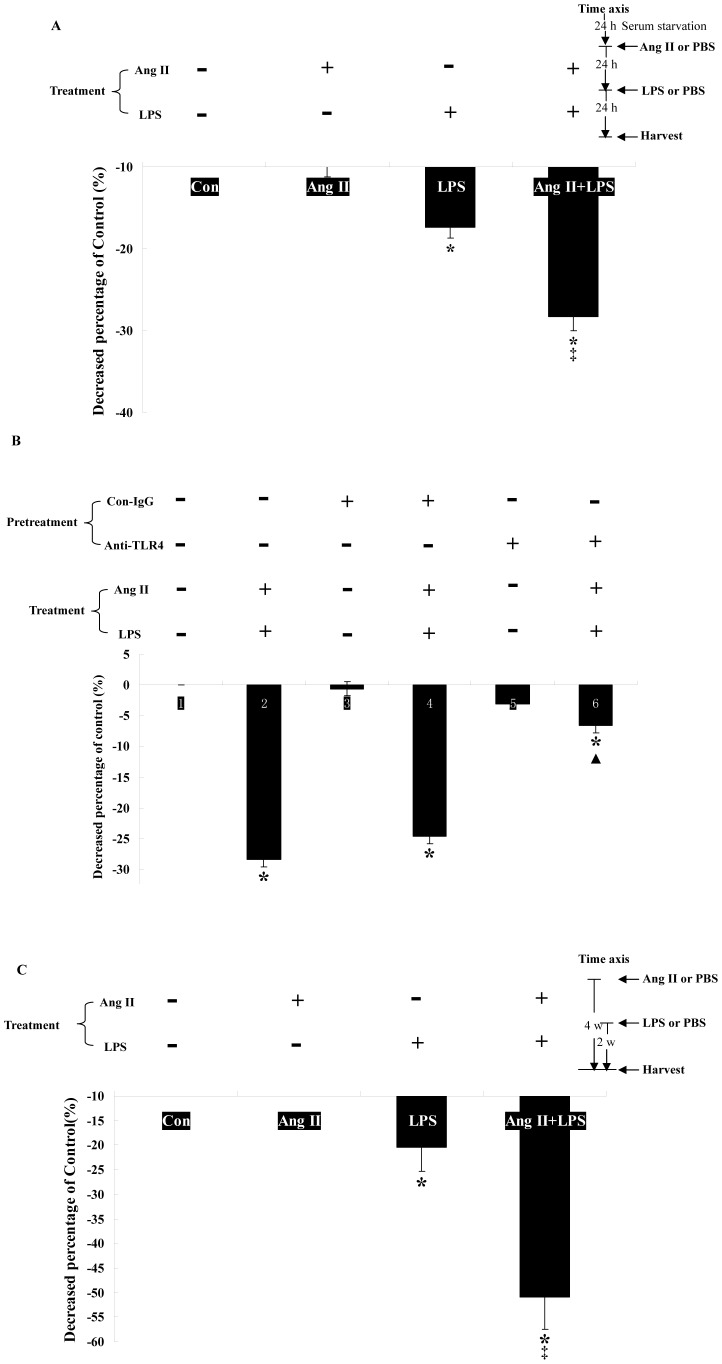
Angiotensin II has progressively been considered to play an important role in the development of liver fibrosis, although the mechanism isn't fully understood. The aim of this study was to investigate a possible pro-fibrotic mechanism, by which angiotensin II would enhance the pro-fibrotic effect of transforming growth factor beta 1 (TGF-β1) through up-regulation of toll-like receptor 4 (TLR4) and enhancing down-regulation of TGF-β1 inhibitory pseudo-receptor-BAMBI caused by LPS in hepatic stellate cells (HSCs). Firstly, the synergistic effects of angiotensin II, TGF-β1 and LPS on collagen 1α production were confirmed in vitro by ELISA, in which angiotensin II, LPS and TGF-β1 were treated sequentially, and in vivo by immunofluorescence, in the experiments single or multiple intra-peritoneally implanted osmotic mini-pumps administrating angiotensin II or LPS combined with intra-peritoneal injections of TGF-β1 were used. We also found that only LPS and TGF-β1 weren't enough to induce obvious fibrogenesis without angiotensin II. Secondly, to identify the reason of why angiotensin II is so important, the minute level of TLR4 in activated HSCs - T6 and primary quiescent HSCs of rat, up-regulation of TLR4 by angiotensin II and blockage by different angiotensin II receptor type 1 (AT1) blockers in HSCs were assayed by western blotting in vitro and immunofluorescence in vivo. Finally, BAMBI expression level, which is regulated by LPS-TLR4 pathway, was detected by qRT-PCR and results showed angiotensin II enhanced the down-regulation of BAMBI mRNA caused by LPS in vitro and in vivo, and TLR4 neutralization antibody blocked this interactive effect. These data demonstrated that angiotensin II enhances LPS-TLR4 pathway signaling and further down-regulates expression of BAMBI through up-regulation of TLR4, which results in facilitation of pro-fibrotic activity of TGF-β1. Angiotensin II, LPS and TGF-β1 act synergistically during hepatic fibrogenesis, showing crosstalks between angiotensin II-AT1, LPS-TLR4 and TGF-β1-BAMBI signal pathways in rat HSCs.
血管紧张素 II 在肝纤维化的发展中逐渐被认为起着重要作用,尽管其机制尚未完全阐明。本研究旨在通过研究一种可能的促纤维化机制来探索这一机制,即血管紧张素 II 通过上调 Toll 样受体 4(TLR4)并增强脂多糖(LPS)引起的转化生长因子-β1(TGF-β1)抑制性伪受体-BAMBI 的下调,增强 TGF-β1 的促纤维化作用。首先,通过 ELISA 在体外证实血管紧张素 II、TGF-β1 和 LPS 对胶原 1α 产生的协同作用,其中血管紧张素 II、LPS 和 TGF-β1 依次处理,通过免疫荧光在体内证实,在实验中,单独或多次腹腔植入血管紧张素 II 或 LPS 结合 TGF-β1 腹腔注射的渗透微型泵。我们还发现,没有血管紧张素 II,只有 LPS 和 TGF-β1 不足以诱导明显的纤维化。其次,为了确定血管紧张素 II 如此重要的原因,我们通过 Western blot 在体外和免疫荧光在体内检测了大鼠激活的 HSCs-T6 和原代静止 HSCs 中 TLR4 的微小水平,血管紧张素 II 对 TLR4 的上调以及 HSCs 中不同血管紧张素 II 受体 1(AT1)阻滞剂的阻断。最后,通过 qRT-PCR 检测受 LPS-TLR4 途径调节的 BAMBI 表达水平,结果表明血管紧张素 II 增强了 LPS 在体外和体内对 BAMBI mRNA 的下调作用,TLR4 中和抗体阻断了这种相互作用。这些数据表明,血管紧张素 II 通过上调 TLR4 增强了 LPS-TLR4 途径信号,并进一步下调了 BAMBI 的表达,从而促进了 TGF-β1 的促纤维化活性。在肝纤维化过程中,血管紧张素 II、LPS 和 TGF-β1 协同作用,表明血管紧张素 II-AT1、LPS-TLR4 和 TGF-β1-BAMBI 信号通路在大鼠 HSCs 中存在串扰。