INSERM U1052/CNRS UMR5286/Université de Lyon, Lyon1 UMR-S1052, Cancer Research Center of Lyon, Lyon F-69008, France Service de Génétique Moléculaire et Clinique, Hospices Civils de Lyon, Hôpital Edouard Herriot, Lyon F-69437, France UMR 3347/CNRS, U1021/INSERM, Institut Curie, Orsay F-91405, France Service Central d'Anatomie et Cytologie Pathologiques, Hospices Civils de Lyon, Hôpital Edouard Herriot, Lyon F-69437, France Department of Molecular Physiology and Biophysics, Vanderbilt University Medical Center, Nashville, Tennessee 37232, USA.
Endocr Relat Cancer. 2013 Oct 24;20(6):833-48. doi: 10.1530/ERC-13-0164. Print 2013 Dec.
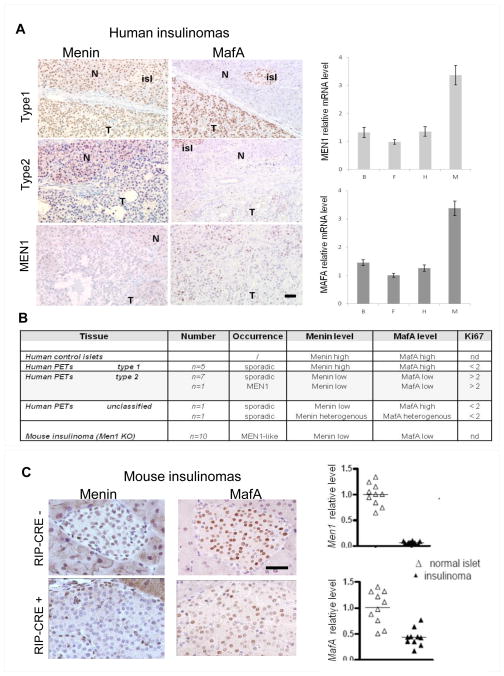
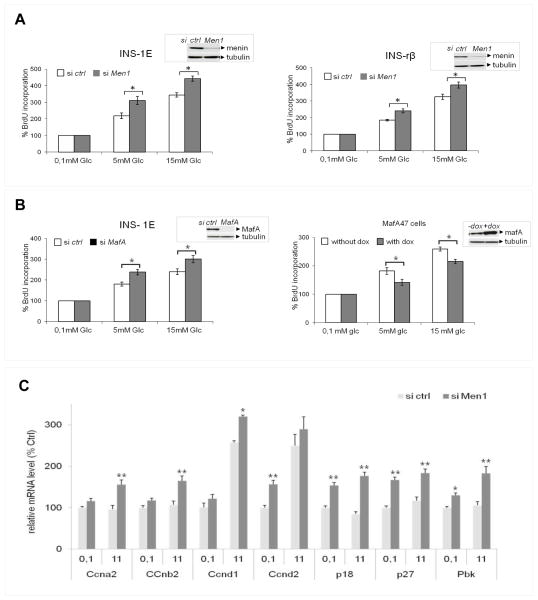
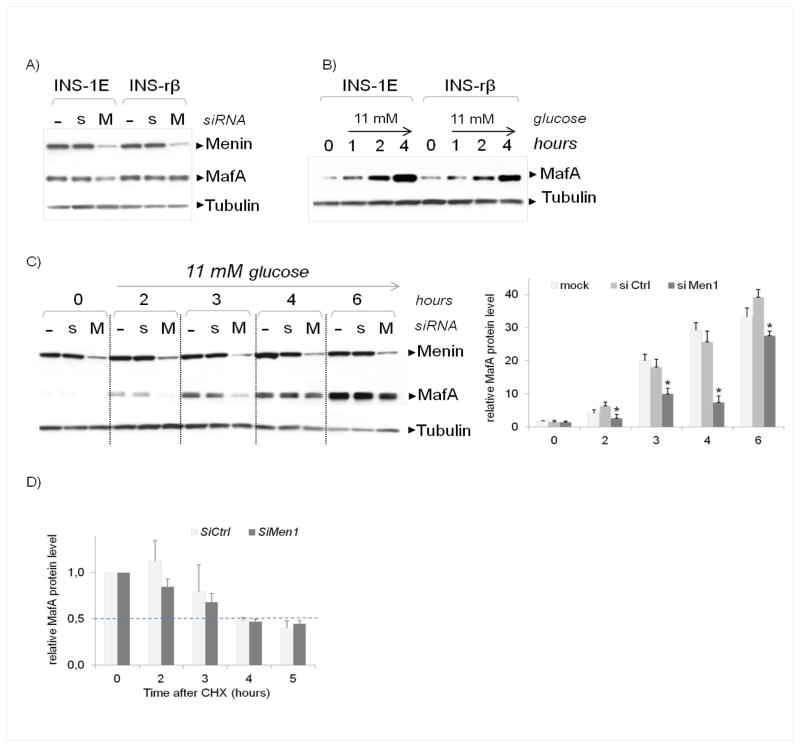
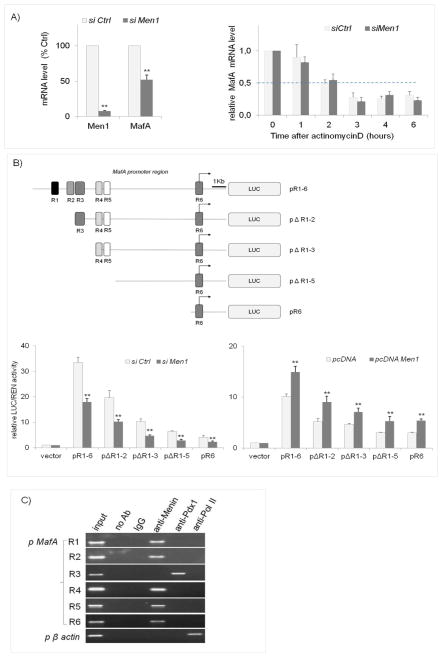
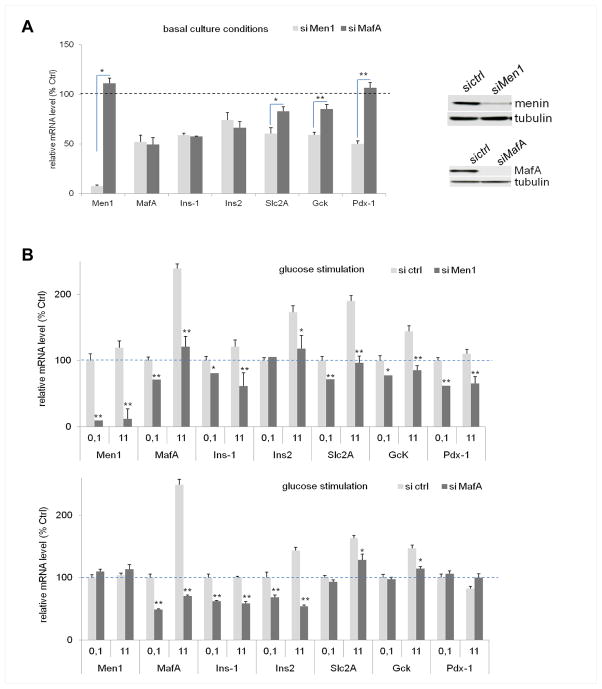
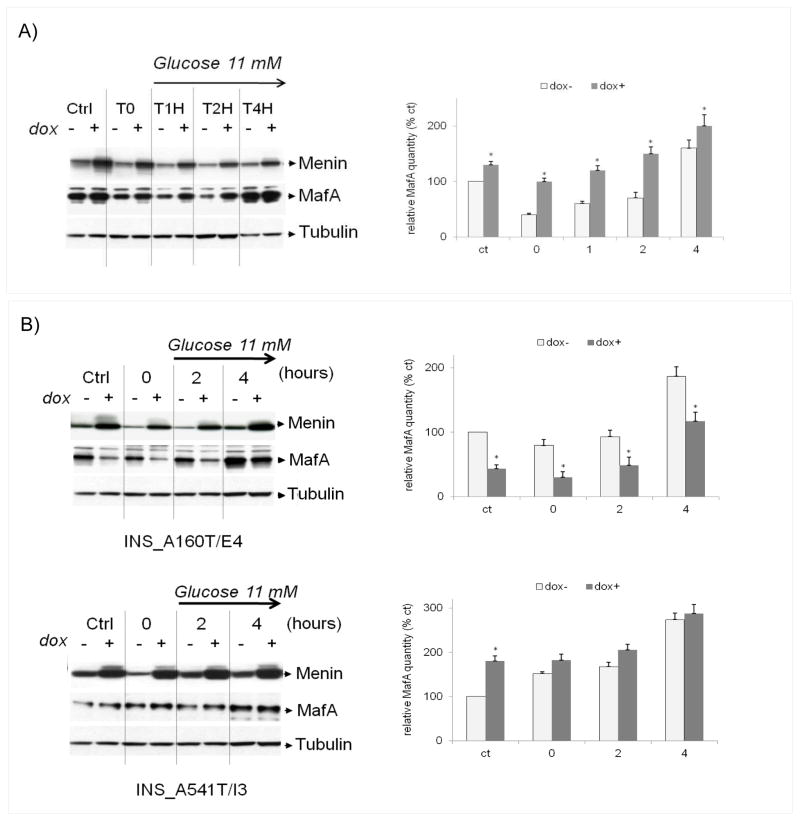
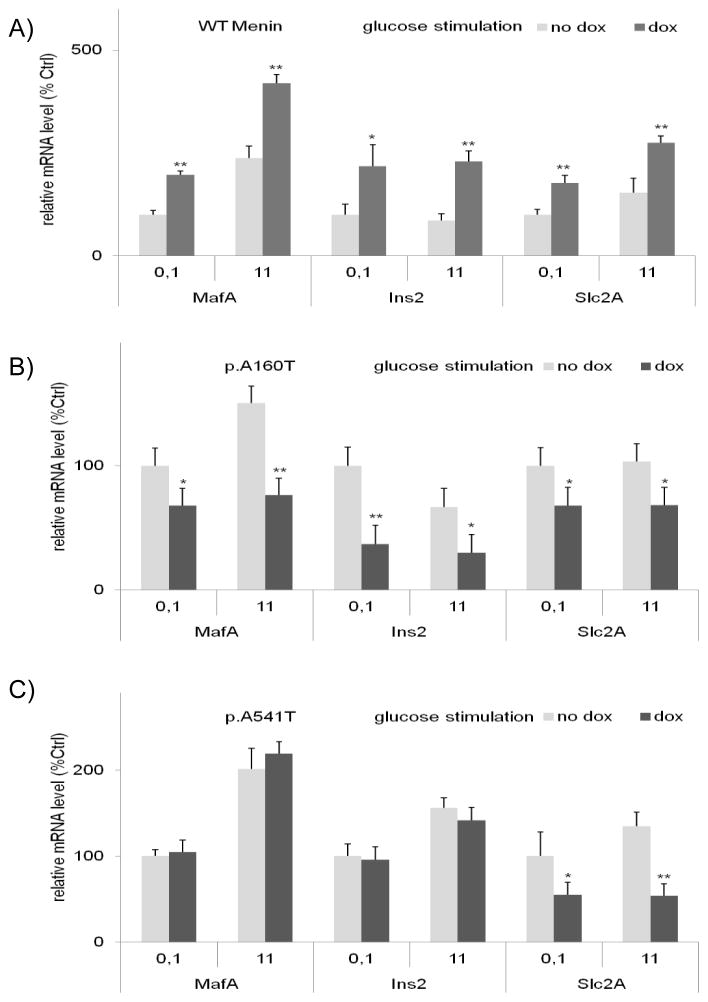
The protein MENIN is the product of the multiple endocrine neoplasia type I (MEN1) gene. Altered MENIN expression is one of the few events that are clearly associated with foregut neuroendocrine tumours (NETs), classical oncogenes or tumour suppressors being not involved. One of the current challenges is to understand how alteration of MENIN expression contributes to the development of these tumours. We hypothesised that MENIN might regulate factors maintaining endocrine-differentiated functions. We chose the insulinoma model, a paradigmatic example of well-differentiated pancreatic NETs, to study whether MENIN interferes with the expression of v-MAF musculoaponeurotic fibrosarcoma oncogene homologue A (MAFA), a master glucose-dependent transcription factor in differentiated β-cells. Immunohistochemical analysis of a series of human insulinomas revealed a correlated decrease in both MENIN and MAFA. Decreased MAFA expression resulting from targeted Men1 ablation was also consistently observed in mouse insulinomas. In vitro analyses using insulinoma cell lines showed that MENIN regulated MAFA protein and mRNA levels, and bound to Mafa promoter sequences. MENIN knockdown concomitantly decreased mRNA expression of both Mafa and β-cell differentiation markers (Ins1/2, Gck, Slc2a2 and Pdx1) and, in parallel, increased the proliferation rate of tumours as measured by bromodeoxyuridine incorporation. Interestingly, MAFA knockdown alone also increased proliferation rate but did not affect the expression of candidate proliferation genes regulated by MENIN. Finally, MENIN variants with missense mutations detected in patients with MEN1 lost the WT MENIN properties to regulate MAFA. Together, our findings unveil a previously unsuspected MENIN/MAFA connection regarding control of the β-cell differentiation/proliferation balance, which could contribute to tumorigenesis.
该蛋白 MENIN 是多发性内分泌肿瘤 I 型(MEN1)基因的产物。改变 MENIN 的表达是与前肠神经内分泌肿瘤(NETs)明确相关的少数事件之一,经典的癌基因或肿瘤抑制基因不参与其中。目前的挑战之一是了解 MENIN 表达的改变如何促进这些肿瘤的发展。我们假设 MENIN 可能调节维持内分泌分化功能的因素。我们选择了胰岛素瘤模型,这是分化良好的胰腺 NETs 的典范范例,以研究 MENIN 是否干扰 v-MAF 肌肉腱膜纤维肉瘤癌基因同源物 A(MAFA)的表达,MAFA 是分化的β细胞中葡萄糖依赖性转录因子。对一系列人类胰岛素瘤的免疫组织化学分析显示 MENIN 和 MAFA 的表达均呈相关性下降。靶向 Men1 缺失也一致观察到小鼠胰岛素瘤中 MAFA 表达降低。使用胰岛素瘤细胞系进行的体外分析表明,MENIN 调节 MAFA 蛋白和 mRNA 水平,并与 Mafa 启动子序列结合。MENIN 敲低同时降低了 Mafa 和β细胞分化标记物(Ins1/2、Gck、Slc2a2 和 Pdx1)的 mRNA 表达,并且平行地增加了通过溴脱氧尿苷掺入测量的肿瘤增殖率。有趣的是,单独的 MAFA 敲低也增加了增殖率,但不影响 MENIN 调节的候选增殖基因的表达。最后,在 MEN1 患者中检测到的具有错义突变的 MENIN 变体失去了调节 MAFA 的 WT MENIN 特性。总之,我们的发现揭示了 MENIN/MAFA 连接在控制β细胞分化/增殖平衡方面的先前未被怀疑的作用,这可能有助于肿瘤发生。