Wrangle John, Wang Wei, Koch Alexander, Easwaran Hariharan, Mohammad Helai P, Vendetti Frank, Vancriekinge Wim, Demeyer Timothy, Du Zhengzong, Parsana Princy, Rodgers Kristen, Yen Ray-Whay, Zahnow Cynthia A, Taube Janis M, Brahmer Julie R, Tykodi Scott S, Easton Keith, Carvajal Richard D, Jones Peter A, Laird Peter W, Weisenberger Daniel J, Tsai Salina, Juergens Rosalyn A, Topalian Suzanne L, Rudin Charles M, Brock Malcolm V, Pardoll Drew, Baylin Stephen B
The Johns Hopkins University, School of Medicine, Oncology Center-Hematology/Medical Oncology, Baltimore, Maryland.
Oncotarget. 2013 Nov;4(11):2067-79. doi: 10.18632/oncotarget.1542.
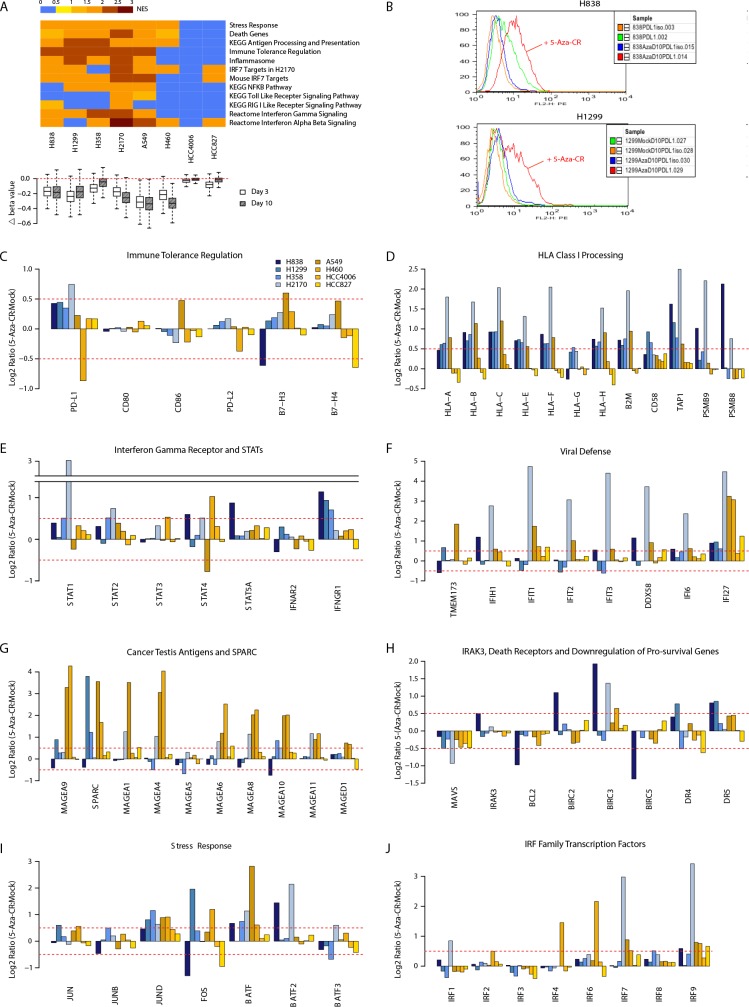
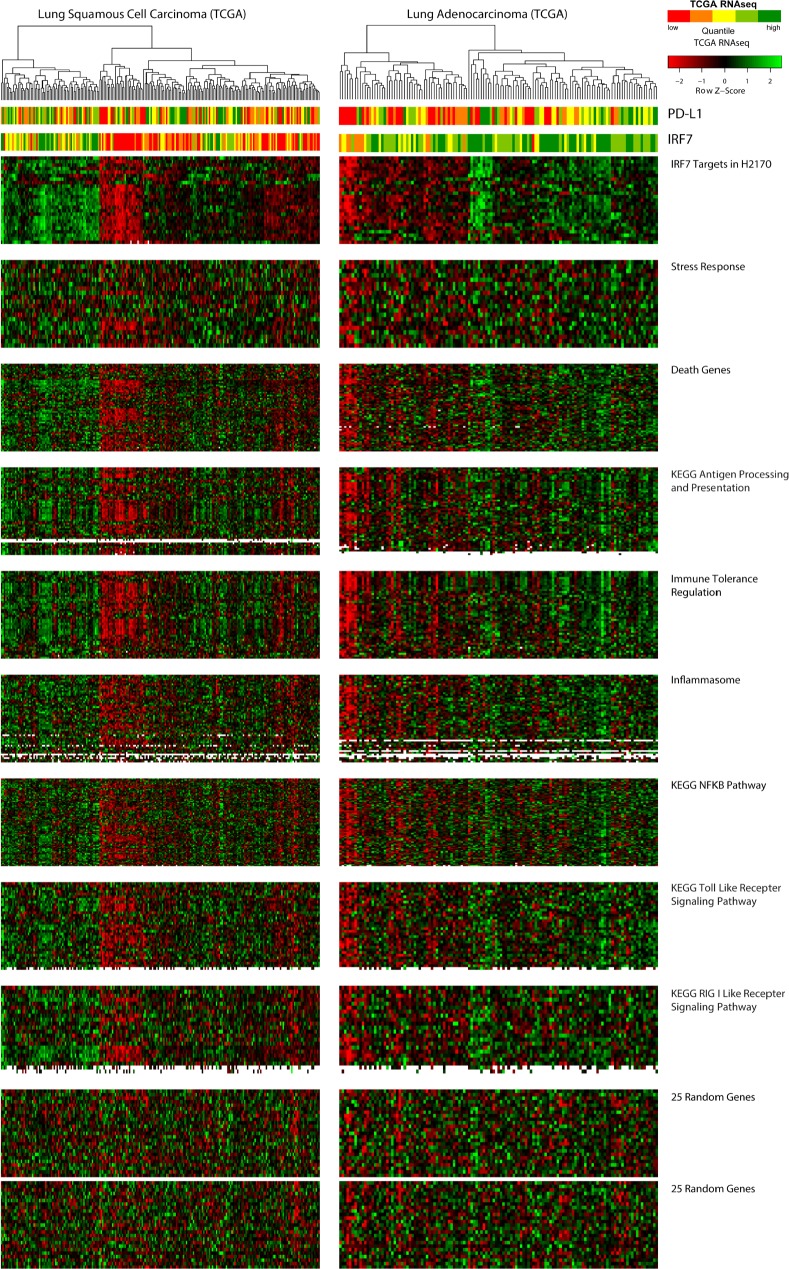
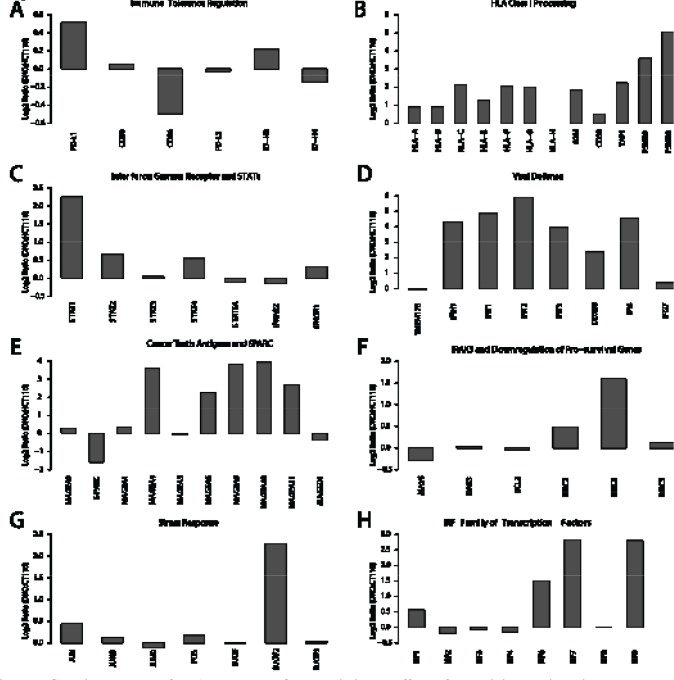
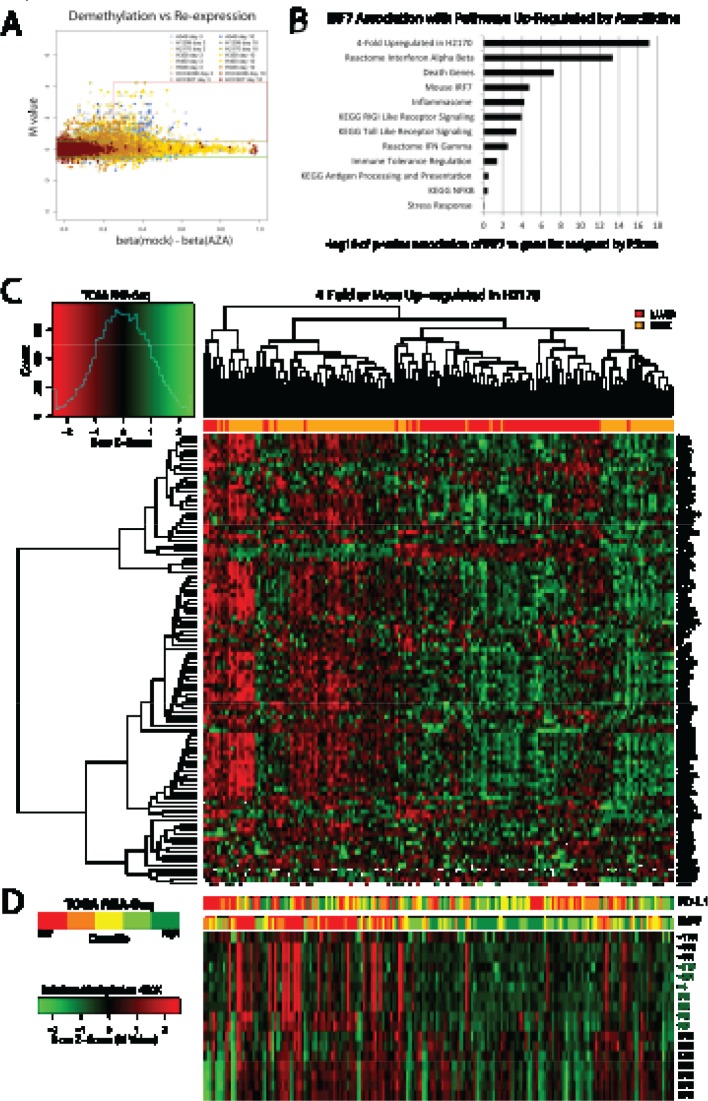
Innovative therapies are needed for advanced Non-Small Cell Lung Cancer (NSCLC). We have undertaken a genomics based, hypothesis driving, approach to query an emerging potential that epigenetic therapy may sensitize to immune checkpoint therapy targeting PD-L1/PD-1 interaction. NSCLC cell lines were treated with the DNA hypomethylating agent azacytidine (AZA - Vidaza) and genes and pathways altered were mapped by genome-wide expression and DNA methylation analyses. AZA-induced pathways were analyzed in The Cancer Genome Atlas (TCGA) project by mapping the derived gene signatures in hundreds of lung adeno (LUAD) and squamous cell carcinoma (LUSC) samples. AZA up-regulates genes and pathways related to both innate and adaptive immunity and genes related to immune evasion in a several NSCLC lines. DNA hypermethylation and low expression of IRF7, an interferon transcription factor, tracks with this signature particularly in LUSC. In concert with these events, AZA up-regulates PD-L1 transcripts and protein, a key ligand-mediator of immune tolerance. Analysis of TCGA samples demonstrates that a significant proportion of primary NSCLC have low expression of AZA-induced immune genes, including PD-L1. We hypothesize that epigenetic therapy combined with blockade of immune checkpoints - in particular the PD-1/PD-L1 pathway - may augment response of NSCLC by shifting the balance between immune activation and immune inhibition, particularly in a subset of NSCLC with low expression of these pathways. Our studies define a biomarker strategy for response in a recently initiated trial to examine the potential of epigenetic therapy to sensitize patients with NSCLC to PD-1 immune checkpoint blockade.
晚期非小细胞肺癌(NSCLC)需要创新疗法。我们采用了一种基于基因组学、由假设驱动的方法,来探究表观遗传疗法可能使针对PD-L1/PD-1相互作用的免疫检查点疗法敏感的新潜力。用DNA低甲基化剂阿扎胞苷(AZA - 维达莎)处理NSCLC细胞系,并通过全基因组表达和DNA甲基化分析来绘制改变的基因和通路。通过在数百个肺腺癌(LUAD)和肺鳞状细胞癌(LUSC)样本中绘制衍生的基因特征,在癌症基因组图谱(TCGA)项目中分析了AZA诱导的通路。在多个NSCLC细胞系中,AZA上调了与先天免疫和适应性免疫相关的基因和通路以及与免疫逃逸相关的基因。干扰素转录因子IRF7的DNA高甲基化和低表达与该特征相关,尤其在LUSC中。与这些事件一致,AZA上调了PD-L1转录本和蛋白,后者是免疫耐受的关键配体介导因子。对TCGA样本的分析表明,相当一部分原发性NSCLC中AZA诱导的免疫基因,包括PD-L1,表达较低。我们假设,表观遗传疗法与免疫检查点阻断相结合——特别是PD-1/PD-L1通路——可能通过改变免疫激活和免疫抑制之间的平衡来增强NSCLC的反应,特别是在这些通路低表达的NSCLC亚组中。我们的研究为一项最近启动的试验定义了一种反应生物标志物策略,以检验表观遗传疗法使NSCLC患者对PD-1免疫检查点阻断敏感的潜力。