Francipane Maria Giovanna, Lagasse Eric
McGowan Institute for Regenerative Medicine, Department of Pathology, University of Pittsburgh School of Medicine, Pittsburgh, PA, USA.
Oncotarget. 2013 Nov;4(11):1948-62. doi: 10.18632/oncotarget.1310.
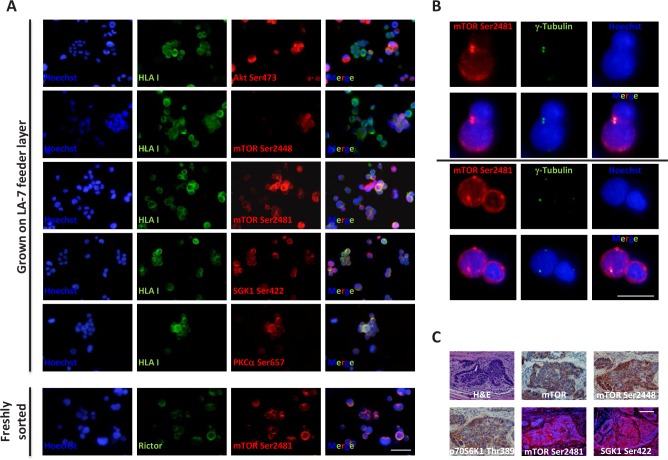
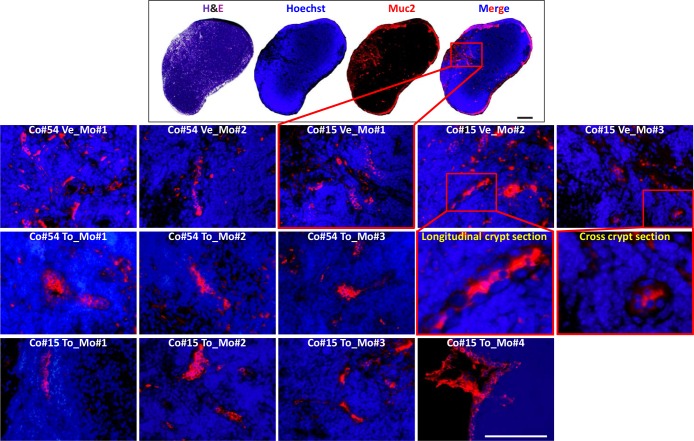
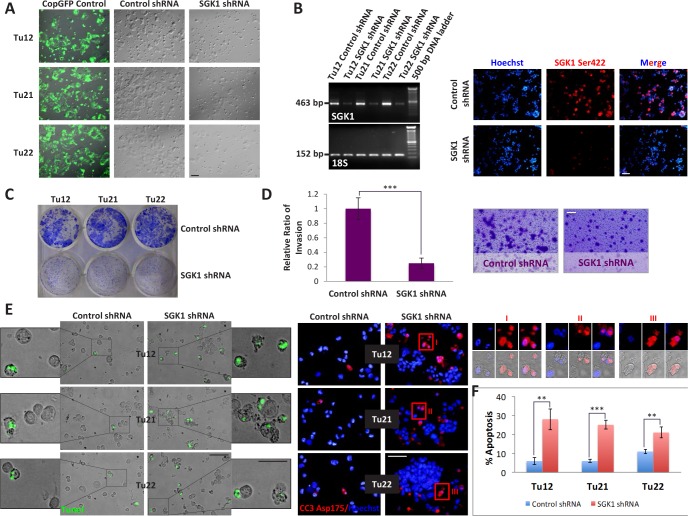
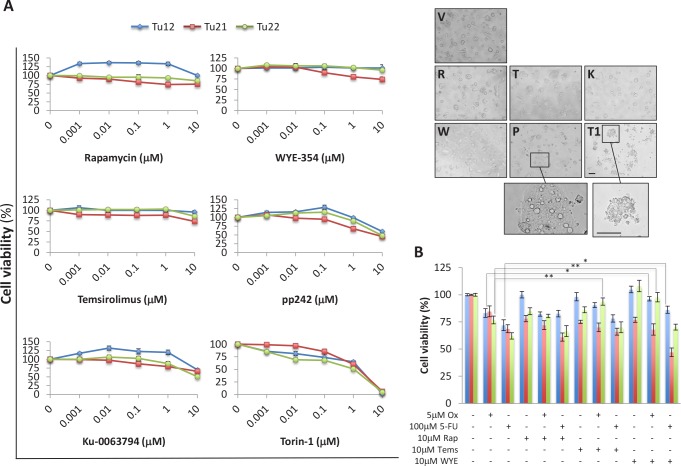
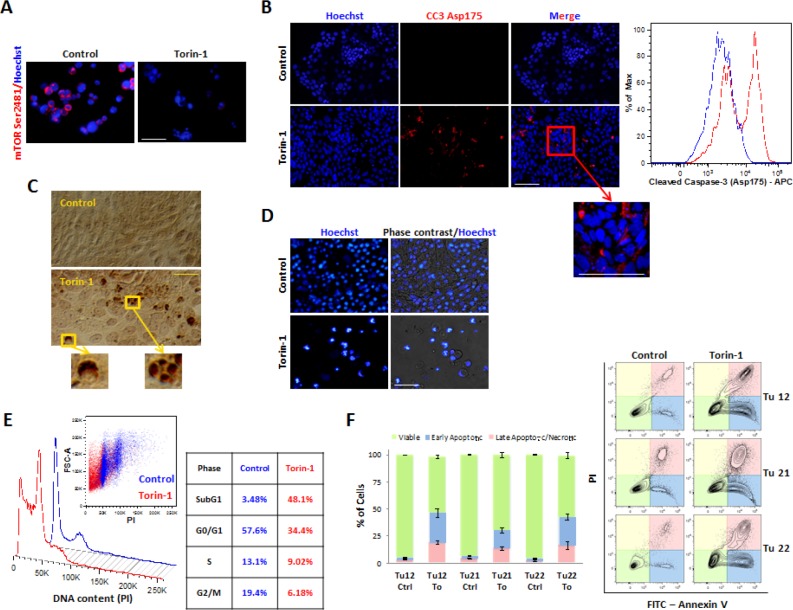
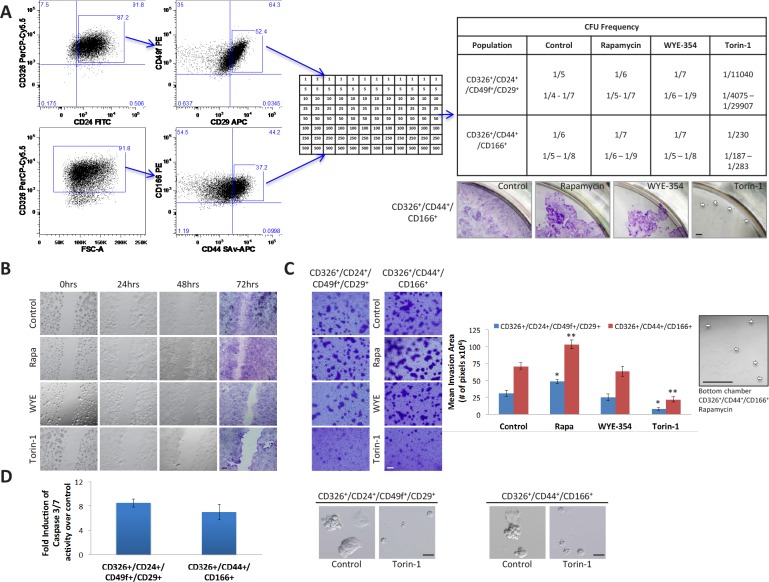
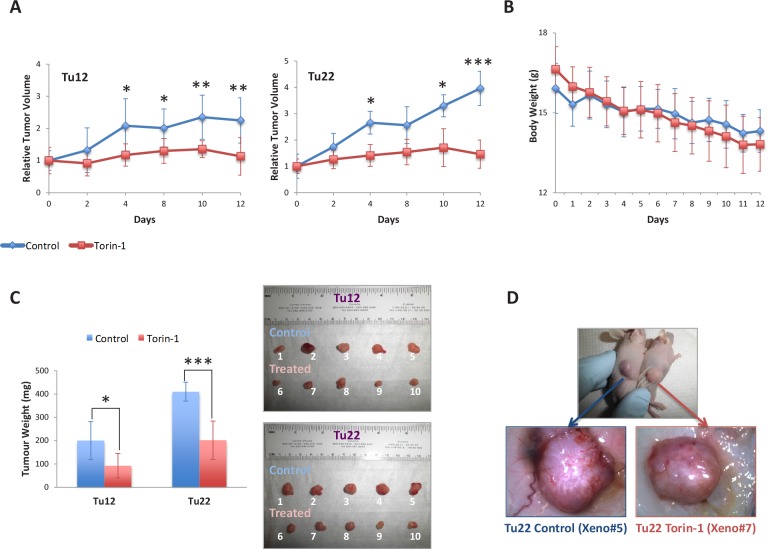
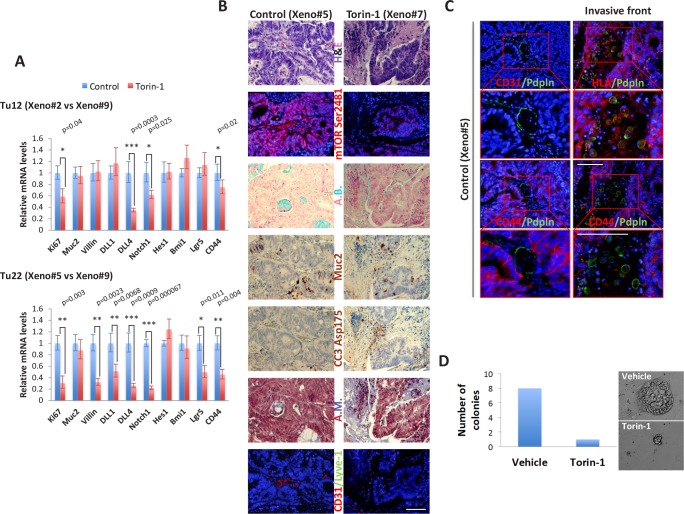
Metastatic colorectal cancer (CRC) is incurable for most patients. Since mammalian target of rapamycin (mTOR) has been suggested as a crucial modulator of tumor biology, we aimed at evaluating the effectiveness of mTOR targeting for CRC therapy. To this purpose, we analyzed mTOR expression and the effect of mTOR inhibition in cancer stem-like cells isolated from three human metastatic CRCs (CoCSCs). CoCSCs exhibited a strong mTOR complex 2 (mTORC2) expression, and a rare expression of mTOR complex 1 (mTORC1). This latter correlated with differentiation, being expressed in CoCSC-derived xenografts. We indicate Serum/glucocorticoid-regulated kinase 1 (SGK1) as the possible main mTORC2 effector in CoCSCs, as highlighted by the negative effect on cancer properties following its knockdown. mTOR inhibitors affected CoCSCs differently, resulting in proliferation, autophagy as well as apoptosis induction. The apoptosis-inducing mTOR inhibitor Torin-1 hindered growth, motility, invasion, and survival of CoCSCs in vitro, and suppressed tumor growth in vivo with a concomitant reduction in vessel formation. Torin-1 also affected the expression of markers for cell proliferation, angio-/lympho-genesis, and stemness in vivo, including Ki67, DLL1, DLL4, Notch, Lgr5, and CD44. Importantly, Torin-1 did not affect the survival of normal colon stem cells in vivo, suggesting its selectivity towards cancer cells. Thus, we propose Torin-1 as a powerful drug candidate for metastatic CRC therapy.
大多数转移性结直肠癌(CRC)患者无法治愈。由于雷帕霉素哺乳动物靶点(mTOR)被认为是肿瘤生物学的关键调节因子,我们旨在评估靶向mTOR对CRC治疗的有效性。为此,我们分析了从三例人类转移性CRC(CoCSCs)中分离出的癌症干细胞样细胞中mTOR的表达及mTOR抑制的效果。CoCSCs表现出强烈的mTOR复合物2(mTORC2)表达,而mTOR复合物1(mTORC1)表达罕见。后者与分化相关,在CoCSC衍生的异种移植中表达。我们指出血清/糖皮质激素调节激酶1(SGK1)可能是CoCSCs中mTORC2的主要效应器,其敲低后对癌症特性产生负面影响即突出了这一点。mTOR抑制剂对CoCSCs的影响不同,导致增殖、自噬以及凋亡诱导。诱导凋亡的mTOR抑制剂Torin-1在体外阻碍了CoCSCs的生长、运动、侵袭和存活,并在体内抑制肿瘤生长,同时减少血管形成。Torin-1还在体内影响细胞增殖、血管/淋巴管生成和干性标志物的表达,包括Ki67、DLL1、DLL4、Notch、Lgr5和CD44。重要的是,Torin-1在体内不影响正常结肠干细胞的存活,表明其对癌细胞具有选择性。因此,我们提出Torin-1作为转移性CRC治疗的有力候选药物。