Pitzschke Andrea, Datta Sneha, Persak Helene
Department of Applied Genetics and Cell Biology, University of Natural Resources and Life Sciences, Muthgasse 18, 1190 Vienna, Austria.
Mol Plant. 2014 Apr;7(4):722-38. doi: 10.1093/mp/sst157. Epub 2013 Nov 8.
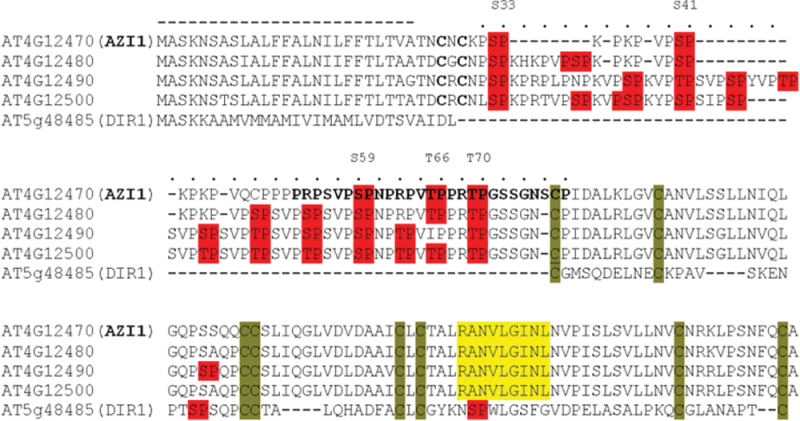
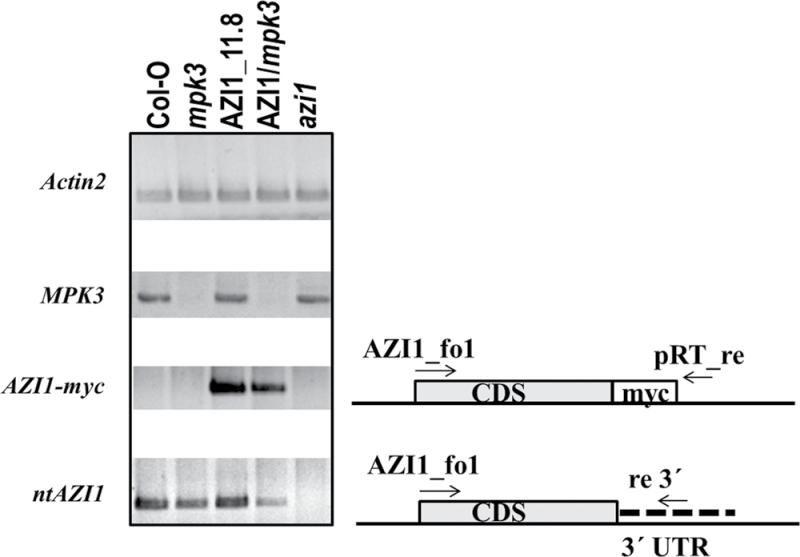
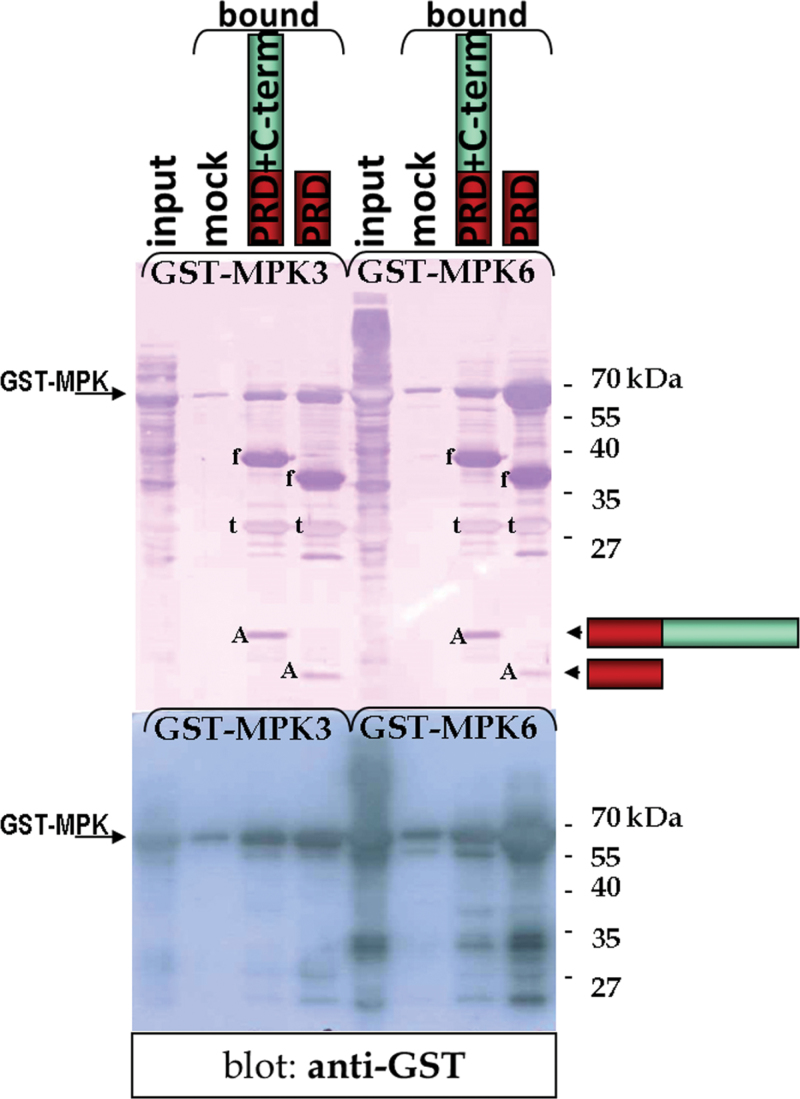
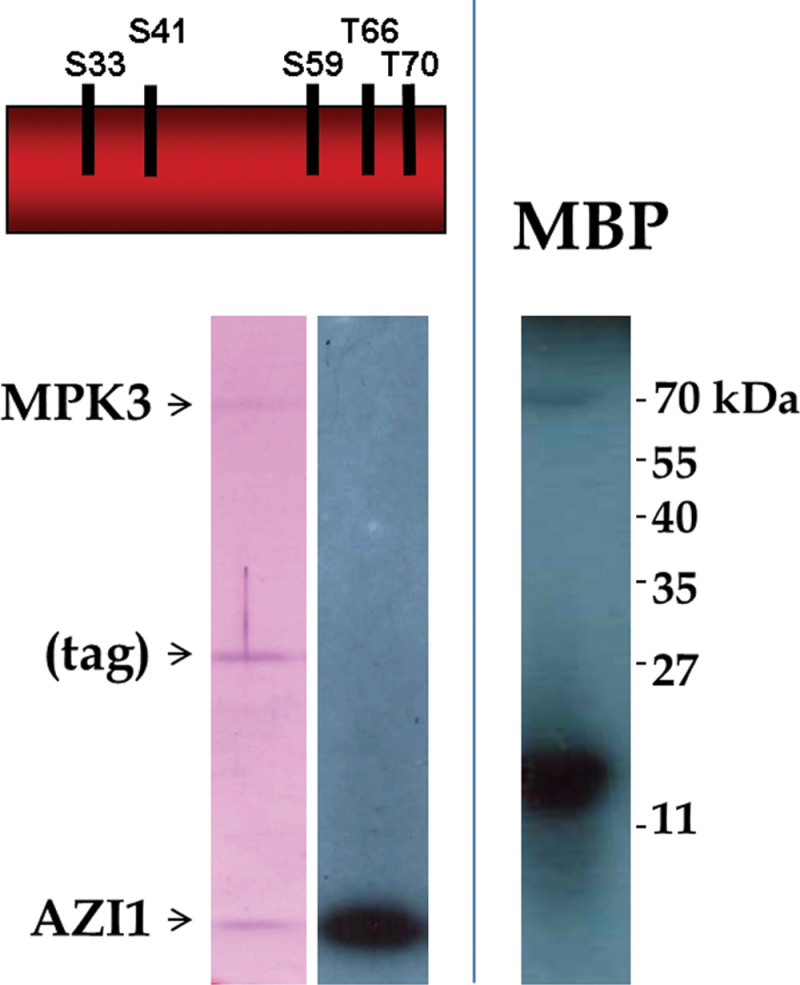
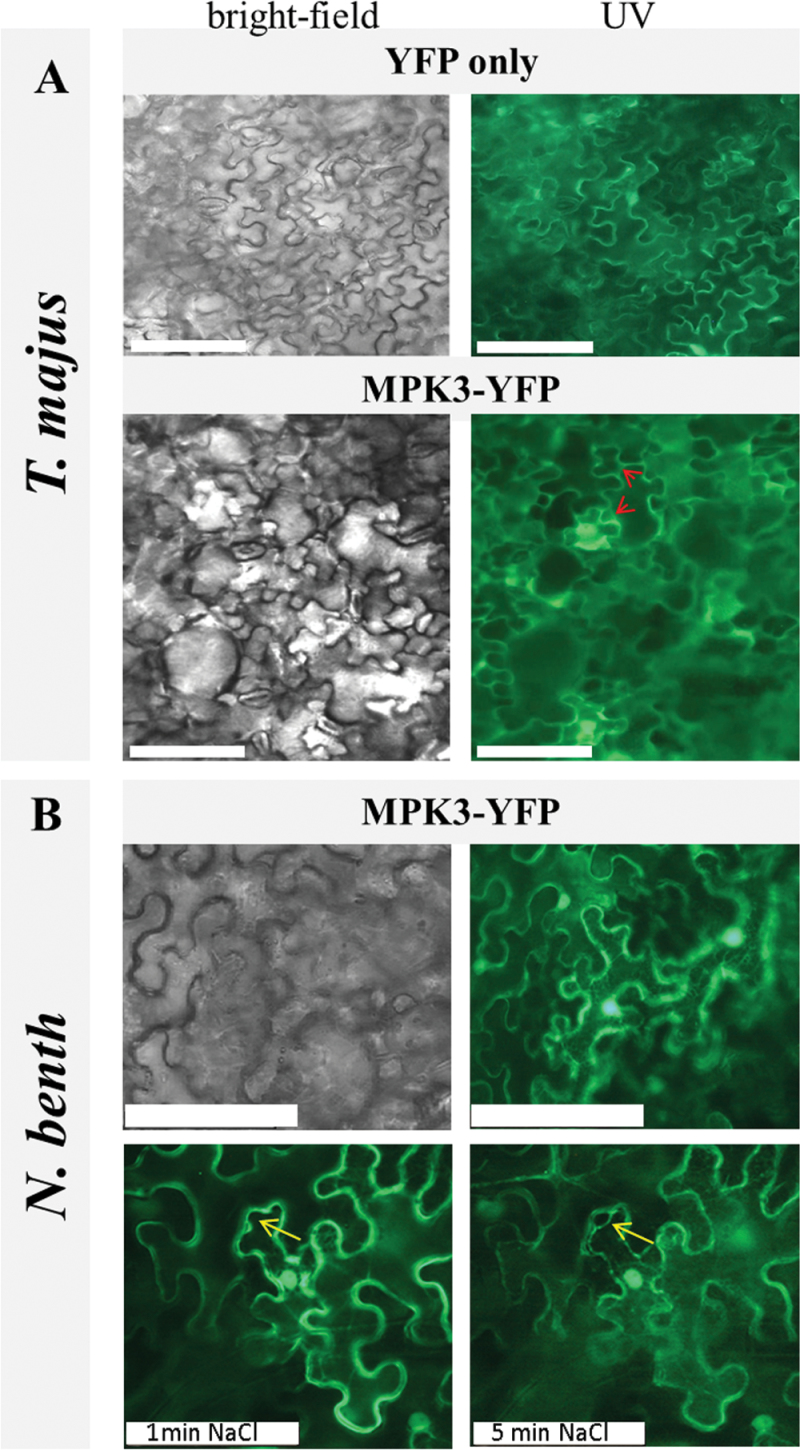
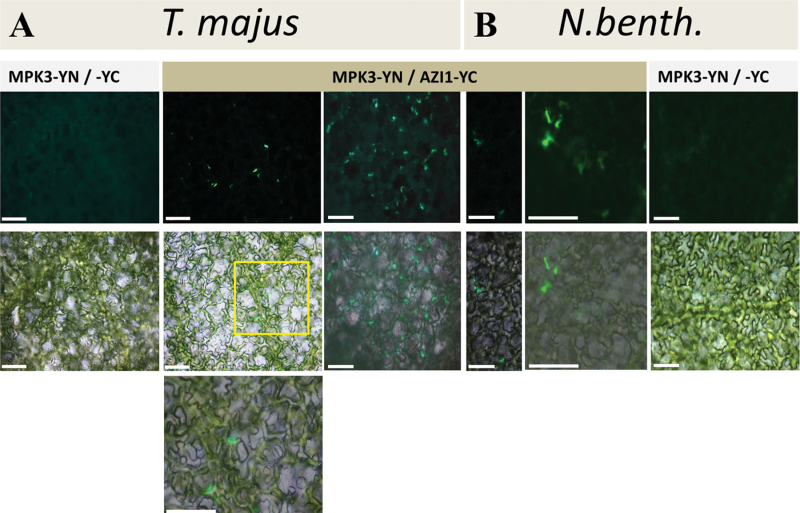
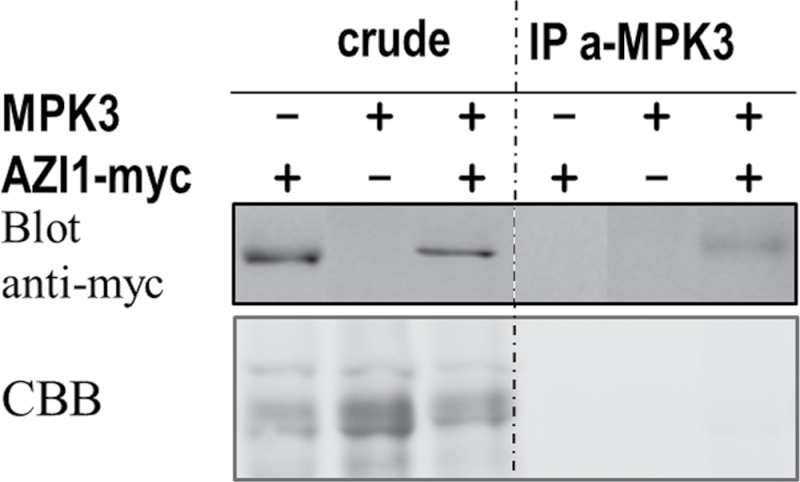
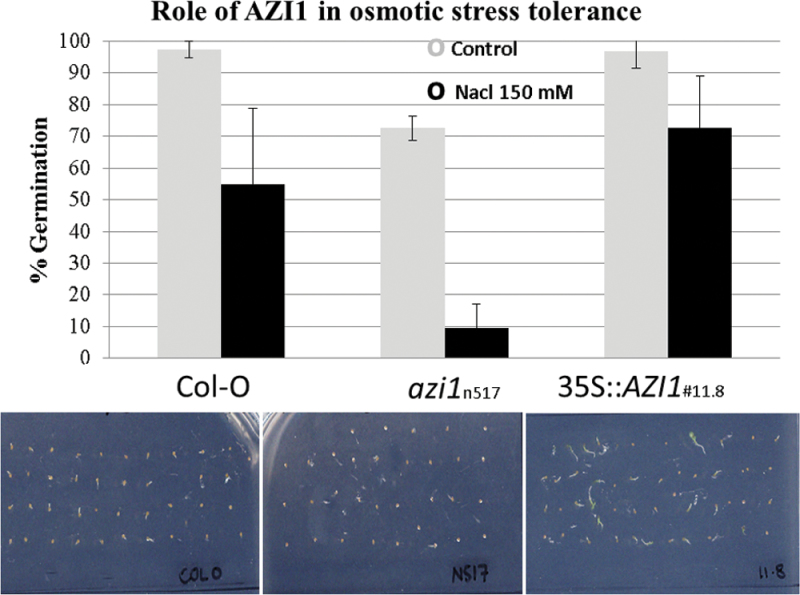
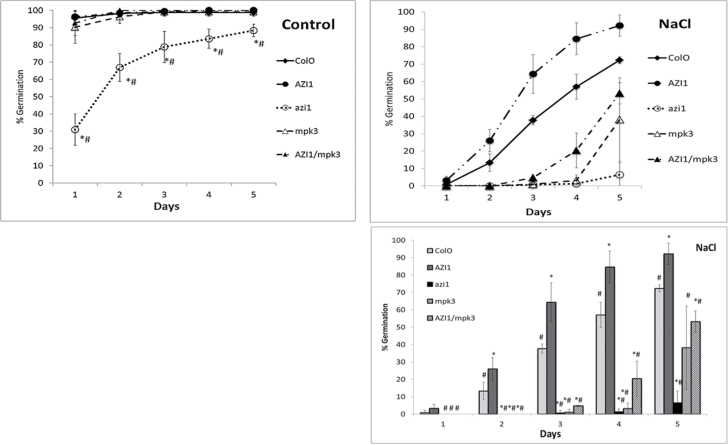
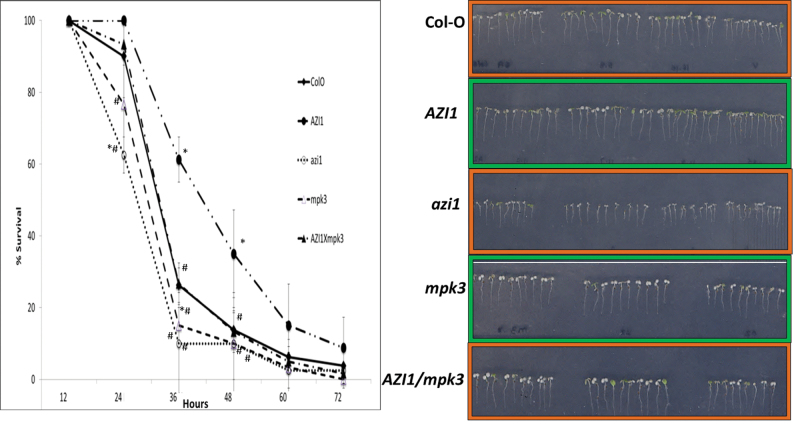
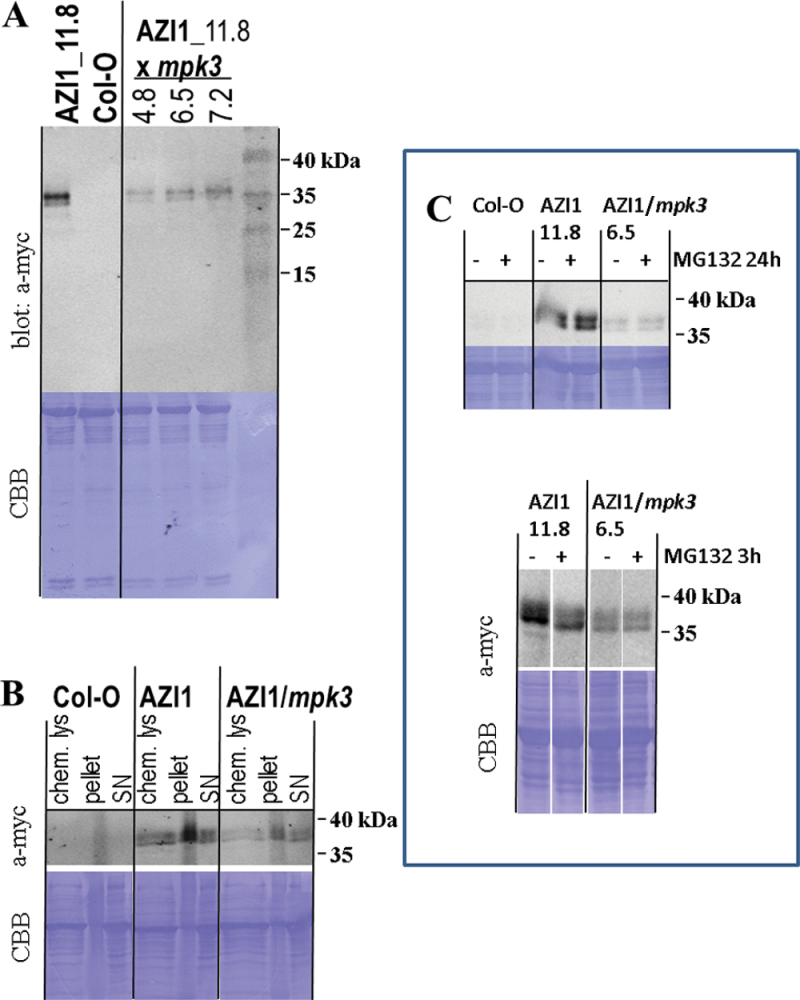
A plant's capability to cope with environmental challenges largely relies on signal transmission through mitogen-activated protein kinase (MAPK) cascades. In Arabidopsis thaliana, MPK3 is particularly strongly associated with numerous abiotic and biotic stress responses. Identification of MPK3 substrates is a milestone towards improving stress resistance in plants. Here, we characterize AZI1, a lipid transfer protein (LTP)-related hybrid proline-rich protein (HyPRP), as a novel target of MPK3. AZI1 is phosphorylated by MPK3 in vitro. As documented by co-immunoprecipitation and bimolecular fluorescence complementation experiments, AZI1 interacts with MPK3 to form protein complexes in planta. Furthermore, null mutants of azi1 are hypersensitive to salt stress, while AZI1-overexpressing lines are markedly more tolerant. AZI1 overexpression in the mpk3 genetic background partially alleviates the salt-hypersensitive phenotype of this mutant, but functional MPK3 appears to be required for the full extent of AZI1-conferred robustness. Notably, this robustness does not come at the expense of normal development. Immunoblot and RT-PCR data point to a role of MPK3 as positive regulator of AZI1 abundance.
植物应对环境挑战的能力很大程度上依赖于通过丝裂原活化蛋白激酶(MAPK)级联进行的信号传递。在拟南芥中,MPK3与众多非生物和生物胁迫反应特别密切相关。鉴定MPK3底物是提高植物抗逆性的一个里程碑。在这里,我们将AZI1(一种与脂质转移蛋白(LTP)相关的富含脯氨酸的杂交蛋白(HyPRP))鉴定为MPK3的一个新靶点。AZI1在体外被MPK3磷酸化。通过免疫共沉淀和双分子荧光互补实验证明,AZI1在植物中与MPK3相互作用形成蛋白复合物。此外,azi1的缺失突变体对盐胁迫高度敏感,而过量表达AZI1的株系则明显更耐盐。在mpk3基因背景中过表达AZI1可部分缓解该突变体的盐超敏表型,但似乎需要功能性MPK3才能使AZI1赋予的稳健性达到最大程度。值得注意的是,这种稳健性并不会以正常发育为代价。免疫印迹和RT-PCR数据表明MPK3作为AZI1丰度的正调控因子发挥作用。