Helmholtz Centre for Environmental Research, Department of Community Ecology, Halle (Saale), Germany.
PLoS One. 2013 Nov 6;8(11):e78107. doi: 10.1371/journal.pone.0078107. eCollection 2013.
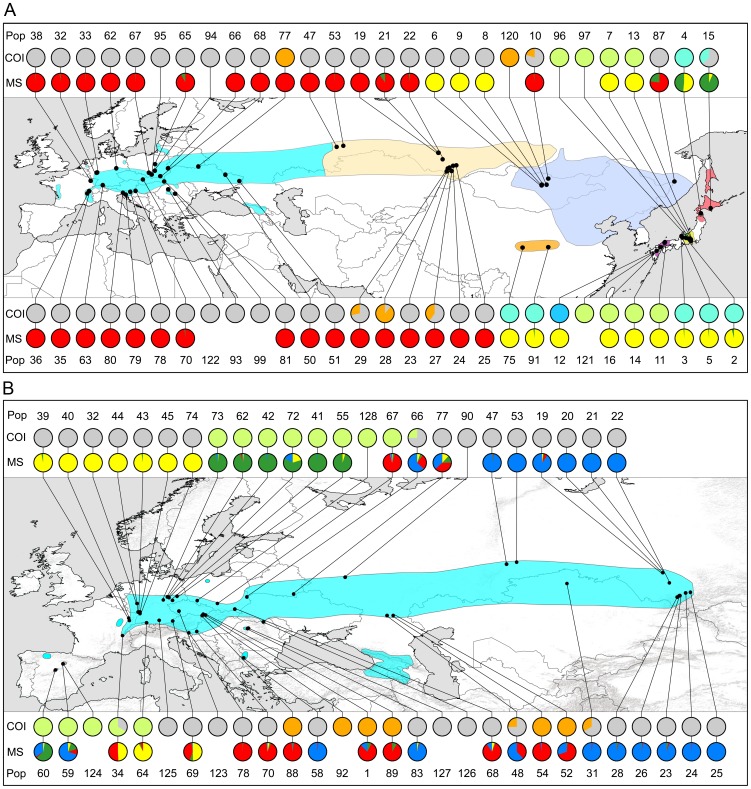
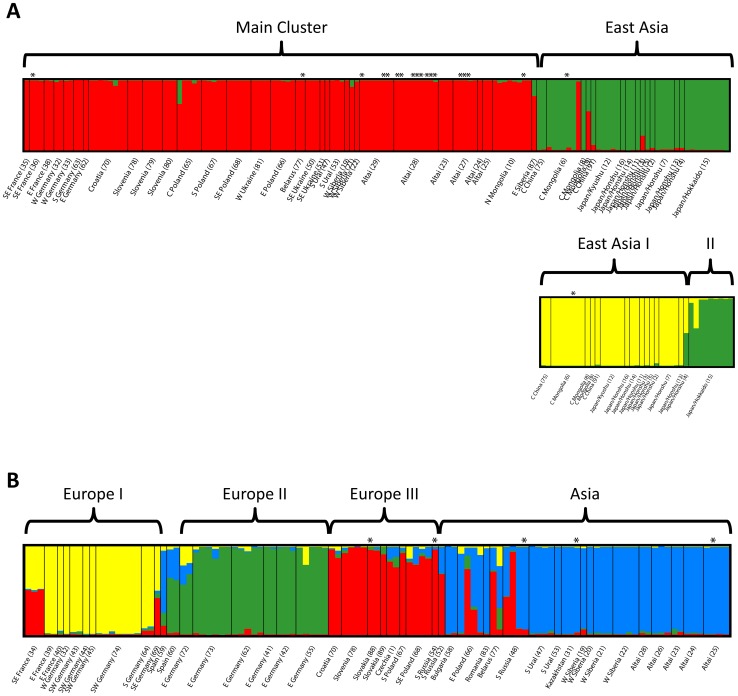
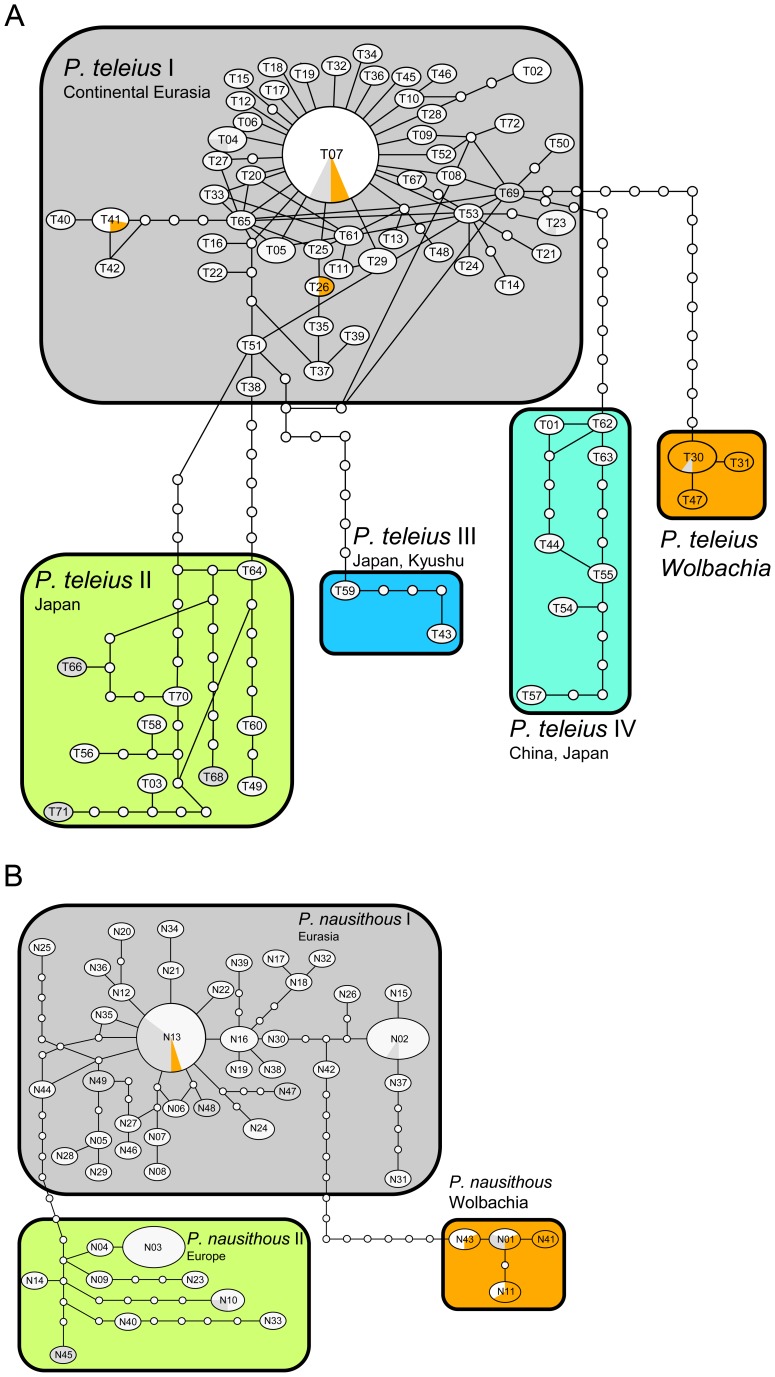
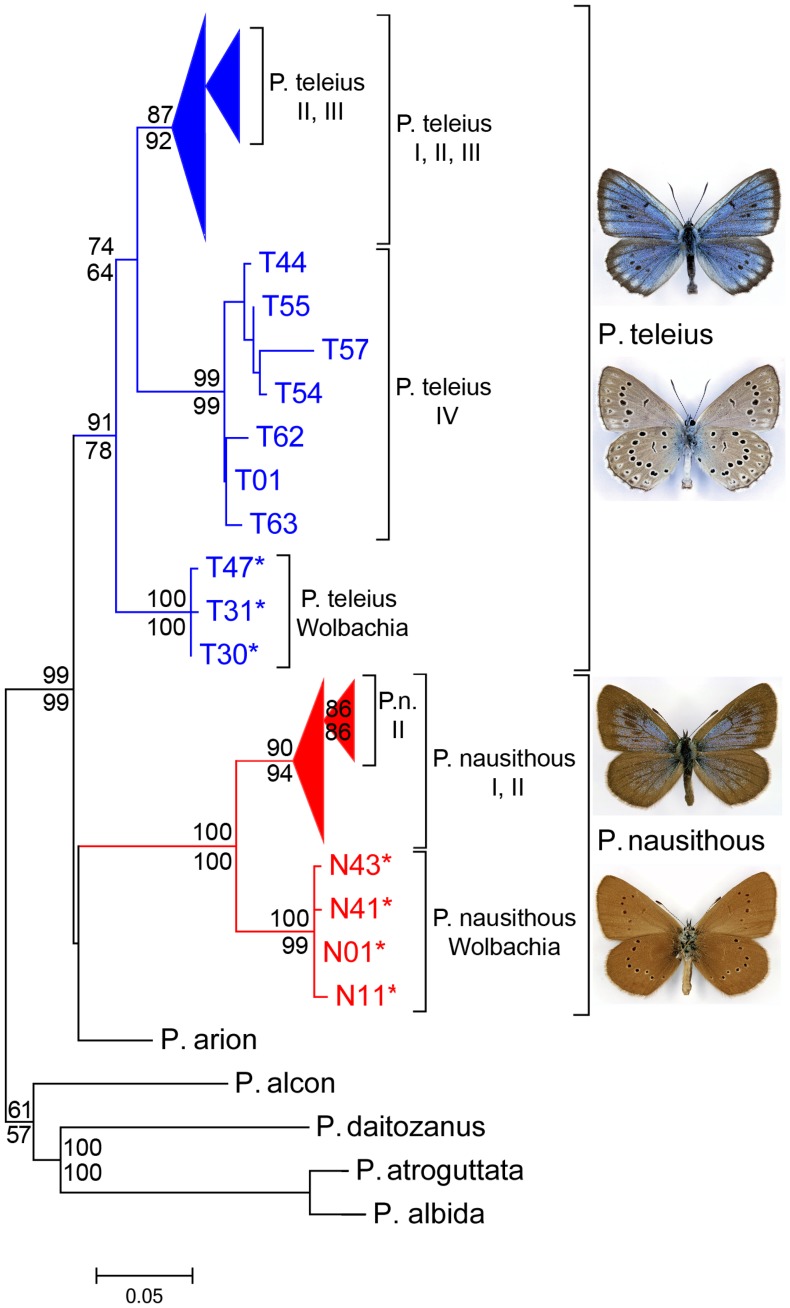
Deep mitochondrial divergence within species may result from cryptic speciation, from phylogeographic isolation or from endosymbiotic bacteria like Wolbachia that manipulate host reproduction. Phengaris butterflies are social parasites that spend most of their life in close relationship with ants. Previously, cryptic speciation has been hypothesised for two Phengaris species based on divergent mtDNA sequences. Since Phengaris species are highly endangered, the existence of cryptic species would have drastic consequences for conservation and management. We tested for cryptic speciation and alternative scenarios in P. teleius and P. nausithous based on a comprehensive sample across their Palaearctic ranges using COI gene sequences, nuclear microsatellites and tests for Wolbachia. In both species a deep mitochondrial split occurring 0.65-1.97 myrs ago was observed that did not correspond with microsatellite data but was concordant with Wolbachia infection. Haplotypes previously attributed to cryptic species were part of the Wolbachia-infected clades. In both species remaining phylogeographic structure was largely consistent between mitochondrial and nuclear genomes. In P. teleius several mitochondrial and nuclear groups were observed in East Asia while a single haplogroup and nuclear cluster prevailed across continental Eurasia. Neutrality tests suggested rapid demographic expansion into that area. In contrast, P. nausithous had several mitochondrial and nuclear groups in Europe, suggesting a complex phylogeographic history in the western part of the species range. We conclude that deep intraspecific divergences found in DNA barcode studies do not necessarily need to represent cryptic speciation but instead can be due to both infection by Wolbachia and phylogeographic structure.
物种内的线粒体深度分歧可能是由隐种形成、系统地理隔离或像沃尔巴克氏体这样操纵宿主繁殖的内共生细菌引起的。孔雀蛱蝶是社会性寄生虫,它们一生中的大部分时间都与蚂蚁密切相关。以前,基于分歧的 mtDNA 序列,已经假设了两种孔雀蛱蝶的隐种形成。由于孔雀蛱蝶物种高度濒危,隐种的存在将对保护和管理产生巨大影响。我们基于 COI 基因序列、核微卫星和沃尔巴克氏体检测,在其全北界范围内对 P. teleius 和 P. nausithous 进行了全面采样,以检测隐种形成和替代情景。在这两个物种中,我们观察到了一个发生在 0.65-1.97 百万年前的线粒体深度分裂,它与微卫星数据不对应,但与沃尔巴克氏体感染一致。以前归因于隐种的单倍型是感染沃尔巴克氏体的分支的一部分。在这两个物种中,线粒体和核基因组之间的剩余系统地理学结构在很大程度上是一致的。在 P. teleius 中,东亚观察到几个线粒体和核群体,而整个欧亚大陆则流行单一的单倍型和核聚类。中性检验表明,该地区的种群迅速扩张。相比之下,P. nausithous 在欧洲有几个线粒体和核群体,这表明该物种西部的系统地理学历史较为复杂。我们的结论是,在 DNA 条码研究中发现的深度种内分歧不一定需要代表隐种形成,而是可能同时受到沃尔巴克氏体感染和系统地理学结构的影响。