Department of Neuroscience, Baylor College of Medicine, Houston, TX 77030, USA.
Neuron. 2013 Dec 4;80(5):1310-21. doi: 10.1016/j.neuron.2013.09.006. Epub 2013 Nov 14.
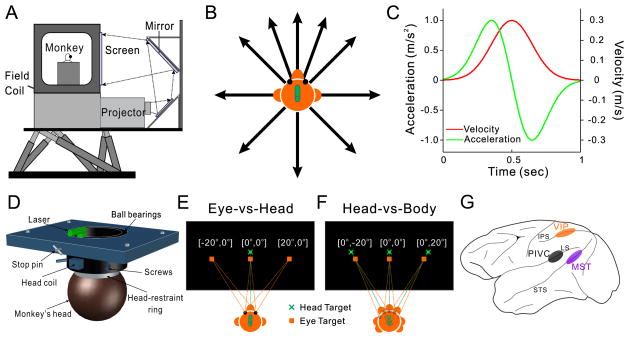
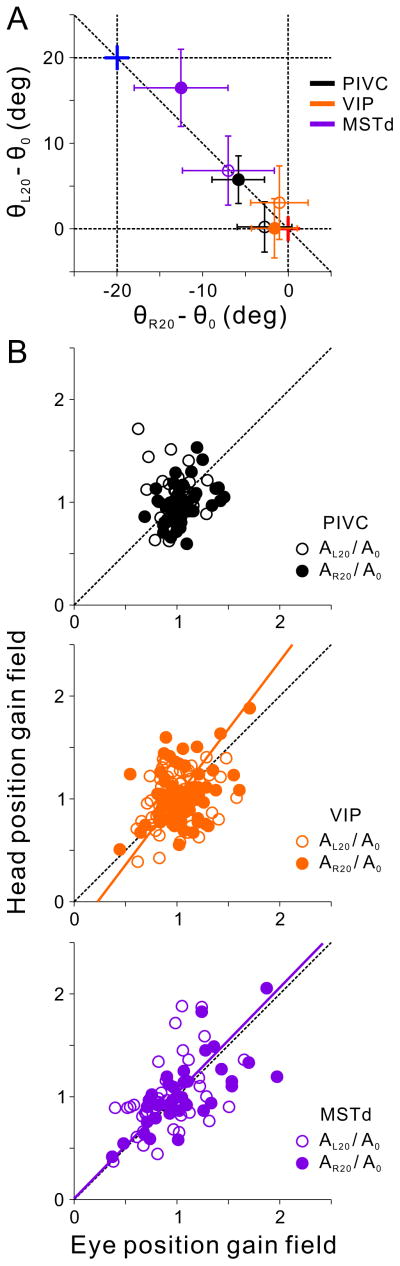
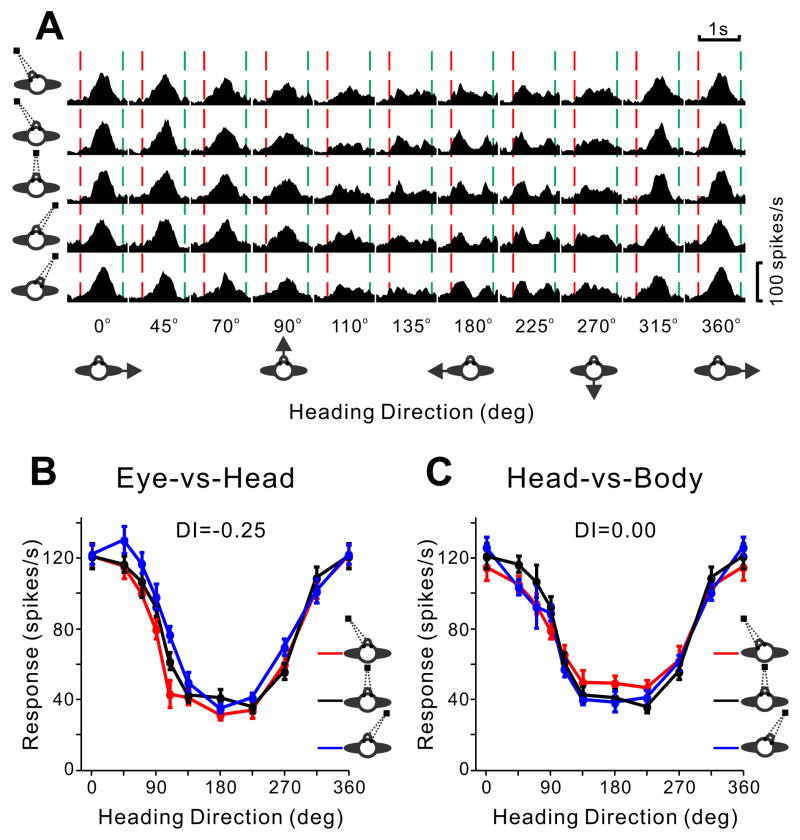
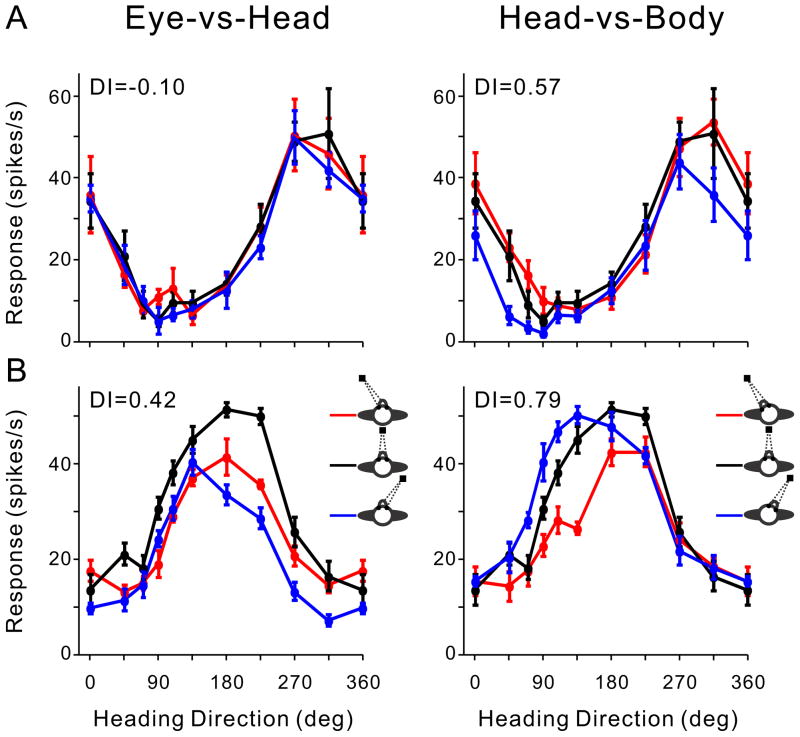
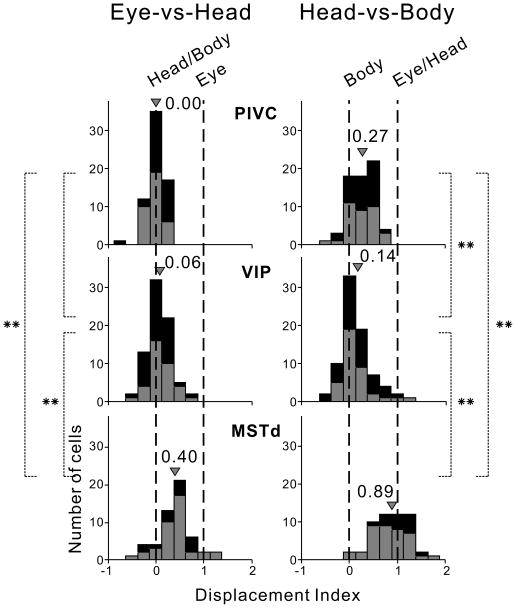
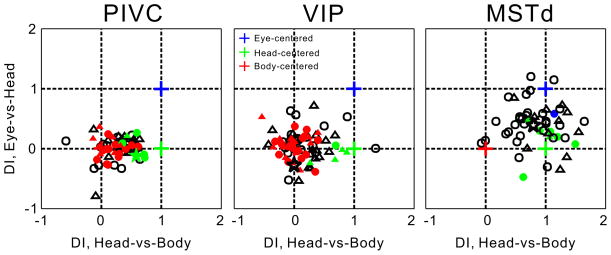
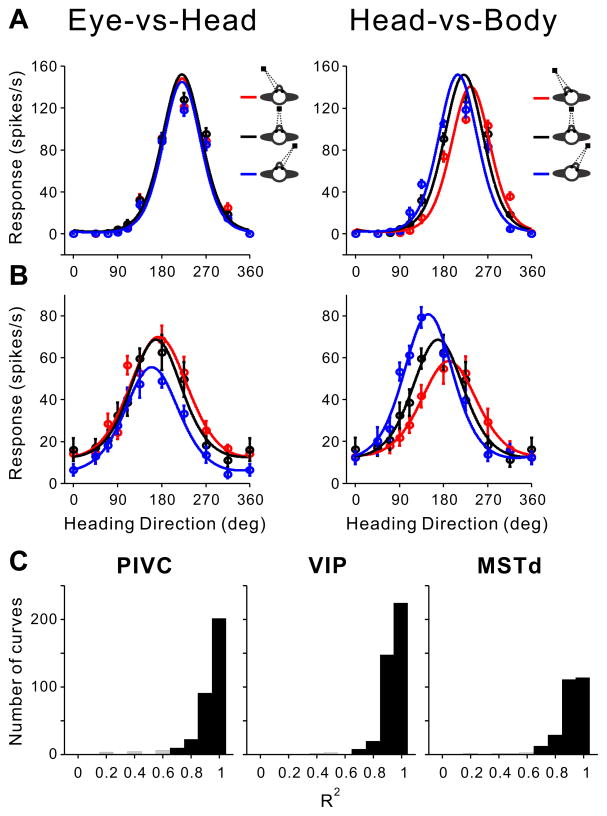
Reference frames are important for understanding how sensory cues from different modalities are coordinated to guide behavior, and the parietal cortex is critical to these functions. We compare reference frames of vestibular self-motion signals in the ventral intraparietal area (VIP), parietoinsular vestibular cortex (PIVC), and dorsal medial superior temporal area (MSTd). Vestibular heading tuning in VIP is invariant to changes in both eye and head positions, indicating a body (or world)-centered reference frame. Vestibular signals in PIVC have reference frames that are intermediate between head and body centered. In contrast, MSTd neurons show reference frames between head and eye centered but not body centered. Eye and head position gain fields were strongest in MSTd and weakest in PIVC. Our findings reveal distinct spatial reference frames for representing vestibular signals and pose new challenges for understanding the respective roles of these areas in potentially diverse vestibular functions.
参考系对于理解不同感觉模式的感官线索如何协调以指导行为非常重要,顶叶皮层对于这些功能至关重要。我们比较了腹内顶区(VIP)、顶内前庭皮层(PIVC)和背内侧上颞区(MSTd)中前庭自运动信号的参考系。VIP 中的前庭朝向调谐对眼睛和头部位置的变化均不变,表明以身体(或世界)为中心的参考系。PIVC 中的前庭信号的参考系介于以头为中心和以身体为中心之间。相比之下,MSTd 神经元表现出头眼为中心而不以身体为中心的参考系。眼和头位置增益场在 MSTd 中最强,在 PIVC 中最弱。我们的发现揭示了代表前庭信号的不同空间参考系,并为理解这些区域在潜在多样化的前庭功能中的各自作用提出了新的挑战。