Institute of Psychology, University of Osnabrück, Osnabrück, Germany ; Institute of Cognitive Science, University of Osnabrück, Osnabrück, Germany.
PLoS One. 2013 Nov 11;8(11):e78307. doi: 10.1371/journal.pone.0078307. eCollection 2013.
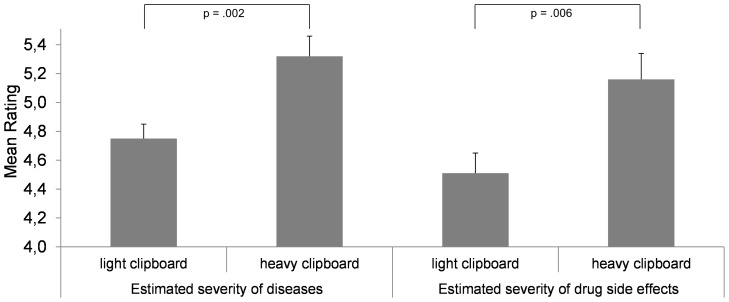
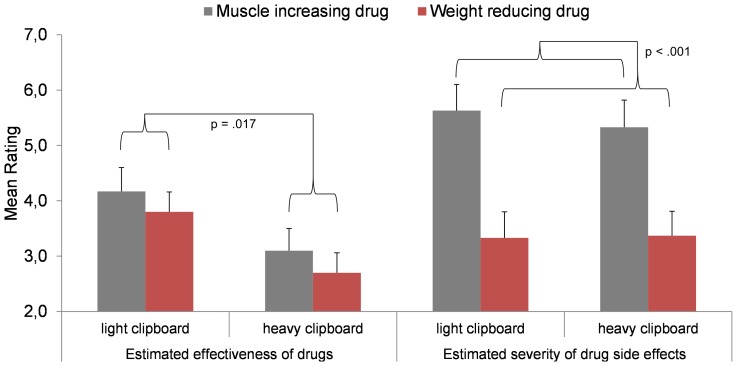
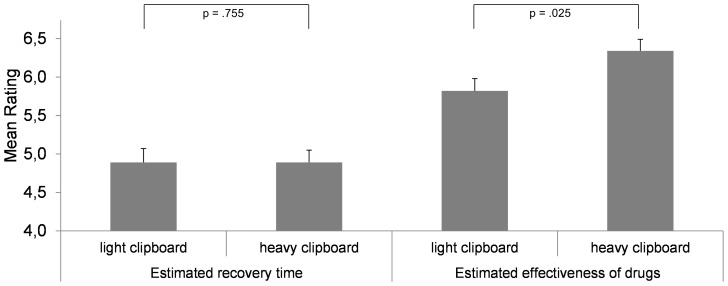
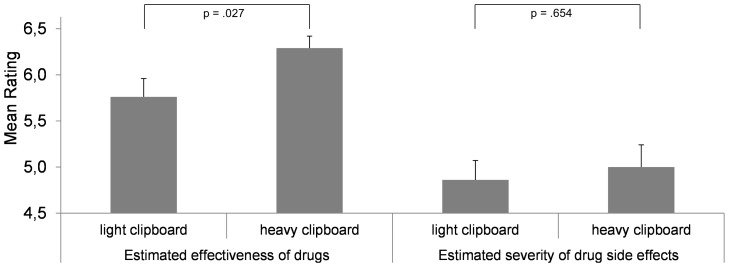
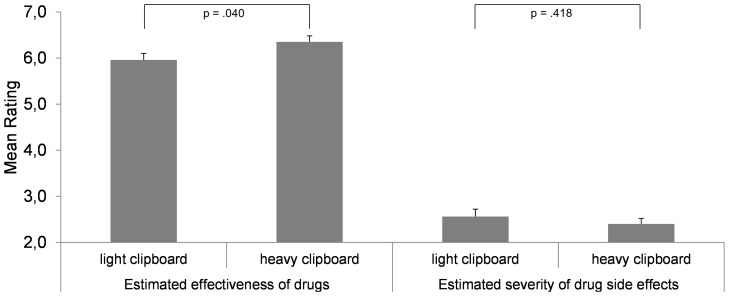
Peoples' perception of diseases and pharmaceutical drugs is a critical issue in health research. Beliefs about disease severity influence the compliance with recommendations for convalescence and the motivation to perform proper health-behavior. The estimated effectiveness of drugs and severity of side effects influence medication adherence and contribute to placebo effects. The present paper closes the gap between these effects and the concept of embodied cognition from a metaphor-enriched perspective. In five studies, we demonstrate that the bodily sensation of weight influences our evaluations of diseases and drugs. The experience of heaviness enhanced the estimated seriousness of diseases and the estimated effectiveness of drugs. The perceived seriousness of drug side effects was also affected by weight but only when drug effectiveness was not attended to. Moreover, the incidental sensation of weight shows a novel effect when evaluating weight-related drugs. The results are in line with the idea of embodied metaphors and reveal important boundary conditions which contribute to a better understanding of the underlying mechanisms.
人们对疾病和药物的看法是健康研究中的一个关键问题。对疾病严重程度的信念影响着对康复建议的遵守程度和执行适当健康行为的动机。药物的估计疗效和副作用的严重程度影响着药物的依从性,并导致安慰剂效应。本文从隐喻丰富的角度弥合了这些效应与具身认知概念之间的差距。在五项研究中,我们证明了体重的身体感觉会影响我们对疾病和药物的评估。沉重感增强了对疾病严重程度和药物疗效的估计。药物副作用的严重性感知也受到体重的影响,但只有在不关注药物疗效时才会受到影响。此外,在评估与体重相关的药物时,偶然的体重感觉会产生一种新的效果。研究结果与具身隐喻的观点一致,并揭示了有助于更好地理解潜在机制的重要边界条件。