Pachel Christina, Mathes Denise, Bayer Barbara, Dienesch Charlotte, Wangorsch Gaby, Heitzmann Wolfram, Lang Isabell, Ardehali Hossein, Ertl Georg, Dandekar Thomas, Wajant Harald, Frantz Stefan
Department of Internal Medicine I, University Hospital Würzburg, Würzburg, Germany ; Comprehensive Heart Failure Center, University of Würzburg, Würzburg, Germany.
PLoS One. 2013 Nov 11;8(11):e78938. doi: 10.1371/journal.pone.0078938. eCollection 2013.
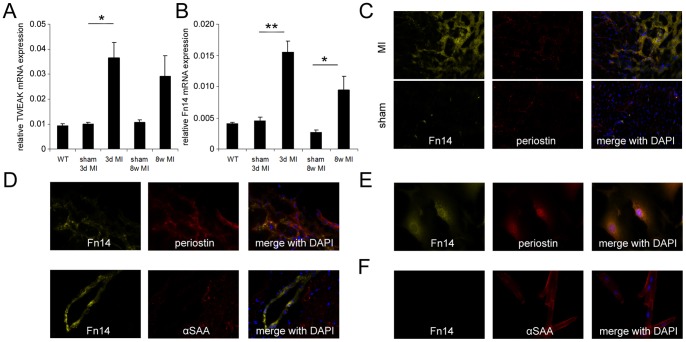
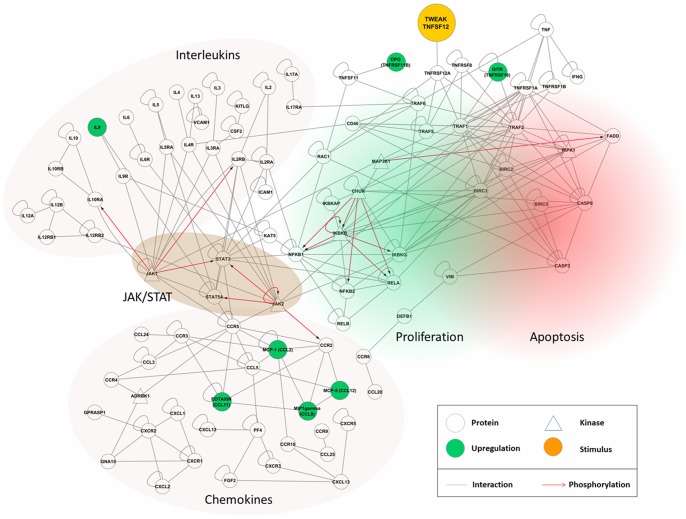
Tumor necrosis factor-like weak inducer of apoptosis (TWEAK) and its receptor fibroblast growth factor-inducible 14 (Fn14) are upregulated after myocardial infarction (MI) in both humans and mice. They modulate inflammation and the extracellular matrix, and could therefore be important for healing and remodeling after MI. However, the function of TWEAK after MI remains poorly defined.
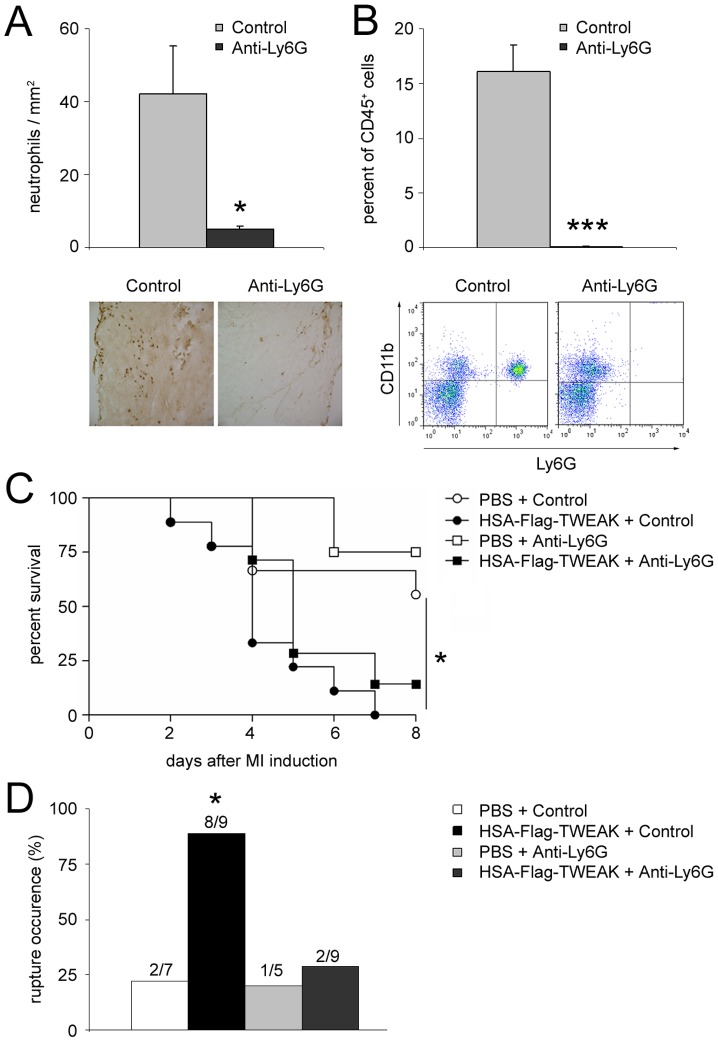
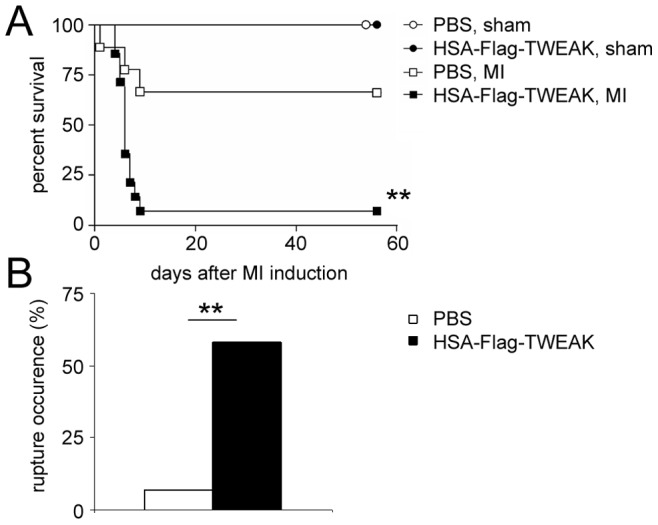
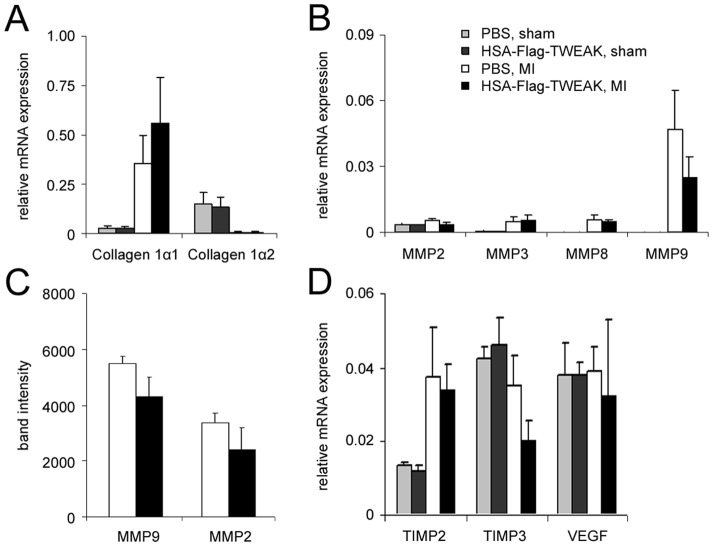
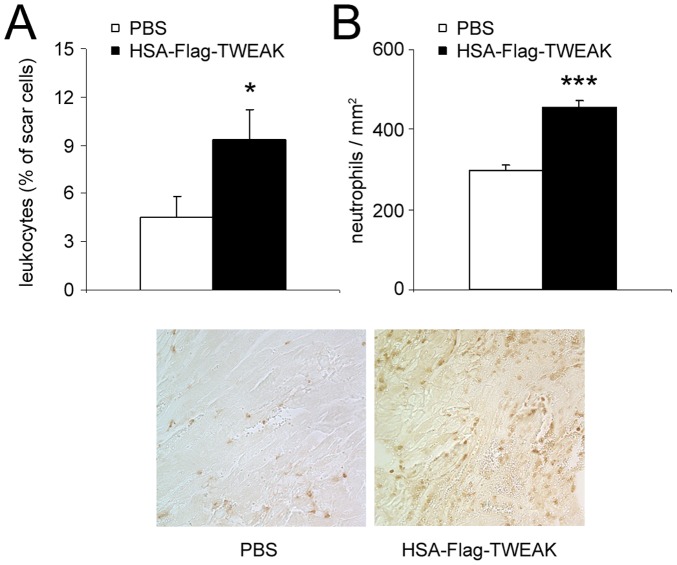
Following ligation of the left coronary artery, mice were injected twice per week with a recombinant human serum albumin conjugated variant of TWEAK (HSA-Flag-TWEAK), mimicking the activity of soluble TWEAK. Treatment with HSA-Flag-TWEAK resulted in significantly increased mortality in comparison to the placebo group due to myocardial rupture. Infarct size, extracellular matrix remodeling, and apoptosis rates were not different after MI. However, HSA-Flag-TWEAK treatment increased infiltration of proinflammatory cells into the myocardium. Accordingly, depletion of neutrophils prevented cardiac ruptures without modulating all-cause mortality.
Treatment of mice with HSA-Flag-TWEAK induces myocardial healing defects after experimental MI. This is mediated by an exaggerated neutrophil infiltration into the myocardium.
肿瘤坏死因子样凋亡微弱诱导剂(TWEAK)及其受体成纤维细胞生长因子诱导14(Fn14)在人类和小鼠心肌梗死(MI)后均上调。它们调节炎症和细胞外基质,因此可能对MI后的愈合和重塑很重要。然而,MI后TWEAK的功能仍不清楚。
结扎左冠状动脉后,每周给小鼠注射两次重组人血清白蛋白偶联的TWEAK变体(HSA-Flag-TWEAK),模拟可溶性TWEAK的活性。与安慰剂组相比,HSA-Flag-TWEAK治疗导致因心肌破裂而死亡率显著增加。MI后梗死面积、细胞外基质重塑和凋亡率无差异。然而,HSA-Flag-TWEAK治疗增加了促炎细胞向心肌的浸润。因此,中性粒细胞的消耗可预防心脏破裂,而不影响全因死亡率。
用HSA-Flag-TWEAK治疗小鼠会在实验性MI后诱导心肌愈合缺陷。这是由中性粒细胞过度浸润心肌介导的。