Department of Pharmacology and Pharmaceutical Sciences, School of Pharmacy, University of Southern California, Los Angeles, California, United States of America.
PLoS One. 2013 Nov 11;8(11):e79977. doi: 10.1371/journal.pone.0079977. eCollection 2013.
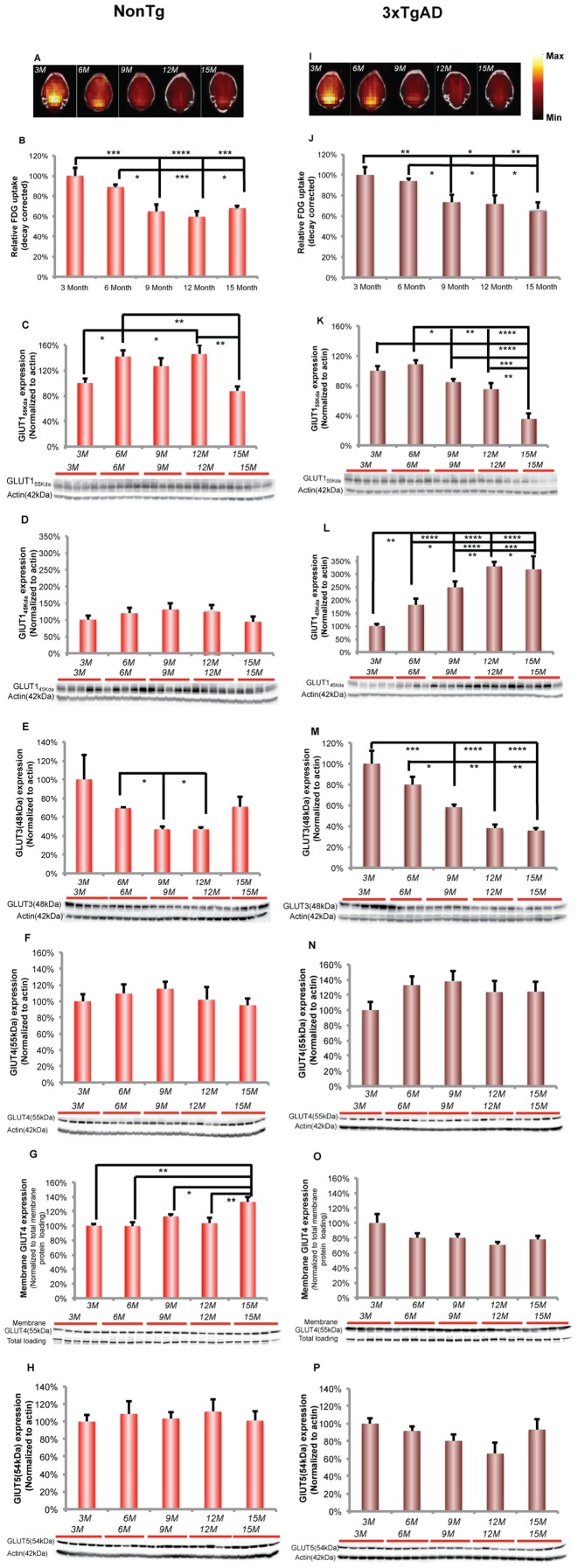
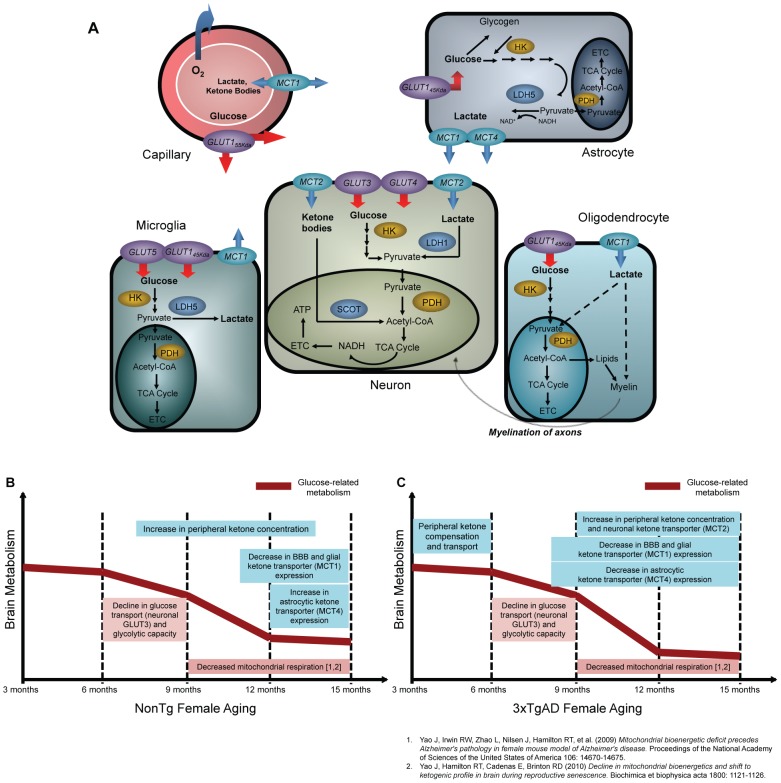
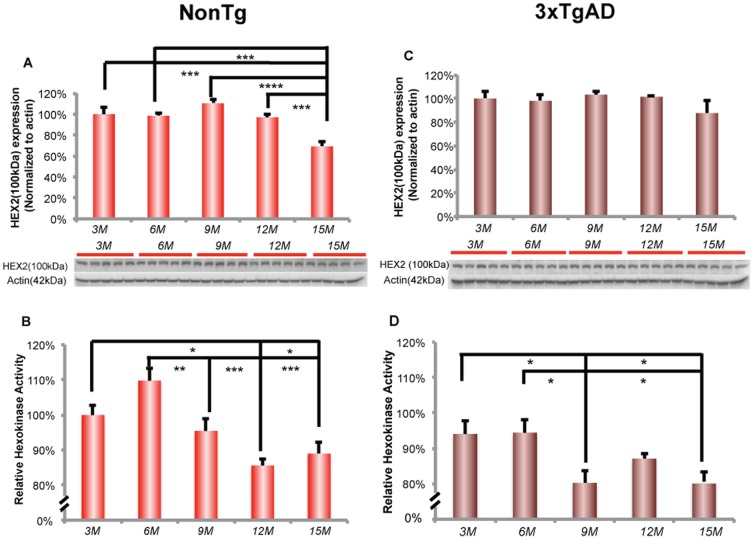
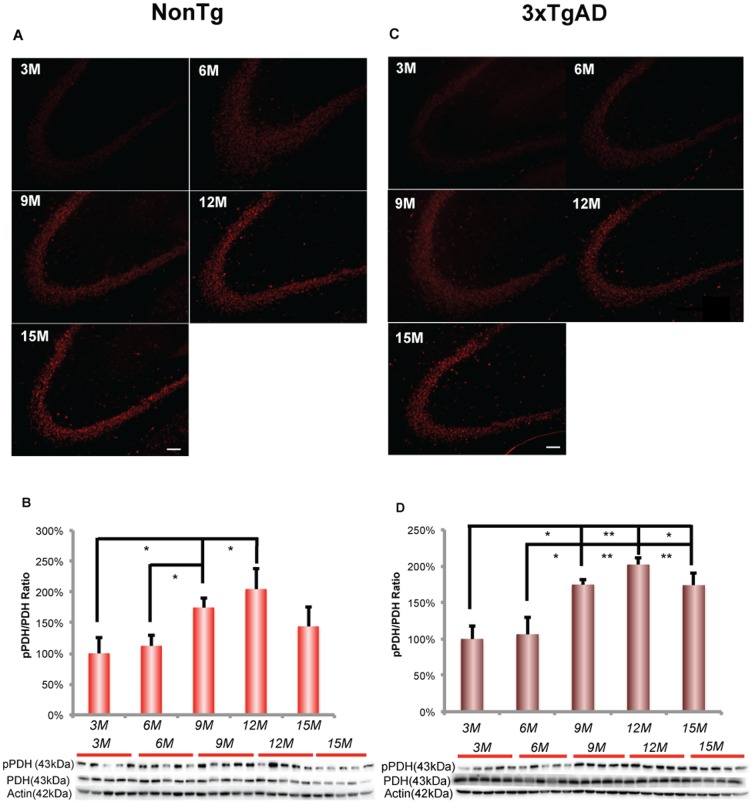
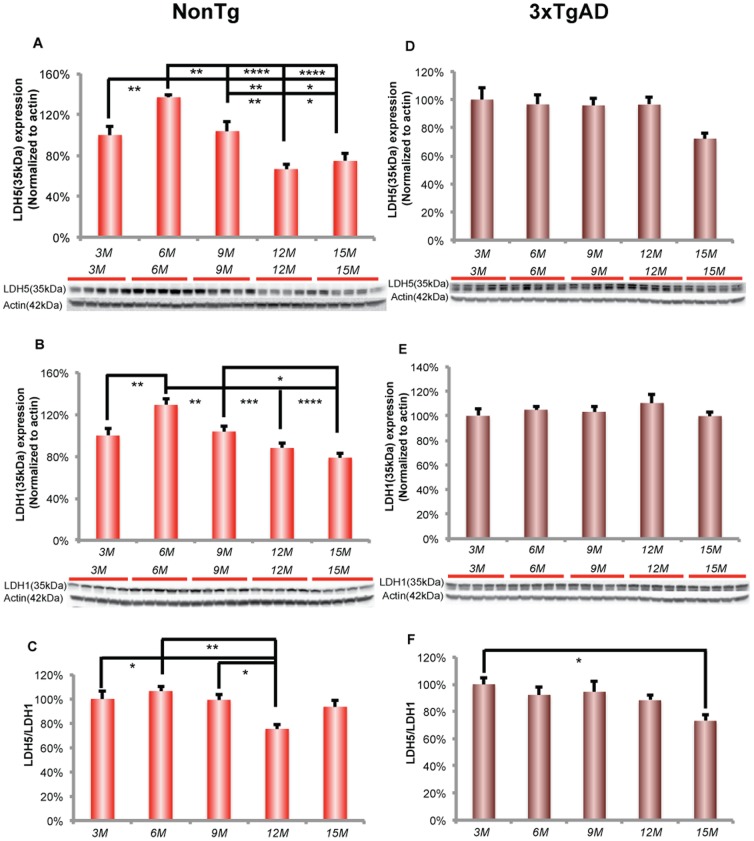
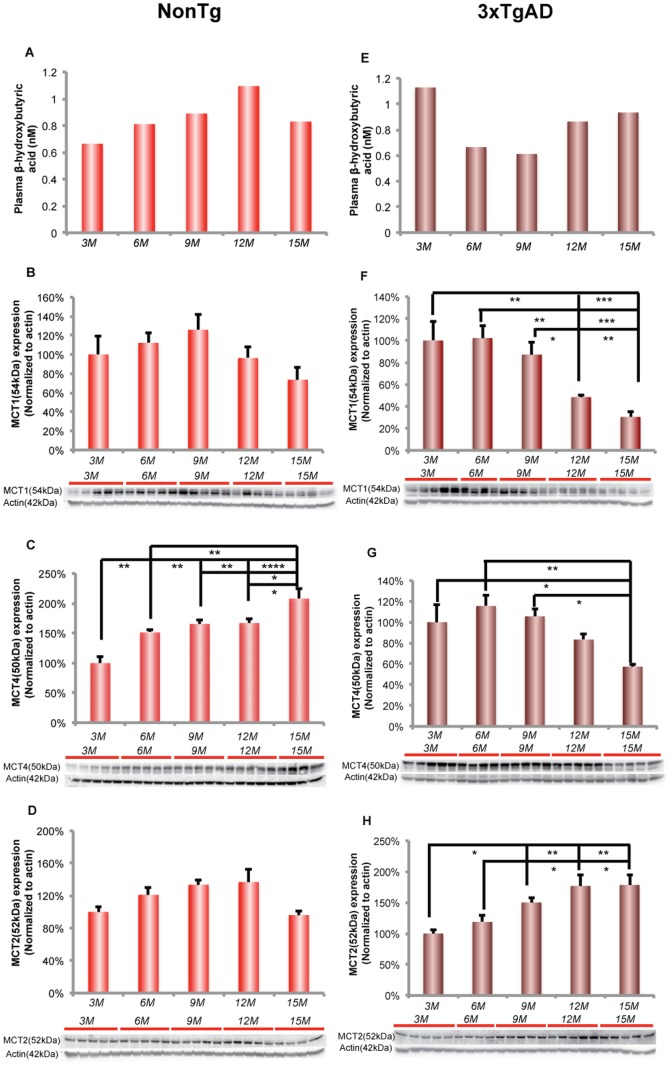
We previously demonstrated that mitochondrial bioenergetic deficits in the female brain accompanied reproductive senescence and was accompanied by a shift from an aerobic glycolytic to a ketogenic phenotype. Herein, we investigated the relationship between systems of fuel supply, transport and mitochondrial metabolic enzyme expression/activity during aging (3-15 months) in the hippocampus of nontransgenic (nonTg) background and 3xTgAD female mice. Results indicate that during female brain aging, both nonTg and 3xTgAD brains undergo significant decline in glucose transport, as detected by FDG-microPET, between 6-9 months of age just prior to the transition into reproductive senescence. The deficit in brain metabolism was sustained thereafter. Decline in glucose transport coincided with significant decline in neuronal glucose transporter expression and hexokinase activity with a concomitant rise in phosphorylated/inactivated pyruvate dehydrogenase. Lactate utilization declined in parallel to the decline in glucose transport suggesting lactate did not serve as an alternative fuel. An adaptive response in the nonTg hippocampus was a shift to transport and utilization of ketone bodies as an alternative fuel. In the 3xTgAD brain, utilization of ketone bodies as an alternative fuel was evident at the earliest age investigated and declined thereafter. The 3xTgAD adaptive response was to substantially increase monocarboxylate transporters in neurons while decreasing their expression at the BBB and in astrocytes. Collectively, these data indicate that the earliest change in the metabolic system of the aging female brain is the decline in neuronal glucose transport and metabolism followed by decline in mitochondrial function. The adaptive shift to the ketogenic system as an alternative fuel coincided with decline in mitochondrial function. Translationally, these data provide insights into the earliest events in bioenergetic aging of the female brain and provide potential targets for preventing shifts to less efficient bioenergetic fuels and transition to the ketogenic phenotype of the Alzheimer's brain.
我们之前的研究表明,雌性大脑中线粒体生物能量缺陷伴随着生殖衰老,同时伴随着从有氧糖酵解向生酮表型的转变。在此,我们研究了在非转基因(nonTg)背景和 3xTgAD 雌性小鼠的海马体中,随着年龄的增长(3-15 个月),燃料供应、运输和线粒体代谢酶表达/活性系统之间的关系。结果表明,在雌性大脑衰老过程中,非Tg 和 3xTgAD 大脑在 6-9 个月龄时都经历了葡萄糖转运的显著下降,这一现象发生在生殖衰老之前。此后,大脑代谢的缺陷一直持续存在。葡萄糖转运的下降与神经元葡萄糖转运蛋白表达和己糖激酶活性的显著下降相吻合,同时伴随着磷酸化/失活的丙酮酸脱氢酶的升高。与葡萄糖转运的下降平行,乳酸的利用也下降了,这表明乳酸不能作为替代燃料。非Tg 海马体的适应性反应是将酮体作为替代燃料进行转运和利用。在 3xTgAD 大脑中,酮体作为替代燃料的利用在最早研究的年龄就已经很明显,此后则下降。3xTgAD 的适应性反应是在神经元中大量增加单羧酸转运蛋白,同时减少它们在血脑屏障和星形胶质细胞中的表达。总的来说,这些数据表明,衰老雌性大脑代谢系统的最早变化是神经元葡萄糖转运和代谢的下降,随后是线粒体功能的下降。向生酮系统的适应性转变作为替代燃料与线粒体功能的下降同时发生。从翻译的角度来看,这些数据为女性大脑生物能量衰老的最早事件提供了深入的了解,并为防止向效率较低的生物能源转变和向阿尔茨海默病大脑的生酮表型转变提供了潜在的目标。