Center for Studies of Psychological Application and School of Psychology, South China Normal University, Guangzhou, China.
PLoS One. 2013 Nov 11;8(11):e80214. doi: 10.1371/journal.pone.0080214. eCollection 2013.
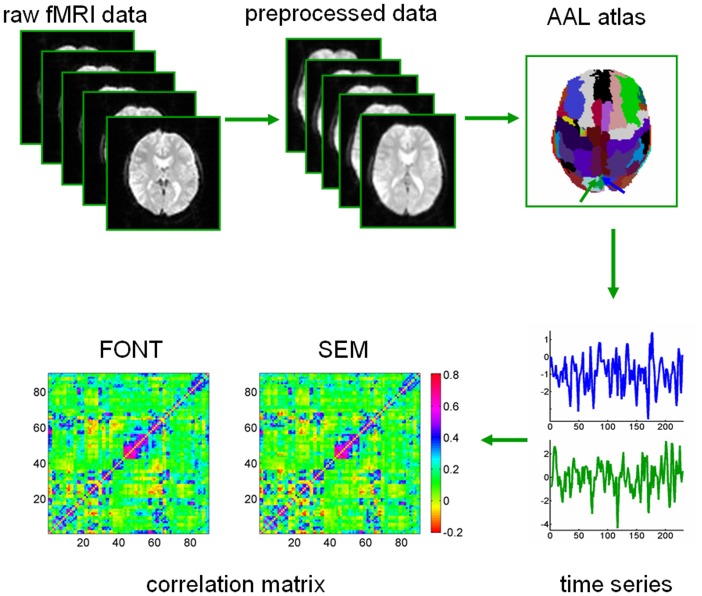
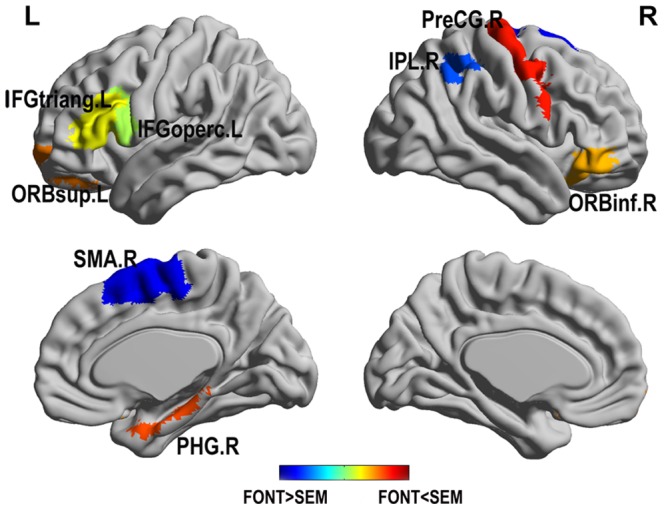
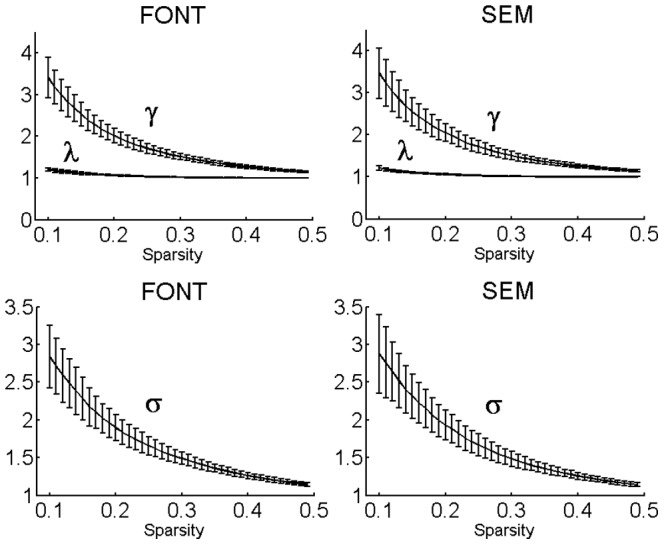
Previous studies have indicated that sentences are comprehended via widespread brain regions in the fronto-temporo-parietal network in explicit language tasks (e.g., semantic congruency judgment tasks), and through restricted temporal or frontal regions in implicit language tasks (e.g., font size judgment tasks). This discrepancy has raised questions regarding a common network for sentence comprehension that acts regardless of task effect and whether different tasks modulate network properties. To this end, we constructed brain functional networks based on 27 subjects' fMRI data that was collected while performing explicit and implicit language tasks. We found that network properties and network hubs corresponding to the implicit language task were similar to those associated with the explicit language task. We also found common hubs in occipital, temporal and frontal regions in both tasks. Compared with the implicit language task, the explicit language task resulted in greater global efficiency and increased integrated betweenness centrality of the left inferior frontal gyrus, which is a key region related to sentence comprehension. These results suggest that brain functional networks support both explicit and implicit sentence comprehension; in addition, these two types of language tasks may modulate the properties of brain functional networks.
先前的研究表明,在显性语言任务(例如语义一致性判断任务)中,句子是通过额颞顶颞网络中的广泛脑区来理解的,而在隐性语言任务(例如字体大小判断任务)中,则通过受限的颞区或额区来理解。这种差异引发了关于句子理解的通用网络的问题,即无论任务效果如何,以及不同任务是否调节网络属性,该网络都能发挥作用。为此,我们基于 27 名受试者的 fMRI 数据构建了大脑功能网络,这些数据是在他们执行显性和隐性语言任务时收集的。我们发现,隐性语言任务的网络属性和网络枢纽与显性语言任务相似。我们还在两个任务的枕部、颞部和额部发现了共同的枢纽。与隐性语言任务相比,显性语言任务导致左侧额下回的全局效率更高,整合度中心度增加,而左侧额下回是与句子理解相关的关键区域。这些结果表明,大脑功能网络支持显性和隐性句子理解;此外,这两种类型的语言任务可能调节大脑功能网络的属性。