German Center for Neurodegenerative Diseases (DZNE), University of Munich, Schillerstr, 44, Munich 80336, Germany.
Acta Neuropathol Commun. 2013 May 13;1:16. doi: 10.1186/2051-5960-1-16.
Frontotemporal lobar degeneration (FTLD) is a heterogeneous group of neurodegenerative diseases associated with personality changes and progressive dementia. Loss-of-function mutations in the growth factor progranulin (GRN) cause autosomal dominant FTLD, but so far the pathomechanism of sporadic FTLD is unclear.
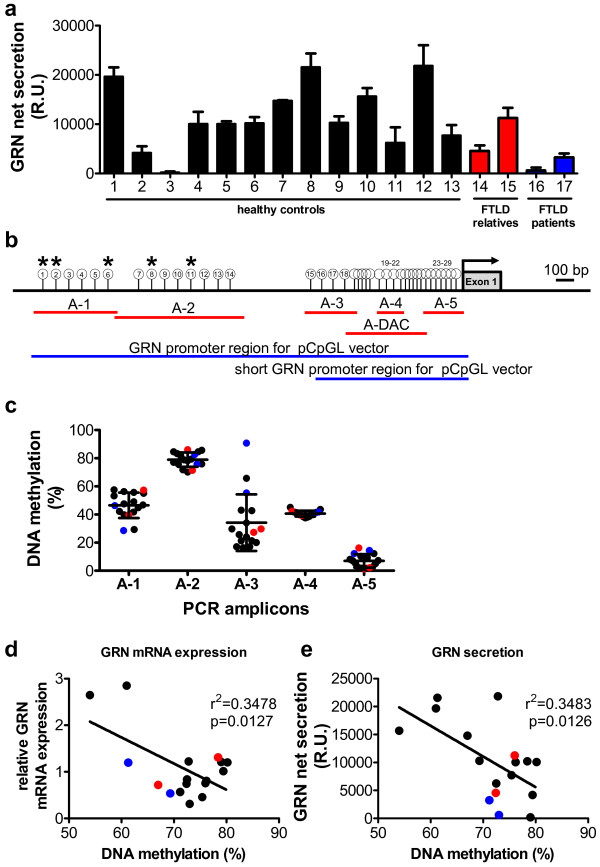
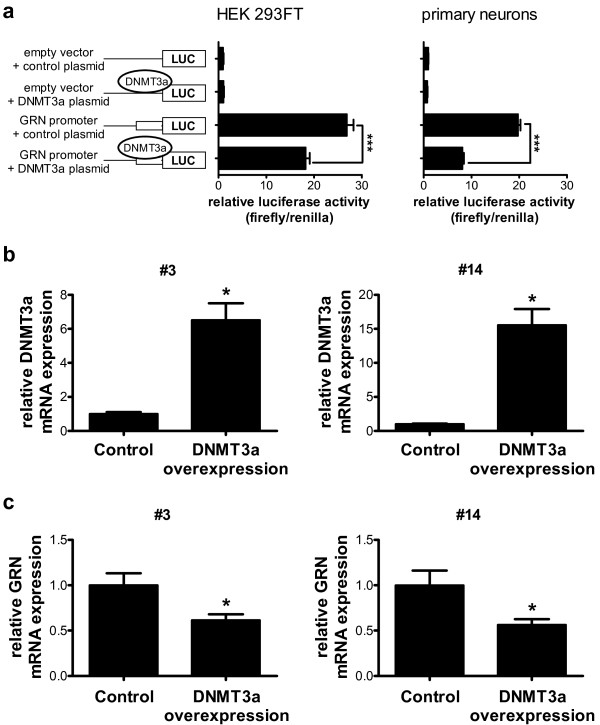
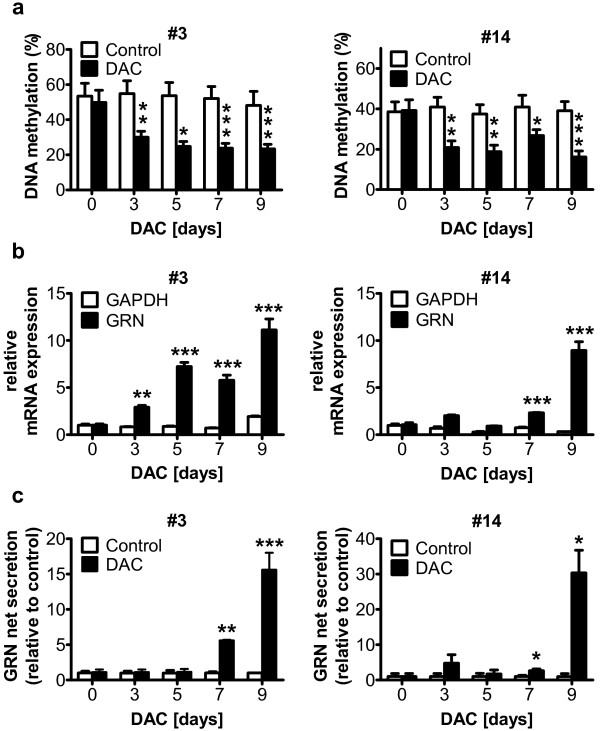
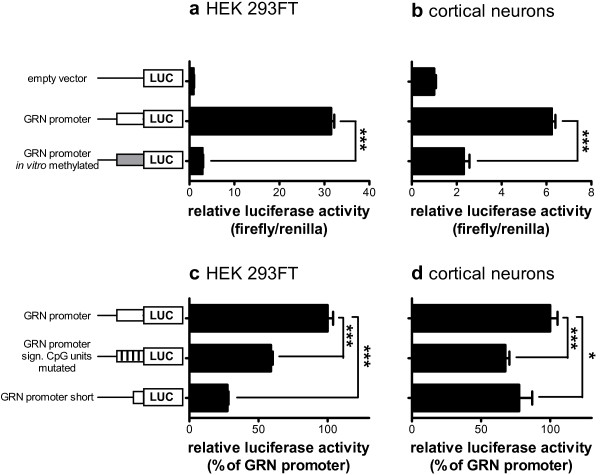
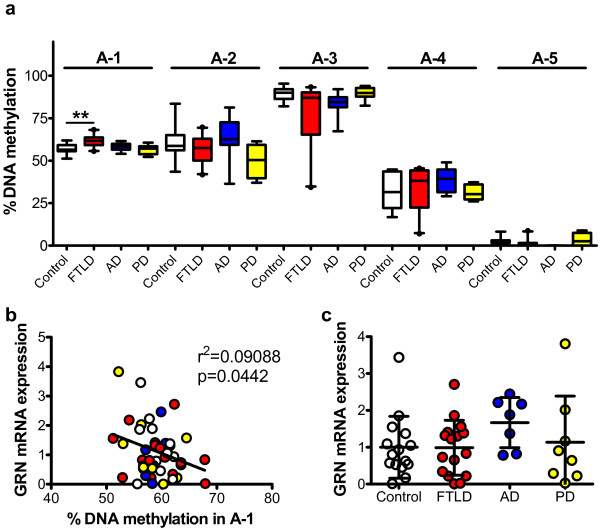
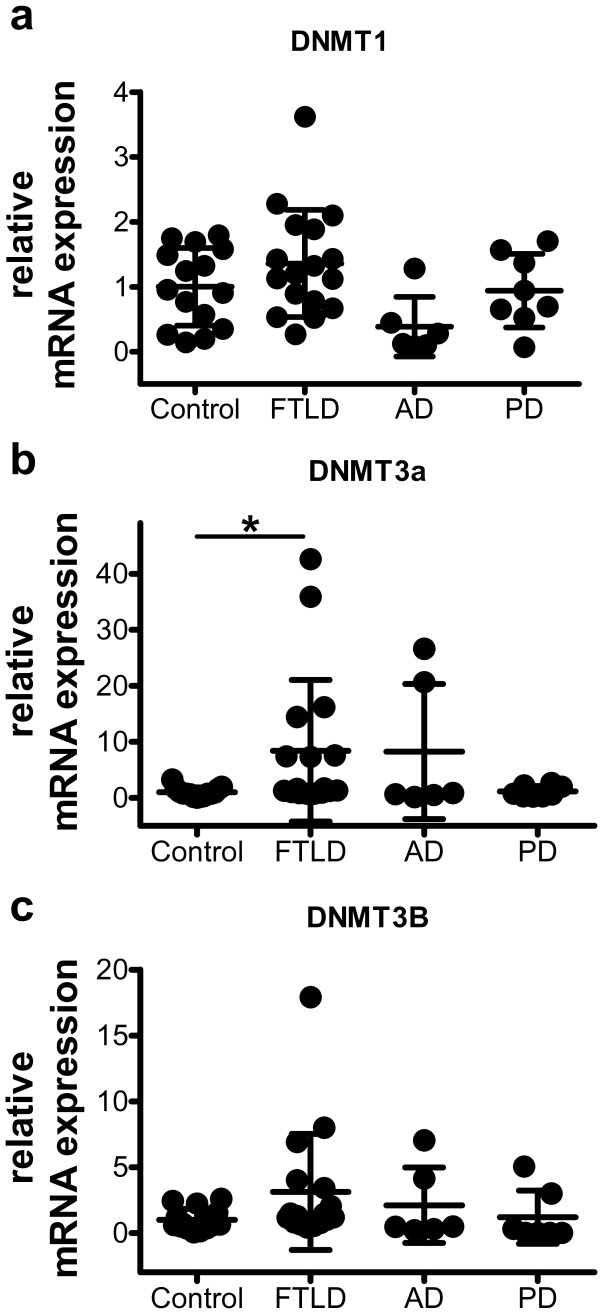
We analyzed whether DNA methylation in the GRN core promoter restricts GRN expression and, thus, might promote FTLD in the absence of GRN mutations. GRN expression in human lymphoblast cell lines is negatively correlated with methylation at several CpG units within the GRN promoter. Chronic treatment with the DNA methyltransferase inhibitor 5-aza-2'-deoxycytidine (DAC) strongly induces GRN mRNA and protein levels. In a reporter assay, CpG methylation blocks transcriptional activity of the GRN core promoter. In brains of FTLD patients several CpG units in the GRN promoter are significantly hypermethylated compared to age-matched healthy controls, Alzheimer and Parkinson patients. These CpG motifs are critical for GRN promoter activity in reporter assays. Furthermore, DNA methyltransferase 3a (DNMT3a) is upregulated in FTLD patients and overexpression of DNMT3a reduces GRN promoter activity and expression.
These data suggest that altered DNA methylation is a novel pathomechanism for FTLD that is potentially amenable to targeted pharmacotherapy.
额颞叶变性(FTLD)是一组与人格改变和进行性痴呆相关的异质性神经退行性疾病。生长因子颗粒体蛋白前体(GRN)的功能丧失性突变导致常染色体显性 FTLD,但迄今为止,散发性 FTLD 的发病机制尚不清楚。
我们分析了 GRN 核心启动子中的 DNA 甲基化是否限制了 GRN 的表达,从而在没有 GRN 突变的情况下促进 FTLD。人淋巴母细胞系中的 GRN 表达与 GRN 启动子内几个 CpG 单位的甲基化呈负相关。慢性 DNA 甲基转移酶抑制剂 5-氮杂-2'-脱氧胞苷(DAC)处理强烈诱导 GRN mRNA 和蛋白水平。在报告基因实验中,CpG 甲基化会阻断 GRN 核心启动子的转录活性。与年龄匹配的健康对照、阿尔茨海默病和帕金森病患者相比,FTLD 患者的 GRN 启动子中的几个 CpG 单位明显过度甲基化。这些 CpG 基序在报告基因实验中对 GRN 启动子活性至关重要。此外,FTLD 患者中 DNA 甲基转移酶 3a(DNMT3a)上调,DNMT3a 的过表达降低了 GRN 启动子活性和表达。
这些数据表明,改变的 DNA 甲基化是 FTLD 的一种新的发病机制,可能适合靶向药物治疗。