Abe Kazuhiro, Okuda Osamu, Ohishi Hidenori, Sonobe Makoto, Arai Hajime
Department of Neurosurgery, Juntendo Tokyo Koto Geriatric Medical Center.
Neurol Med Chir (Tokyo). 2014;54(2):145-9. doi: 10.2176/nmc.nmc-2012-0080. Epub 2013 Nov 20.
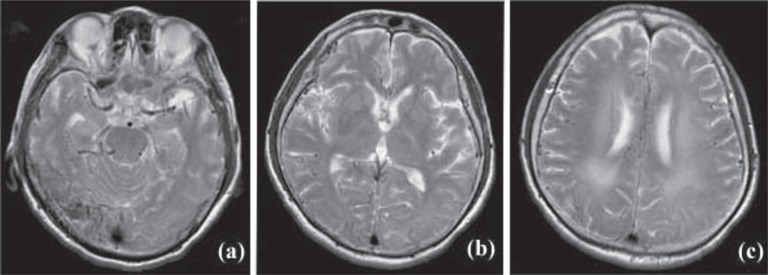
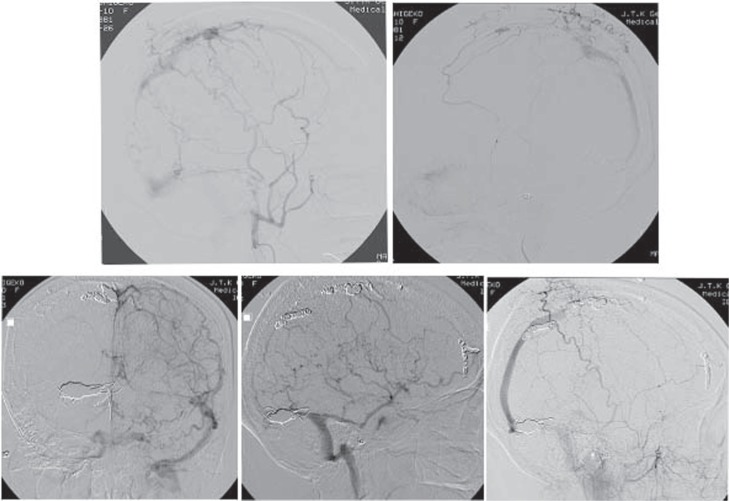
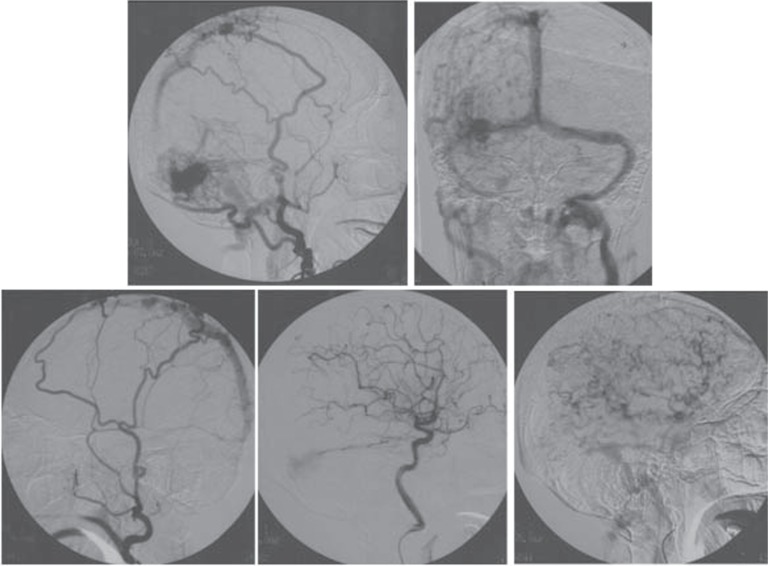
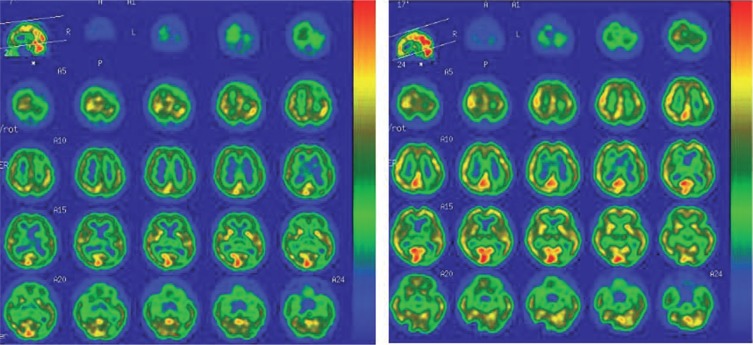
A 67-year-old female presented with multiple dural arteriovenous fistulas (AVFs) manifesting as dementia rapidly progressing over 2 months. The initial diagnosis was Creutzfeldt-Jakob disease based on the acute clinical course. However, angiography eventually revealed multiple dural AVFs involving the bilateral convexities to the superior sagittal sinus and the right transverse-sigmoid sinus. Endovascular treatment combining arterial and venous embolization in multiple stages proved to be effective, as the hemodynamic pathology improved, and the patient recovered from dementia. The cause of the dementia was thought to be venous hypertension in the deep white matter induced by the dural AVFs. Dural AVFs should be included in the differential diagnosis of rapidly progressive dementia.
一名67岁女性因多发硬脑膜动静脉瘘(AVF)就诊,表现为在2个月内迅速进展的痴呆。基于急性临床病程,初步诊断为克雅氏病。然而,血管造影最终显示多发硬脑膜AVF累及双侧凸面至上矢状窦以及右侧横窦-乙状窦。多阶段联合动脉和静脉栓塞的血管内治疗被证明是有效的,随着血流动力学病变改善,患者从痴呆中康复。痴呆的原因被认为是硬脑膜AVF引起的深部白质静脉高压。硬脑膜AVF应纳入快速进展性痴呆的鉴别诊断。