
DYT1肌张力障碍基因敲入小鼠模型纹状体GABA能神经元胞质钙动力学的微小变化。
Minimal Change in the cytoplasmic calcium dynamics in striatal GABAergic neurons of a DYT1 dystonia knock-in mouse model.
作者信息
Iwabuchi Sadahiro, Koh Jin-Young, Wang Kai, Ho K W David, Harata N Charles
机构信息
Department of Molecular Physiology and Biophysics, University of Iowa Carver College of Medicine, Iowa City, Iowa, United States of America.
出版信息
PLoS One. 2013 Nov 19;8(11):e80793. doi: 10.1371/journal.pone.0080793. eCollection 2013.
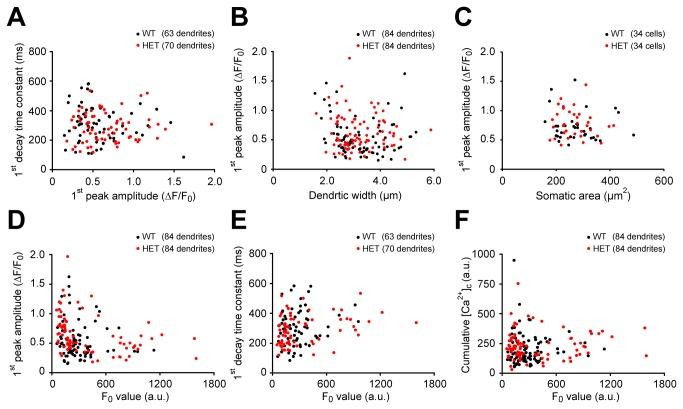
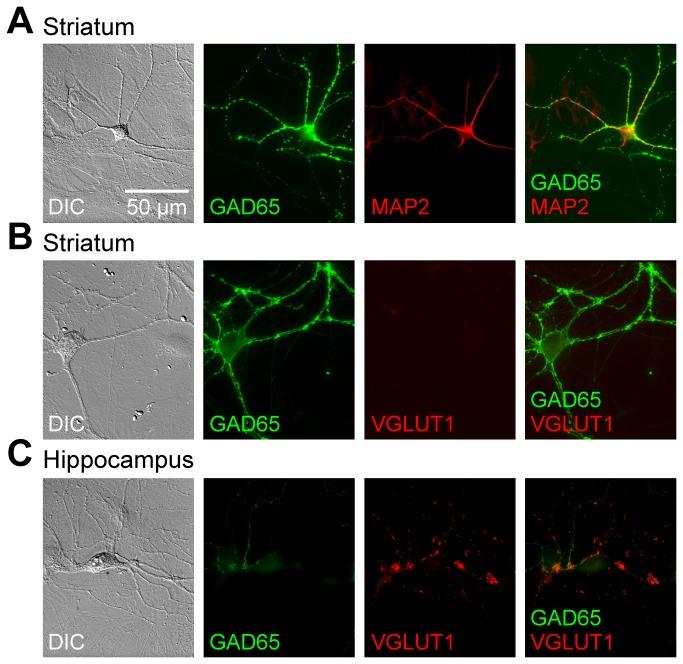
DYT1 dystonia is the most common hereditary form of primary torsion dystonia. This autosomal-dominant disorder is characterized by involuntary muscle contractions that cause sustained twisting and repetitive movements. It is caused by an in-frame deletion in the TOR1A gene, leading to the deletion of a glutamic acid residue in the torsinA protein. Heterozygous knock-in mice, which reproduce the genetic mutation in human patients, have abnormalities in synaptic transmission at the principal GABAergic neurons in the striatum, a brain structure that is involved in the execution and modulation of motor activity. However, whether this mutation affects the excitability of striatal GABAergic neurons has not been investigated in this animal model. Here, we examined the excitability of cultured striatal neurons obtained from heterozygous knock-in mice, using calcium imaging as indirect readout. Immunofluorescence revealed that more than 97% of these neurons are positive for a marker of GABAergic neurons, and that more than 92% are also positive for a marker of medium spiny neurons, indicating that these are mixed cultures of mostly medium spiny neurons and a few (~5%) GABAergic interneurons. When these neurons were depolarized by field stimulation, the calcium concentration in the dendrites increased rapidly and then decayed slowly. The amplitudes of calcium transients were larger in heterozygous neurons than in wild-type neurons, resulting in ~15% increase in cumulative calcium transients during a train of stimuli. However, there was no change in other parameters of calcium dynamics. Given that calcium dynamics reflect neuronal excitability, these results suggest that the mutation only slightly increases the excitability of striatal GABAergic neurons in DYT1 dystonia.
DYT1肌张力障碍是原发性扭转性肌张力障碍最常见的遗传形式。这种常染色体显性疾病的特征是肌肉不自主收缩,导致持续的扭转和重复性运动。它是由TOR1A基因的框内缺失引起的,导致torsinA蛋白中的一个谷氨酸残基缺失。杂合子敲入小鼠重现了人类患者的基因突变,其纹状体中主要的γ-氨基丁酸能(GABAergic)神经元的突触传递存在异常,纹状体是一个参与运动活动执行和调节的脑结构。然而,在这个动物模型中尚未研究这种突变是否会影响纹状体GABA能神经元的兴奋性。在这里,我们使用钙成像作为间接读数,检查了从杂合子敲入小鼠获得的培养纹状体神经元的兴奋性。免疫荧光显示,超过97%的这些神经元对GABA能神经元标记物呈阳性,超过92%的神经元对中等棘状神经元标记物也呈阳性,这表明这些是主要由中等棘状神经元和少数(约5%)GABA能中间神经元组成的混合培养物。当这些神经元通过场刺激去极化时,树突中的钙浓度迅速增加,然后缓慢衰减。杂合子神经元中钙瞬变的幅度比野生型神经元中的大,导致在一系列刺激期间累积钙瞬变增加约15%。然而,钙动力学的其他参数没有变化。鉴于钙动力学反映神经元兴奋性,这些结果表明该突变仅轻微增加了DYT1肌张力障碍中纹状体GABA能神经元的兴奋性。




 Zotero 插件