Institute of Crop Sciences / National Key Facility for Crop Gene Resources and Genetic Improvement, Chinese Academy of Agricultural Sciences, Beijing 100081, China.
Rice (N Y). 2013 Oct 5;6(1):23. doi: 10.1186/1939-8433-6-23.
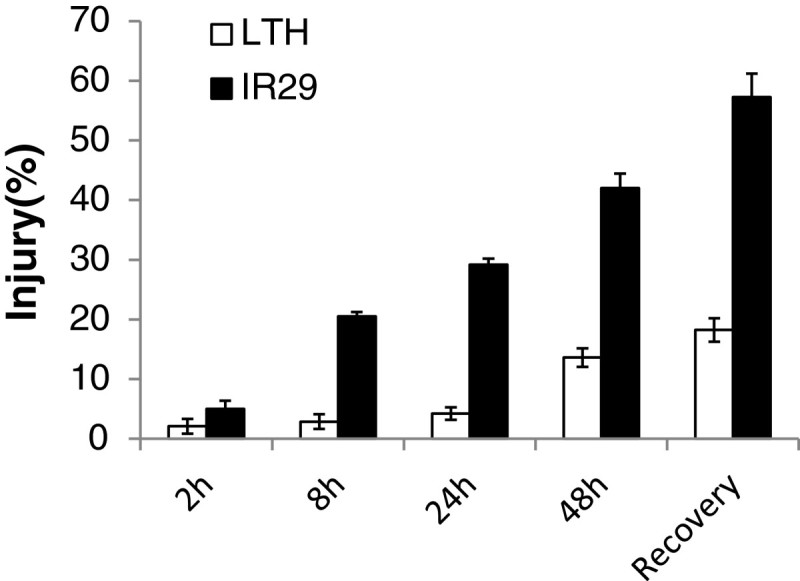
Chilling stress is a major factor limiting rice production. Rice genotypes differ greatly in their seedling chilling tolerance (CT), which is known to involve differential expression of large numbers of genes and proteins. To further understand the metabolomic responses of rice to chilling stress, profiles of the 106 primary metabolites of a CT japonica variety, Lijiangxintuanhegu (LTH) and a chilling sensitive indica line, IR29, were investigated under a time-series of chilling stress and non-stress control conditions at the seedling stage.
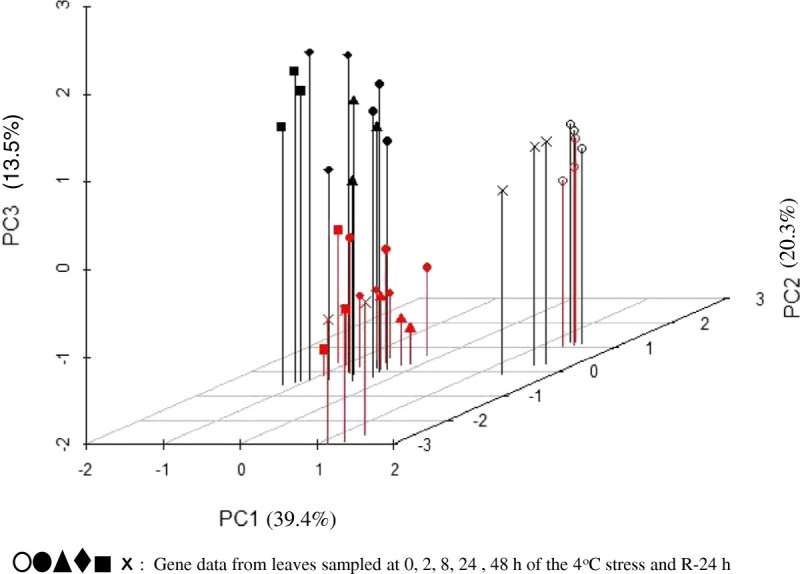
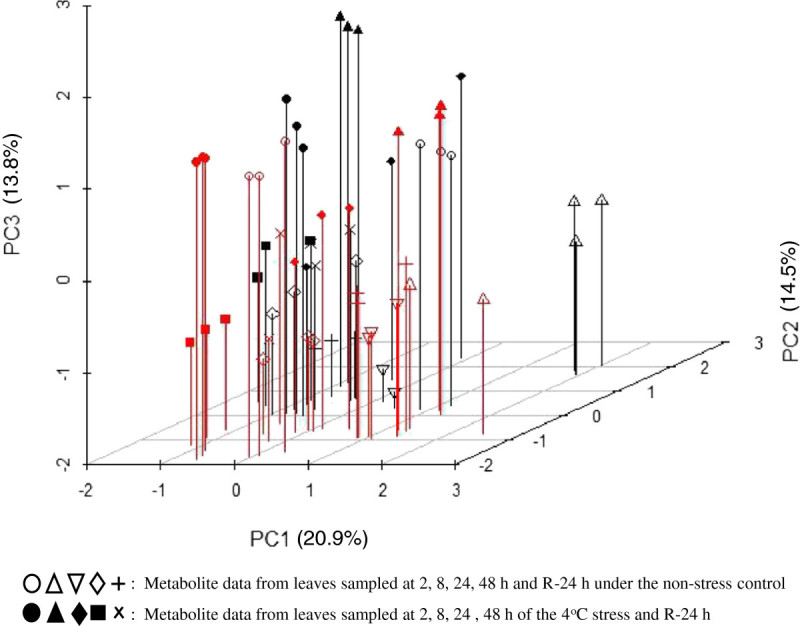
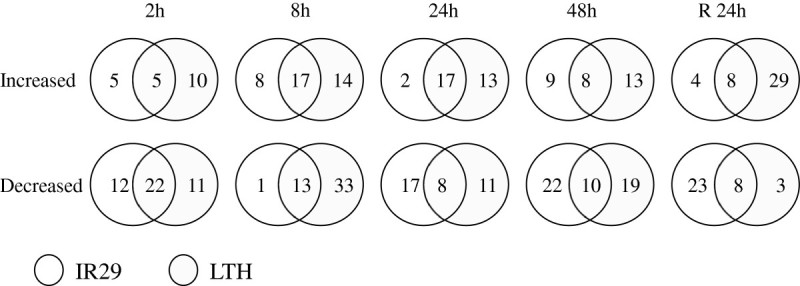
We identified 106 primary metabolites that were temporally and genotype-dependently regulated in LTH and IR29 under the time-series chilling stress and subsequent recovery. Three major groups of primary metabolites, amino acids (AAs), organic acids (OAs) and sugars, showed distinct change patterns in both genotypes in response to the chilling stress: a more general accumulation of most AAs, more dramatic decreased levels of most OAs, and greatly reduced levels for most sugars at early time points of stress but increased levels of specific sugars at the later time points of stress. Compared to IR29, LTH had more metabolites showing chilling induced changes, greater levels of these metabolomic changes and a greater ability to recover after stress, implying that LTH used a positive energy-saving strategy against chilling stress. During subsequent recovery, more metabolites were significantly and exclusively up-regulated in LTH, indicating their positive role in chilling tolerance. A comparative analysis of these metabolites data and differentially expressed genes data allowed identification of 7 AAs and related genes that were both chilling responsive and contributed greatly to the CT of LTH.
The metabolomic responses of rice to chilling stress at the seedling stage were dynamic and involved large numbers of the metabolites. The chilling induced changes of three major groups of metabolites, AAs, OAs and sugars, in rice were well coordinated. The high level seedling CT of LTH was apparently attributed to its increased levels of most AAs and reduced energy consumption that resulted in increased glycolysis and strong resilience on recovery. The results of this study extend our understanding of molecular mechanisms of chilling stress tolerance in rice.
冷胁迫是限制水稻产量的主要因素。水稻基因型在幼苗耐冷性(CT)方面差异很大,这与大量基因和蛋白质的差异表达有关。为了进一步了解水稻对冷胁迫的代谢组学反应,在幼苗阶段,对 CT 粳稻品种丽江新团黑谷(LTH)和冷敏感籼稻品种 IR29 在时间序列冷胁迫和非胁迫对照条件下的 106 种主要代谢物的图谱进行了研究。
我们鉴定出 106 种主要代谢物,它们在 LTH 和 IR29 中随时间序列冷胁迫和随后的恢复而受到时间和基因型的调节。在两种基因型中,三大类主要代谢物(氨基酸(AAs)、有机酸(OAs)和糖)对冷胁迫的反应表现出不同的变化模式:大多数 AAs 的积累更普遍,大多数 OAs 的水平下降更为剧烈,大多数糖的水平在胁迫的早期阶段大大降低,但在胁迫的后期阶段特定糖的水平增加。与 IR29 相比,LTH 有更多的代谢物表现出冷诱导的变化,这些代谢组学变化的水平更大,胁迫后恢复的能力更强,这意味着 LTH 采用了一种积极的节能策略来抵御冷胁迫。在随后的恢复过程中,LTH 中更多的代谢物显著上调,这表明它们在冷耐性中的积极作用。对这些代谢物数据和差异表达基因数据进行比较分析,鉴定出 7 种 AA 和相关基因,它们既对冷胁迫有反应,又对 LTH 的 CT 有很大贡献。
水稻幼苗期对冷胁迫的代谢组学反应是动态的,涉及大量代谢物。三大类代谢物(AAs、OAs 和糖)的冷诱导变化在水稻中得到了很好的协调。LTH 高水平的幼苗 CT 显然归因于其大多数 AAs 水平的增加和能量消耗的降低,这导致了糖酵解的增加和恢复后的强烈弹性。本研究的结果扩展了我们对水稻冷胁迫耐受分子机制的理解。