Unit of Respiratory Immunopharmacology, Department of Experimental Medical Sciences, Lund University, Lund, Sweden.
Allergy. 2014 Mar;69(3):348-58. doi: 10.1111/all.12329. Epub 2013 Nov 28.
Rhinovirus infection or dsRNA stimulation increased thymic stromal lymphopoietin (TSLP), an upstream pro-allergic cytokine, in asthmatic bronchial epithelial cells. We hypothesized that dsRNA challenges superimposed on established experimental allergic asthma constitute a useful exacerbation model. We further hypothesized that TSLP is induced at dsRNA- and rhinoviral infection-induced exacerbations.
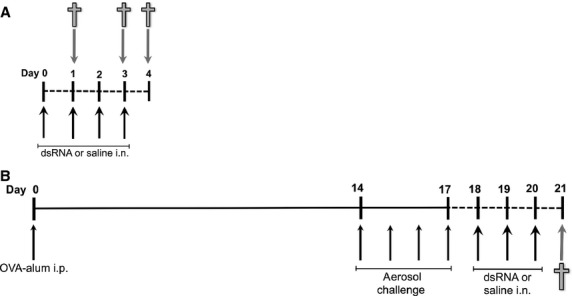
Allergic mice were challenged with OVA followed by three daily intranasal challenges with dsRNA or saline. Bronchoalveolar lavage fluid (BALF) was analysed for total protein, lactate dehydrogenase (LDH), CXCL1/KC, CCL2/MCP-1 and differential cell counts. Lung tissue histology, neutrophils and TSLP, TNF-α, IFN-β and IFN-λ mRNA were examined. Alternatively, allergen-challenged mice received intranasal rhinovirus-(RV)-1B followed by lung TSLP immunostaining.
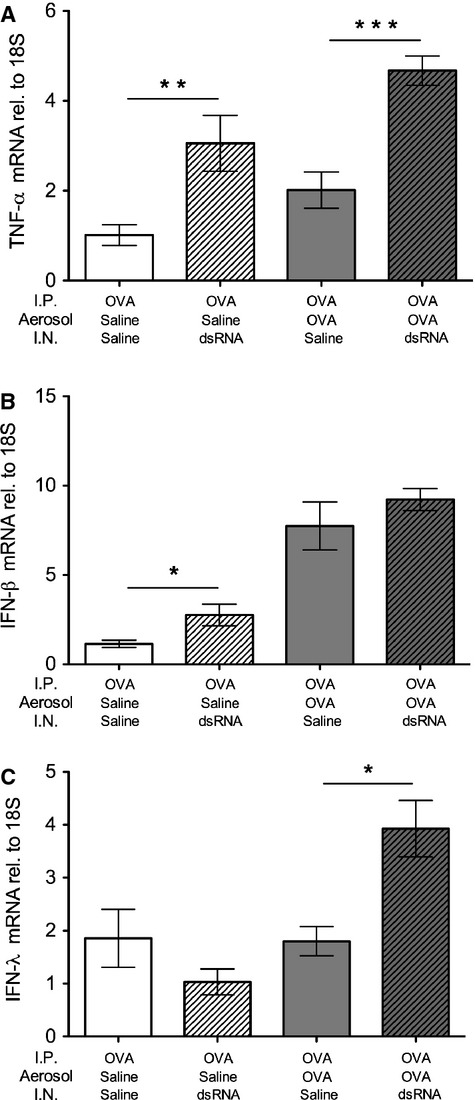
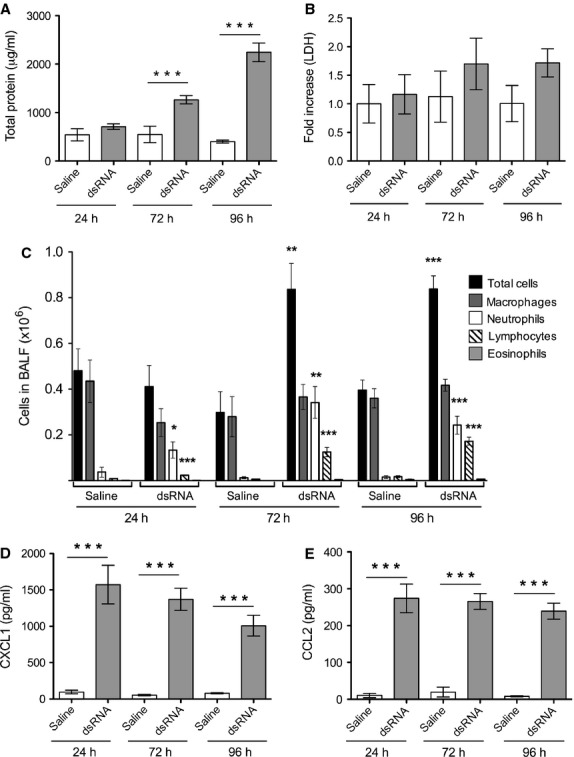
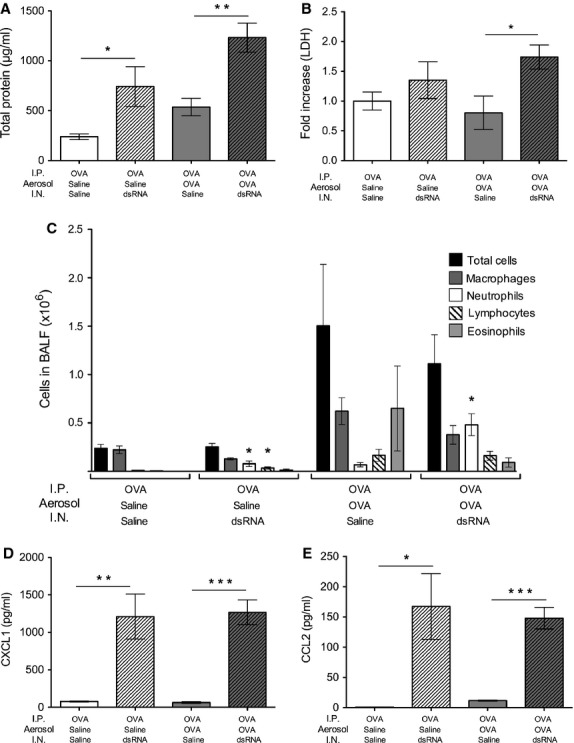
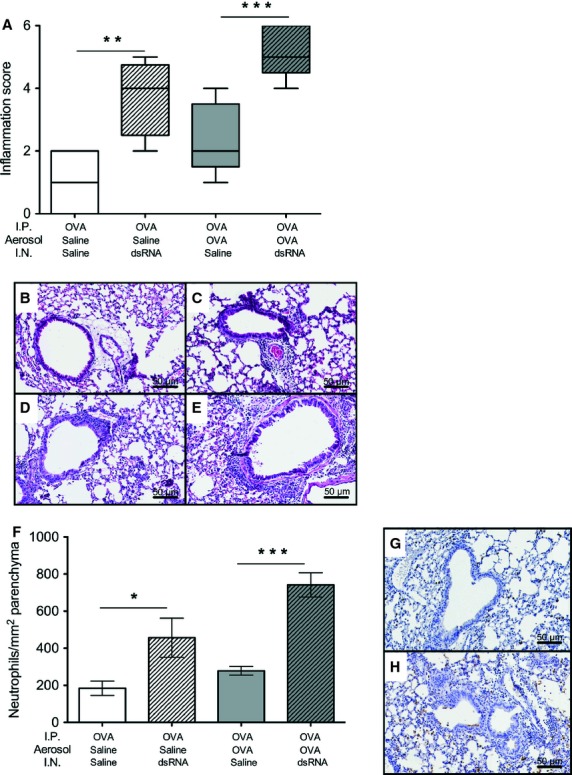
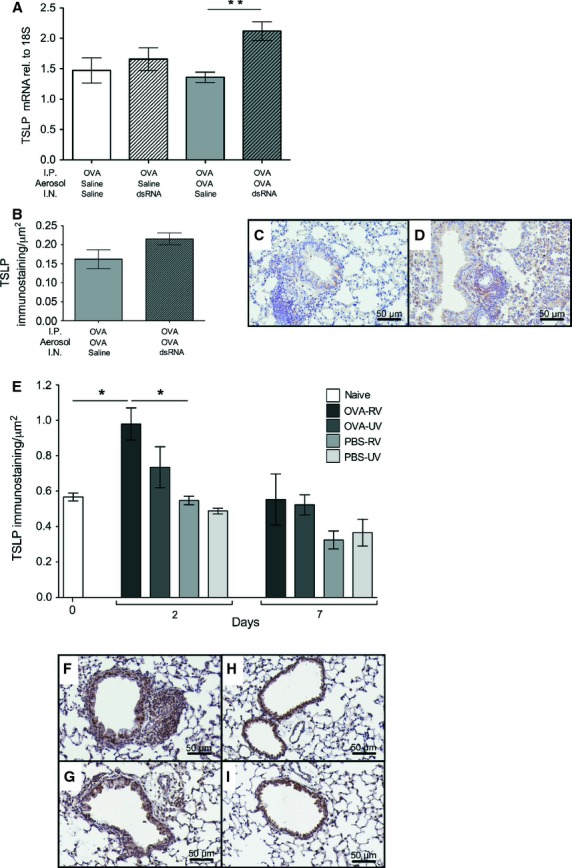
In mice with allergic airway inflammation, dsRNA challenges caused a significant exacerbation increasing lung tissue inflammation score and tissue neutrophilia. Bronchoalveolar lavage fluid neutrophils, total protein, LDH, CXCL1/KC and CCL2/MCP-1 were also increased (P < 0.01), and so were lung tissue expressions of TNF-α, IFN-λ and TSLP (P < 0.01), but IFN-β was not increased. TSLP, IFN-λ and LDH were not increased by allergen or dsRNA challenges alone, but increased exclusively at exacerbations. RV1B infection-induced exacerbation also increased lung tissue TSLP (P < 0.05).
dsRNA-induced exacerbation in mice with experimental asthma involved general inflammation, cytokines and interferons, in agreement with previous observations in exacerbating human asthma. Additionally, both dsRNA and RV1B infection increased lung TSLP exclusively at exacerbations. Our data suggest that dsRNA challenges superimposed on allergic inflammation are suited for pharmacological studies of asthma exacerbations including the regulation of lung tissue TSLP, TNF-α, IFN-β and IFN-λ.
鼻病毒感染或双链 RNA 刺激会增加哮喘支气管上皮细胞中的胸腺基质淋巴细胞生成素 (TSLP),这是一种上游促过敏细胞因子。我们假设,在已建立的过敏性哮喘基础上叠加双链 RNA 挑战构成了一种有用的加重模型。我们进一步假设 TSLP 在双链 RNA 和鼻病毒感染引起的加重中被诱导。
用 OVA 对过敏性小鼠进行攻毒,然后用双链 RNA 或盐水进行每日 3 次的鼻腔内挑战。分析支气管肺泡灌洗液 (BALF) 中的总蛋白、乳酸脱氢酶 (LDH)、CXCL1/KC、CCL2/MCP-1 和细胞分类计数。检查肺组织学、中性粒细胞和 TSLP、TNF-α、IFN-β 和 IFN-λ mRNA。或者,用鼻病毒 (RV)-1B 对过敏原攻毒的小鼠进行鼻腔内处理,然后对肺 TSLP 进行免疫染色。
在有过敏性气道炎症的小鼠中,双链 RNA 挑战会引起明显的加重,导致肺组织炎症评分和组织中性粒细胞增多。BALF 中的中性粒细胞、总蛋白、LDH、CXCL1/KC 和 CCL2/MCP-1 也增加(P<0.01),TNF-α、IFN-λ 和 TSLP 的肺组织表达也增加(P<0.01),但 IFN-β 没有增加。过敏原或双链 RNA 单独挑战均未引起 TSLP、IFN-λ 和 LDH 增加,但仅在加重时增加。RV1B 感染诱导的加重也增加了肺组织中的 TSLP(P<0.05)。
在实验性哮喘的小鼠中,双链 RNA 引起的加重涉及一般炎症、细胞因子和干扰素,这与先前观察到的人类哮喘加重情况一致。此外,双链 RNA 和 RV1B 感染仅在加重时增加肺 TSLP。我们的数据表明,在过敏性炎症基础上叠加双链 RNA 挑战适合用于哮喘加重的药理学研究,包括调节肺组织 TSLP、TNF-α、IFN-β 和 IFN-λ。