Department of Dermatology, New York University School of Medicine, New York, NY 10016, USA.
Pharmaceuticals (Basel). 2013 Nov 11;6(11):1429-50. doi: 10.3390/ph6111429.
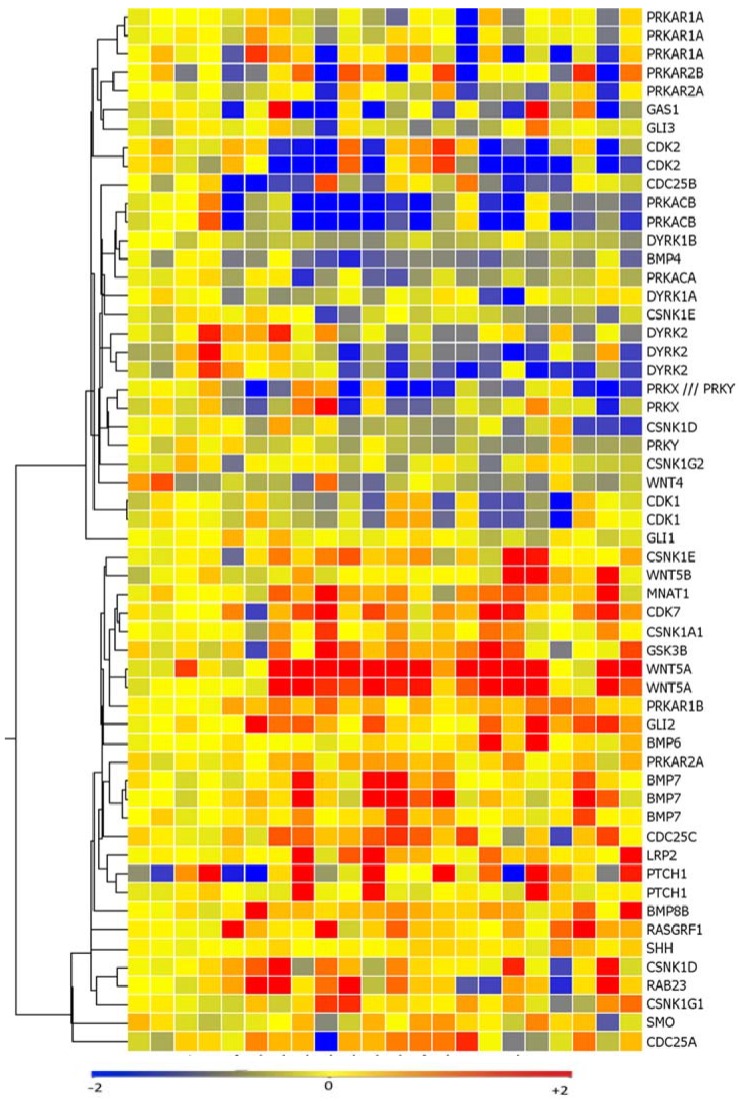
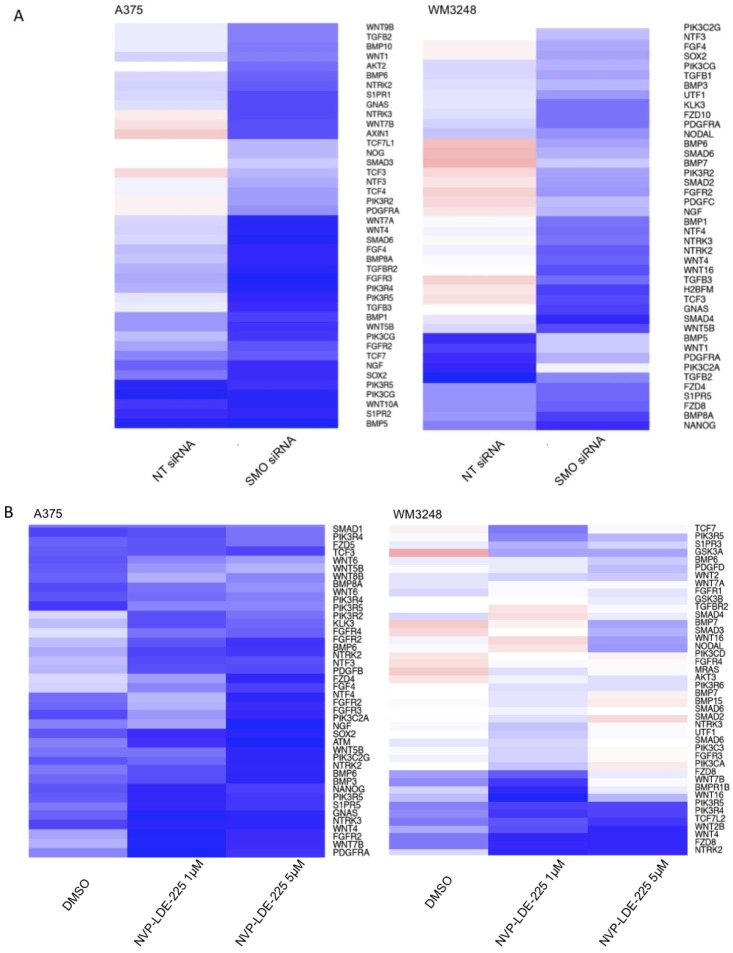
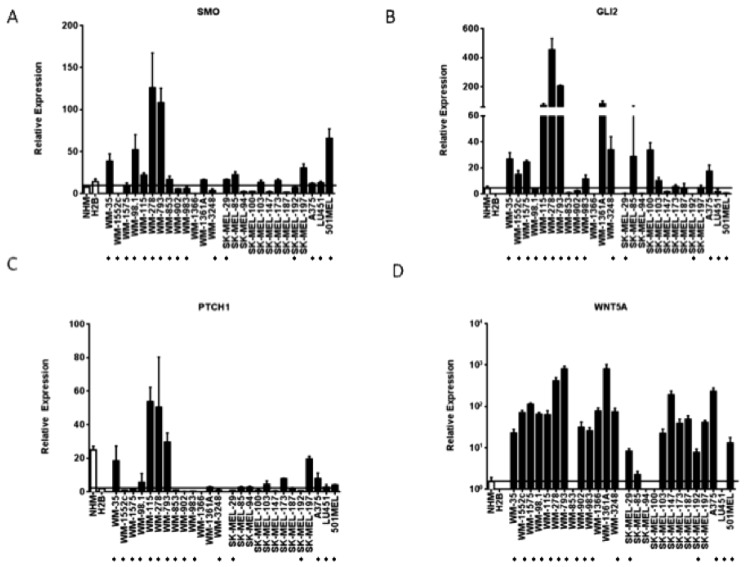
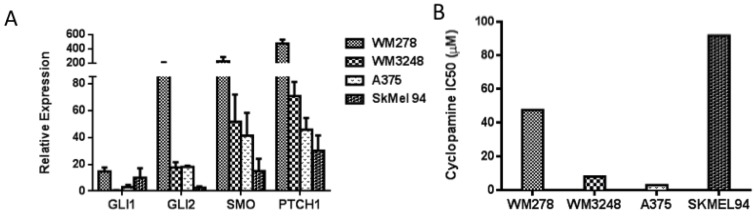
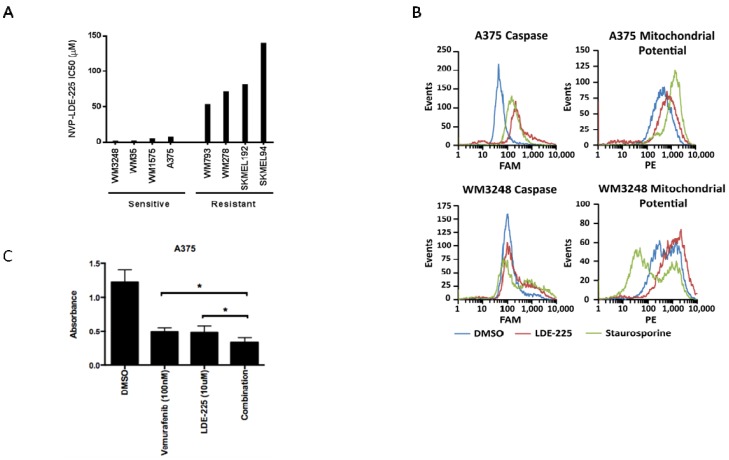
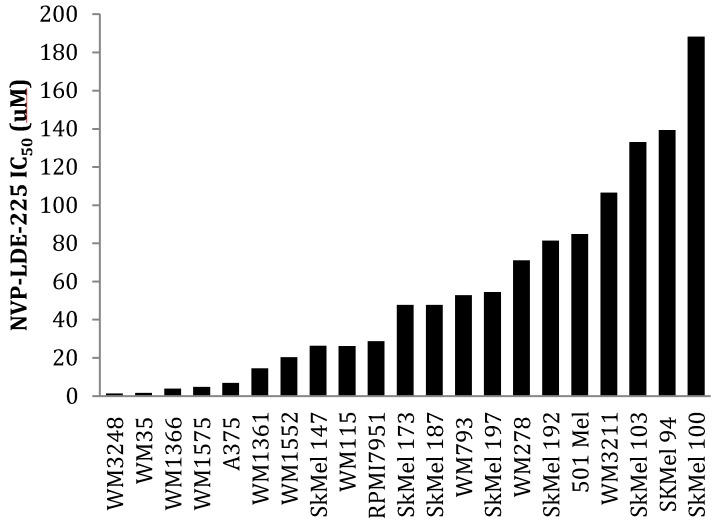
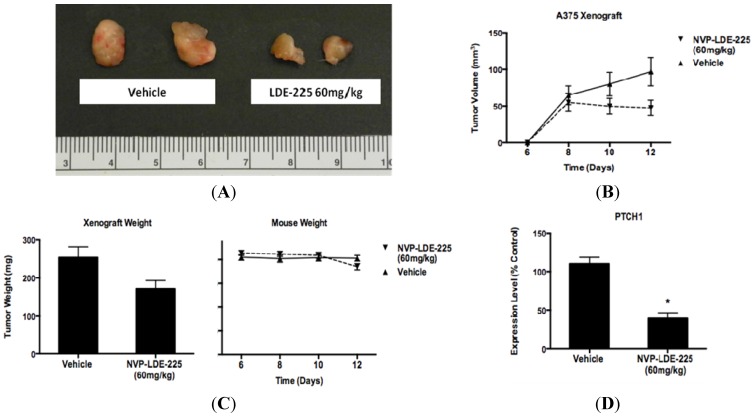
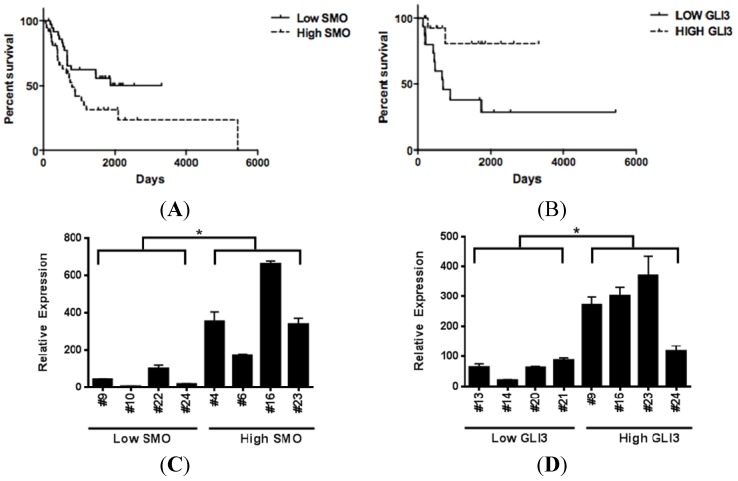
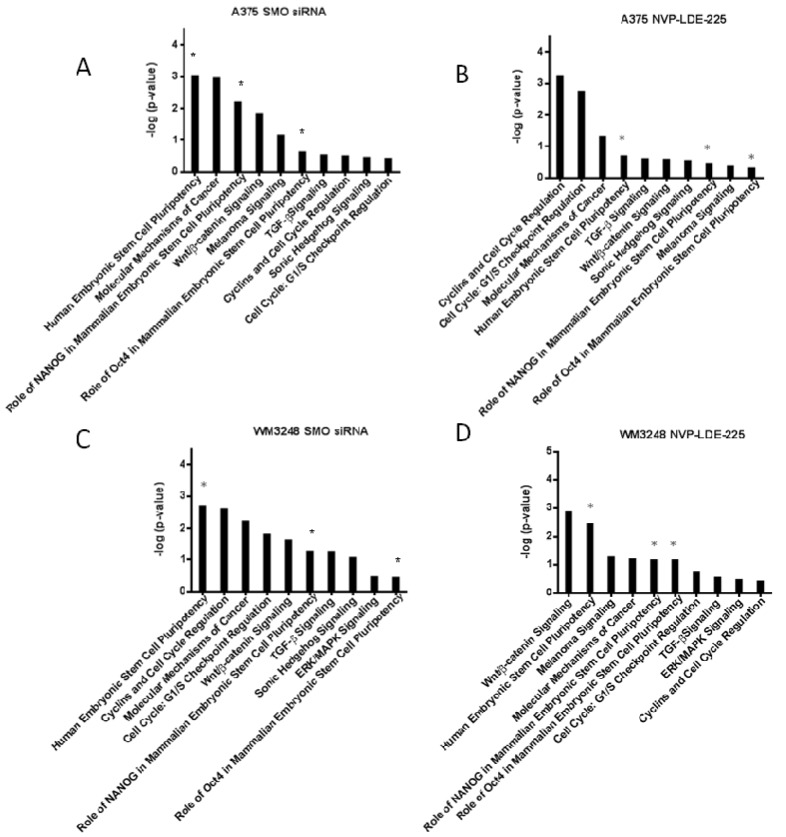
Previous reports have demonstrated a role for hedgehog signaling in melanoma progression, prompting us to explore the therapeutic benefit of targeting this pathway in melanoma. We profiled a panel of human melanoma cell lines and control melanocytes for altered expression of hedgehog pathway members and determined the consequences of both genetic and pharmacological inhibition of the hedgehog pathway activator Smoothened (SMO) in melanoma, both in vitro and in vivo. We also examined the relationship between altered expression of hedgehog pathway mediators and survival in a well-characterized cohort of metastatic melanoma patients with prospectively collected follow up information. Studies revealed that over 40% of the melanoma cell lines examined harbored significantly elevated levels of the hedgehog pathway mediators SMO, GLI2, and PTCH1 compared to melanocytes (p < 0.05). SMO inhibition using siRNA and the small molecule inhibitor, NVP-LDE-225, suppressed melanoma growth in vitro, particularly in those cell lines with moderate SMO and GLI2 expression. NVP-LDE-225 also induced apoptosis in vitro and inhibited melanoma growth in a xenograft model. Gene expression data also revealed evidence of compensatory up-regulation of two other developmental pathways, Notch and WNT, in response to hedgehog pathway inhibition. Pharmacological and genetic SMO inhibition also downregulated genes involved in human embryonic stem cell pluripotency. Finally, increased SMO expression and decreased expression of the hedgehog pathway repressor GLI3 correlated with shorter post recurrence survival in metastatic melanoma patients. Our data demonstrate that hedgehog pathway inhibition might be a promising targeted therapy in appropriately selected metastatic melanoma patients.
先前的报告表明,刺猬信号通路在黑色素瘤的进展中发挥了作用,促使我们探索靶向该通路治疗黑色素瘤的益处。我们对一组人类黑色素瘤细胞系和对照黑素细胞进行了分析,以确定刺猬信号通路成员的表达变化,并确定在体外和体内对刺猬信号通路激活剂 Smoothened(SMO)进行遗传和药理学抑制的后果。我们还检查了在具有前瞻性收集随访信息的特征明确的转移性黑色素瘤患者队列中,刺猬信号通路介质表达改变与生存之间的关系。研究表明,与黑素细胞相比,超过 40%的所检查的黑色素瘤细胞系中刺猬信号通路介质 SMO、GLI2 和 PTCH1 的水平显著升高(p < 0.05)。使用 siRNA 和小分子抑制剂 NVP-LDE-225 抑制 SMO 可抑制黑色素瘤在体外的生长,尤其是在 SMO 和 GLI2 表达中度的细胞系中。NVP-LDE-225 还可诱导体外凋亡并抑制异种移植模型中的黑色素瘤生长。基因表达数据还表明,在刺猬信号通路抑制后,有证据表明另外两个发育途径 Notch 和 WNT 的代偿性上调。药理学和遗传学 SMO 抑制也下调了与人类胚胎干细胞多能性相关的基因。最后,SMO 表达增加和刺猬信号通路抑制剂 GLI3 的表达减少与转移性黑色素瘤患者复发后生存时间缩短相关。我们的数据表明,刺猬信号通路抑制可能是适当选择的转移性黑色素瘤患者有前途的靶向治疗方法。