Lee Youn-Bok, Chen Han-Jou, Peres João N, Gomez-Deza Jorge, Attig Jan, Stalekar Maja, Troakes Claire, Nishimura Agnes L, Scotter Emma L, Vance Caroline, Adachi Yoshitsugu, Sardone Valentina, Miller Jack W, Smith Bradley N, Gallo Jean-Marc, Ule Jernej, Hirth Frank, Rogelj Boris, Houart Corinne, Shaw Christopher E
Department of Clinical Neuroscience, King's College London, Institute of Psychiatry, London SE5 8AF, UK.
MRC Centre for Developmental Neurobiology, London SE1 1UL, UK.
Cell Rep. 2013 Dec 12;5(5):1178-86. doi: 10.1016/j.celrep.2013.10.049. Epub 2013 Nov 27.
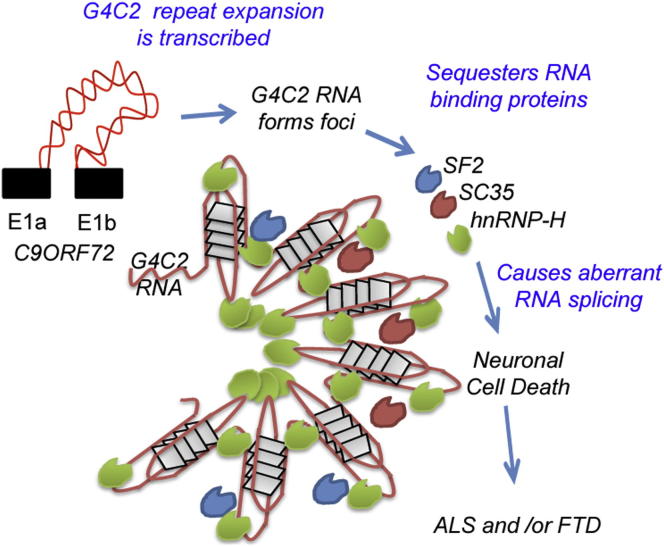
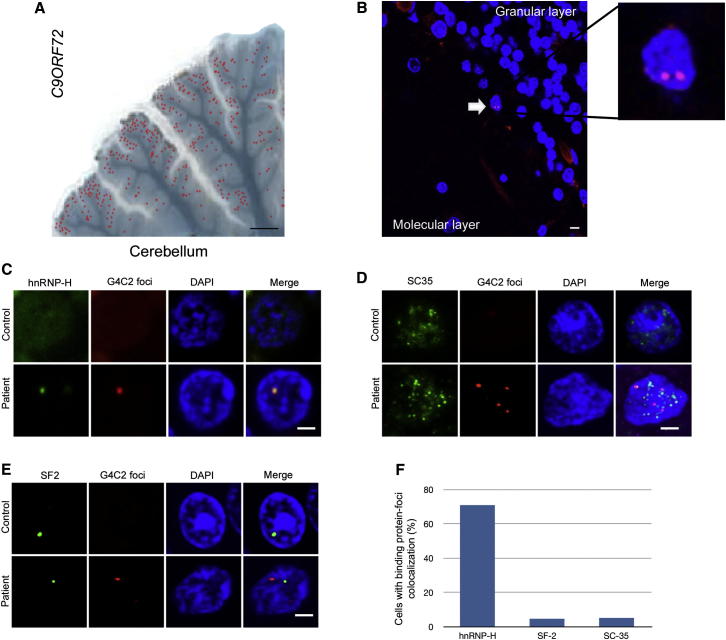
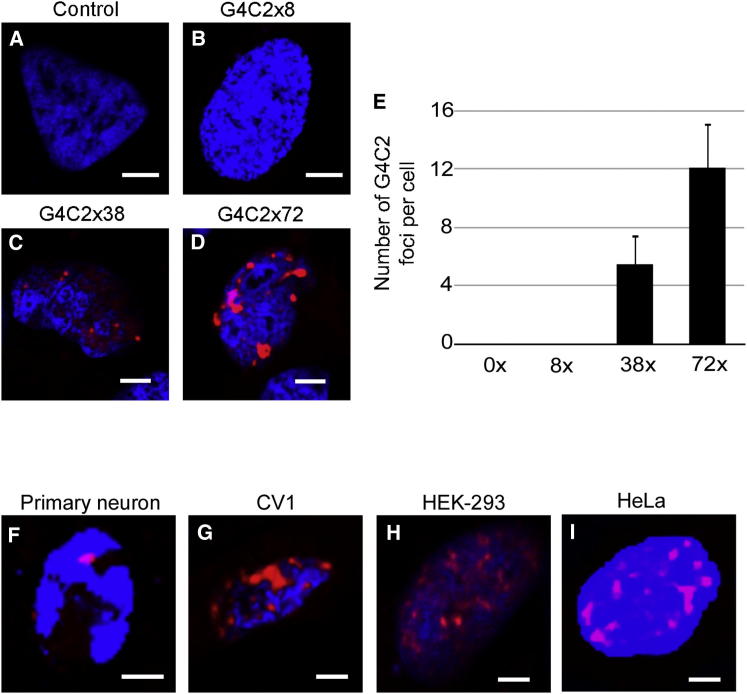
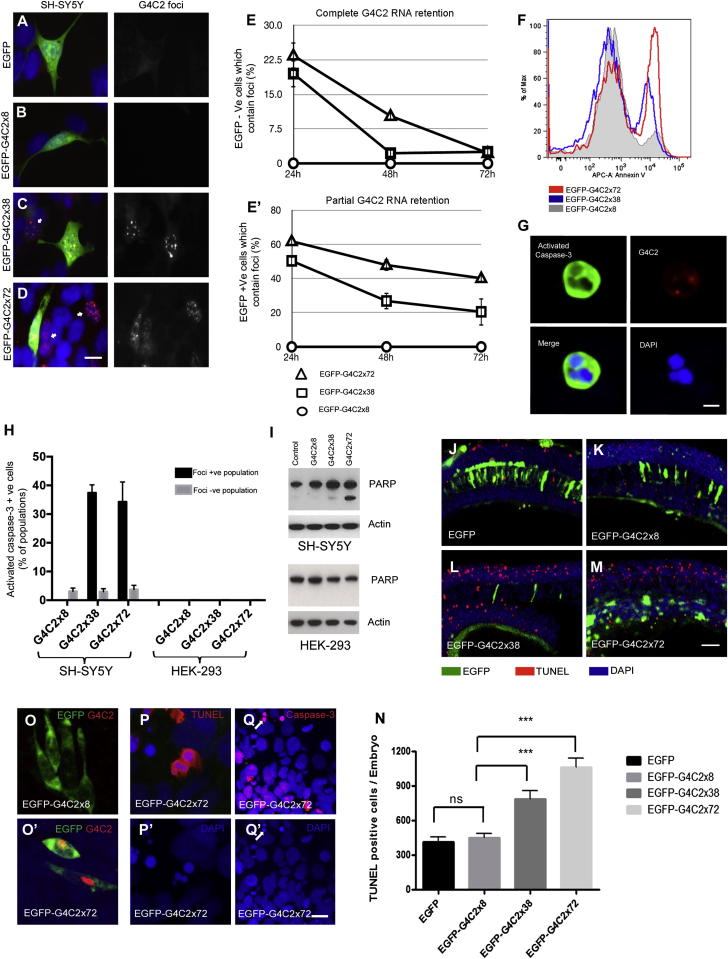
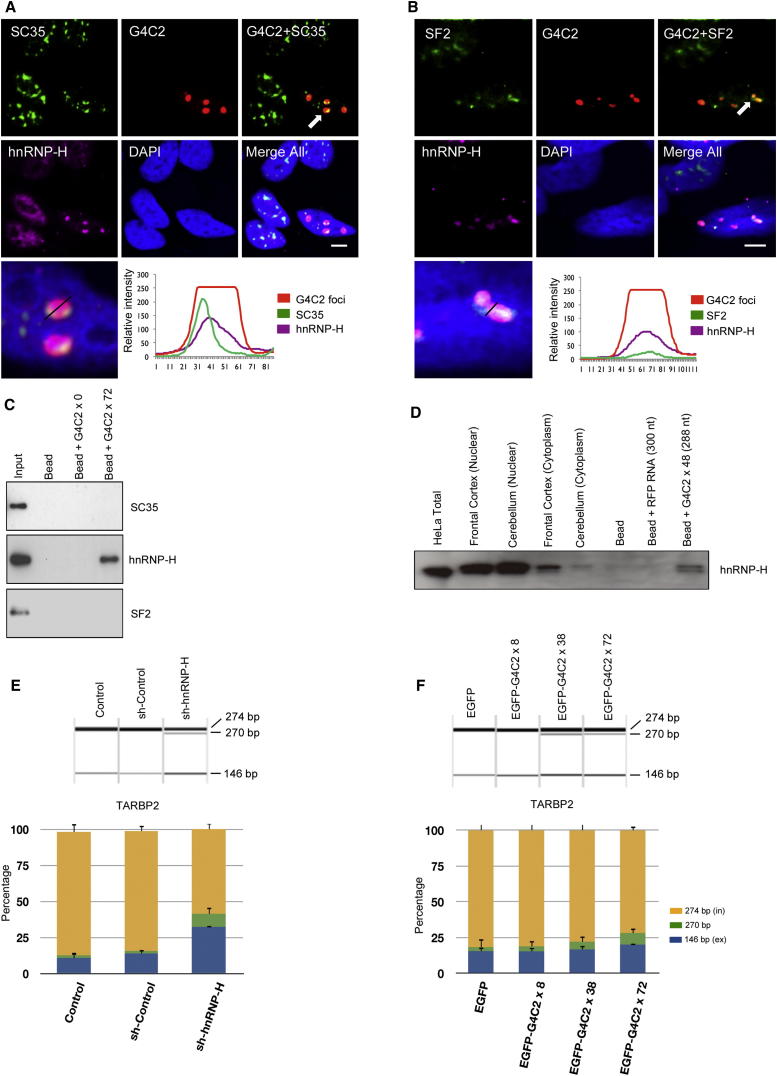
The GGGGCC (G4C2) intronic repeat expansion within C9ORF72 is the most common genetic cause of amyotrophic lateral sclerosis (ALS) and frontotemporal dementia (FTD). Intranuclear neuronal RNA foci have been observed in ALS and FTD tissues, suggesting that G4C2 RNA may be toxic. Here, we demonstrate that the expression of 38× and 72× G4C2 repeats form intranuclear RNA foci that initiate apoptotic cell death in neuronal cell lines and zebrafish embryos. The foci colocalize with a subset of RNA binding proteins, including SF2, SC35, and hnRNP-H in transfected cells. Only hnRNP-H binds directly to G4C2 repeats following RNA immunoprecipitation, and only hnRNP-H colocalizes with 70% of G4C2 RNA foci detected in C9ORF72 mutant ALS and FTD brain tissues. We show that expanded G4C2 repeats are potently neurotoxic and bind hnRNP-H and other RNA binding proteins. We propose that RNA toxicity and protein sequestration may disrupt RNA processing and contribute to neurodegeneration.
C9ORF72基因内的GGGGCC(G4C2)内含子重复序列扩增是肌萎缩侧索硬化症(ALS)和额颞叶痴呆(FTD)最常见的遗传病因。在ALS和FTD组织中观察到核内神经元RNA病灶,提示G4C2 RNA可能具有毒性。在此,我们证明38×和72×G4C2重复序列的表达形成核内RNA病灶,可引发神经元细胞系和斑马鱼胚胎中的凋亡性细胞死亡。在转染细胞中,这些病灶与包括SF2、SC35和hnRNP-H在内的一部分RNA结合蛋白共定位。RNA免疫沉淀后,只有hnRNP-H直接与G4C2重复序列结合,并且只有hnRNP-H与在C9ORF72突变型ALS和FTD脑组织中检测到的70%的G4C2 RNA病灶共定位。我们表明,扩增的G4C2重复序列具有强烈的神经毒性,可结合hnRNP-H和其他RNA结合蛋白。我们提出,RNA毒性和蛋白质隔离可能会破坏RNA加工并导致神经退行性变。