Dept. Neuro-Oncology, University and City of Health and Science Hospital of Turin, Via Cherasco 15, 10126, Turin, Italy,
J Neurooncol. 2014 Feb;116(3):533-41. doi: 10.1007/s11060-013-1317-x. Epub 2013 Dec 1.
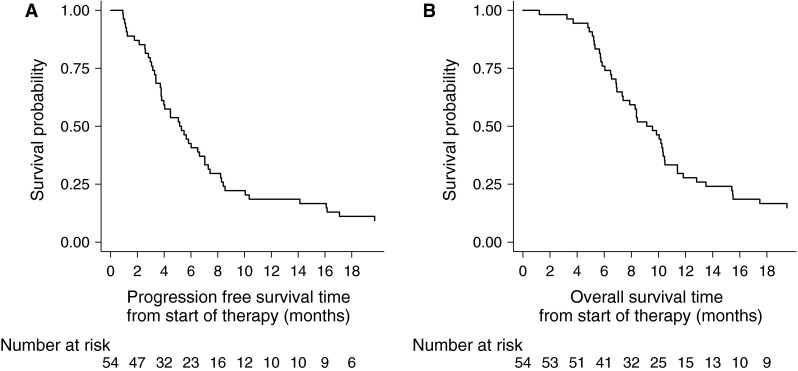
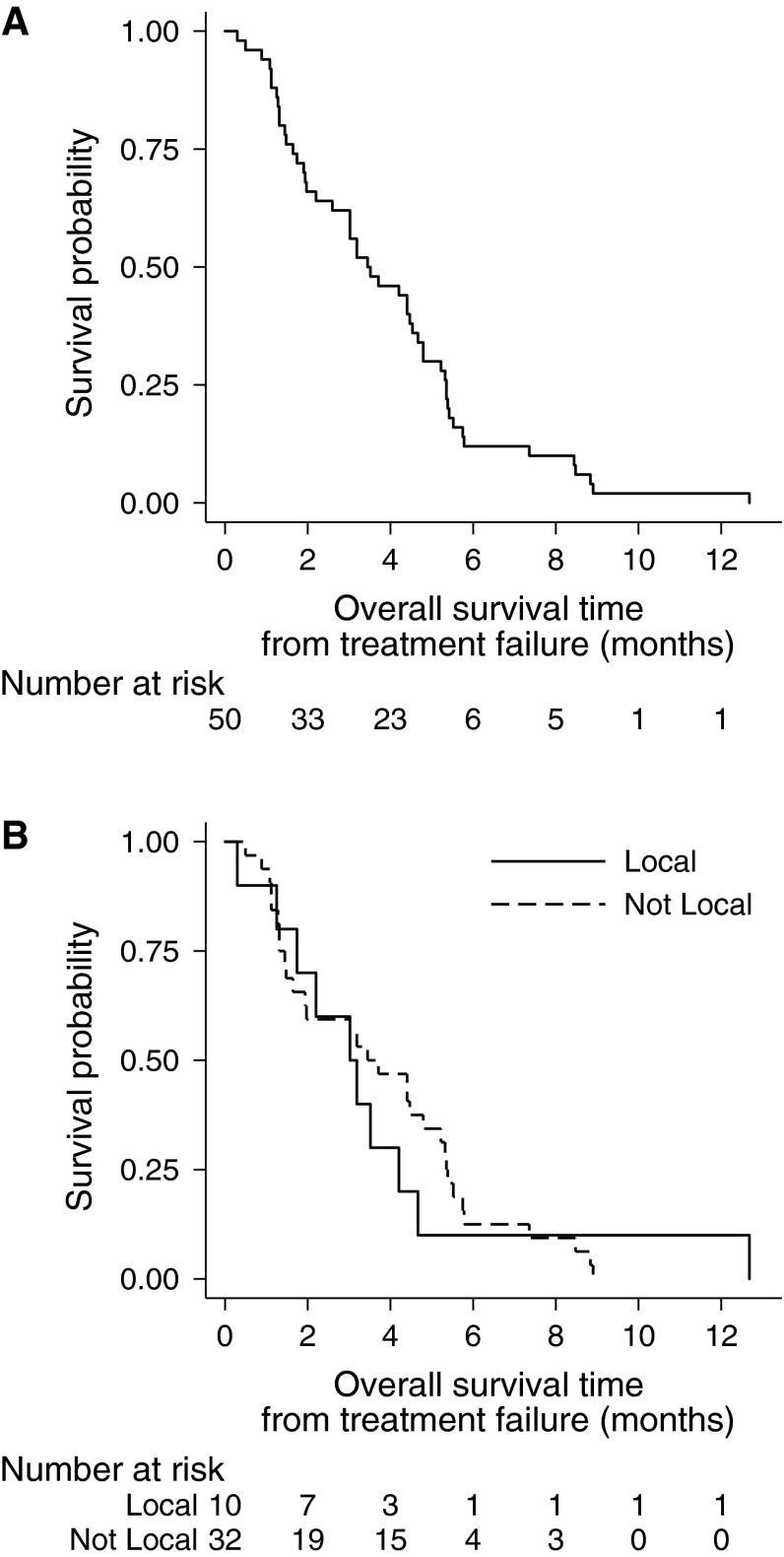
The optimal combination of bevacizumab with cytotoxic or cytostatic drugs in recurrent glioblastoma is unknown. We performed a phase 2 trial of combined bevacizumab and fotemustine for patients with glioblastoma at first relapse after radiotherapy and temozolomide. The primary endpoint was 6-month progression-free survival (PFS), while secondary endpoints were overall survival (OS), response rate based on RANO criteria and toxicity. Fifty-four patients with recurrent GBM were enrolled. The authors observed a 6-month PFS rate of 42.6% (95% CI 29.3-55.2) and a median PFS of 5.2 months (95% CI 3.8-6.6). The median OS was 9.1 months (95% CI 7.3-10.3). Twenty-eight patients (52%) had a radiographic response, and a significant neurological improvement with steroid reduction was observed in 25/42 symptomatic patients (60%). MGMT promoter methylation was significantly associated with improved PFS in univariate analysis. Most unifocal tumors at baseline had a focal enhancing progression (76%), while the diffuse non-enhancing progression accounted for 9.5%. Response or survival were not associated with any pattern of progression. Survival after failure of treatment was short. Twelve out of 54 patients (22%) discontinued fotemustine for grade 3/4 myelotoxicity, while 4/54 (7.4%) discontinued bevacizumab. This study failed to demonstrate a superiority of the combination of bevacizumab and fotemustine over either bevacizumab or fotemustine alone as historical controls. Future studies should explore alternative regimens of combination of the two drugs.
贝伐珠单抗联合细胞毒性或细胞抑制药物治疗复发性胶质母细胞瘤的最佳方案尚不清楚。我们对接受放疗和替莫唑胺治疗后首次复发的胶质母细胞瘤患者进行了贝伐珠单抗联合福莫司汀的 2 期试验。主要终点为 6 个月无进展生存期(PFS),次要终点为总生存期(OS)、根据 RANO 标准评估的反应率和毒性。共纳入 54 例复发性 GBM 患者。作者观察到 6 个月 PFS 率为 42.6%(95%CI 29.3-55.2),中位 PFS 为 5.2 个月(95%CI 3.8-6.6)。中位 OS 为 9.1 个月(95%CI 7.3-10.3)。28 例患者(52%)有影像学反应,42 例有症状患者中有 25 例(60%)出现类固醇减少的显著神经功能改善。MGMT 启动子甲基化在单因素分析中与 PFS 改善显著相关。基线时大多数单灶性肿瘤呈局灶性增强进展(76%),弥漫性非增强进展占 9.5%。反应或生存与任何进展模式均无相关性。治疗失败后的生存时间较短。54 例患者中有 12 例(22%)因 3/4 级骨髓毒性而停止使用福莫司汀,54 例中有 4 例(7.4%)停止使用贝伐珠单抗。本研究未能证明贝伐珠单抗联合福莫司汀联合治疗优于贝伐珠单抗或福莫司汀单药治疗作为历史对照。未来的研究应探索这两种药物联合治疗的替代方案。