Department of Biological Sciences, The University of Illinois at Chicago, Chicago, Illinois, United States of America.
PLoS One. 2013 Nov 1;8(11):e78449. doi: 10.1371/journal.pone.0078449. eCollection 2013.
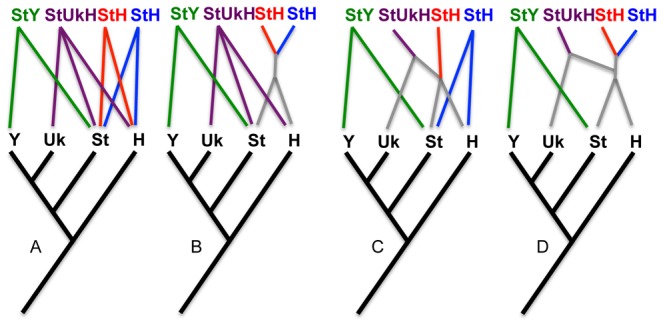
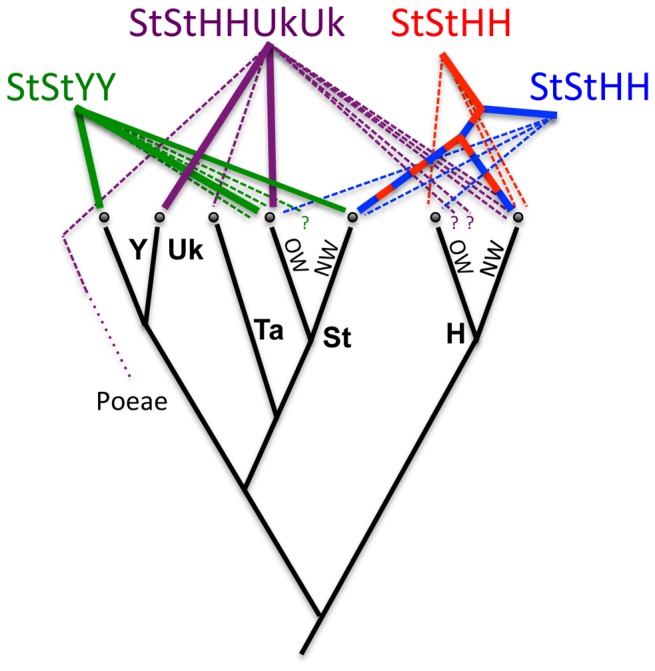
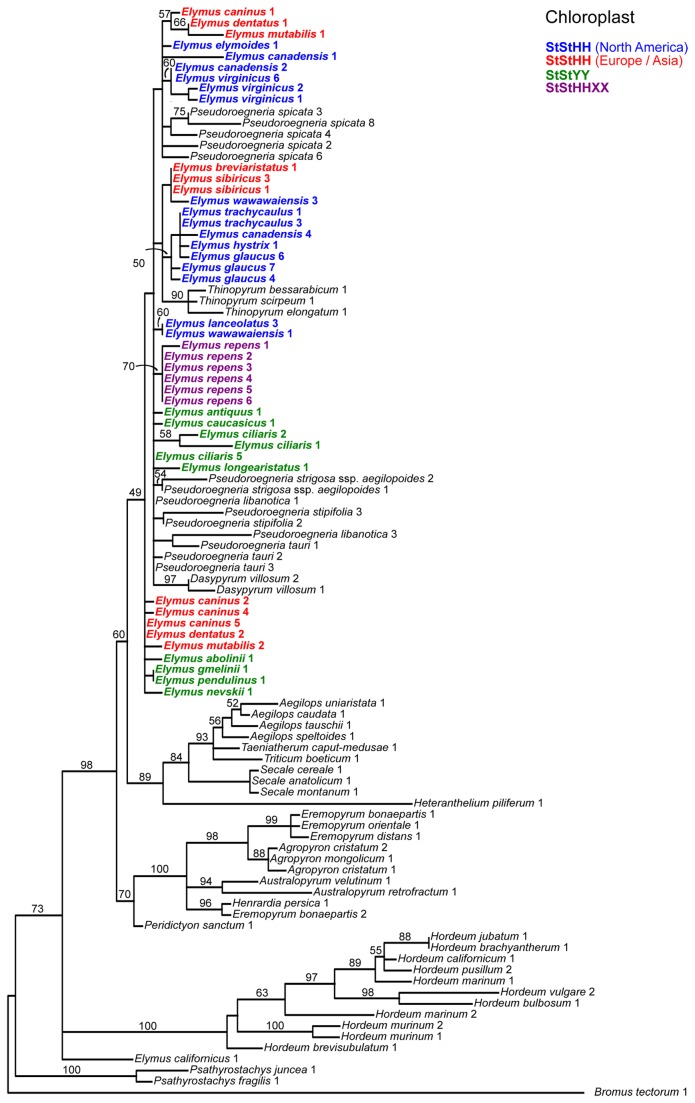
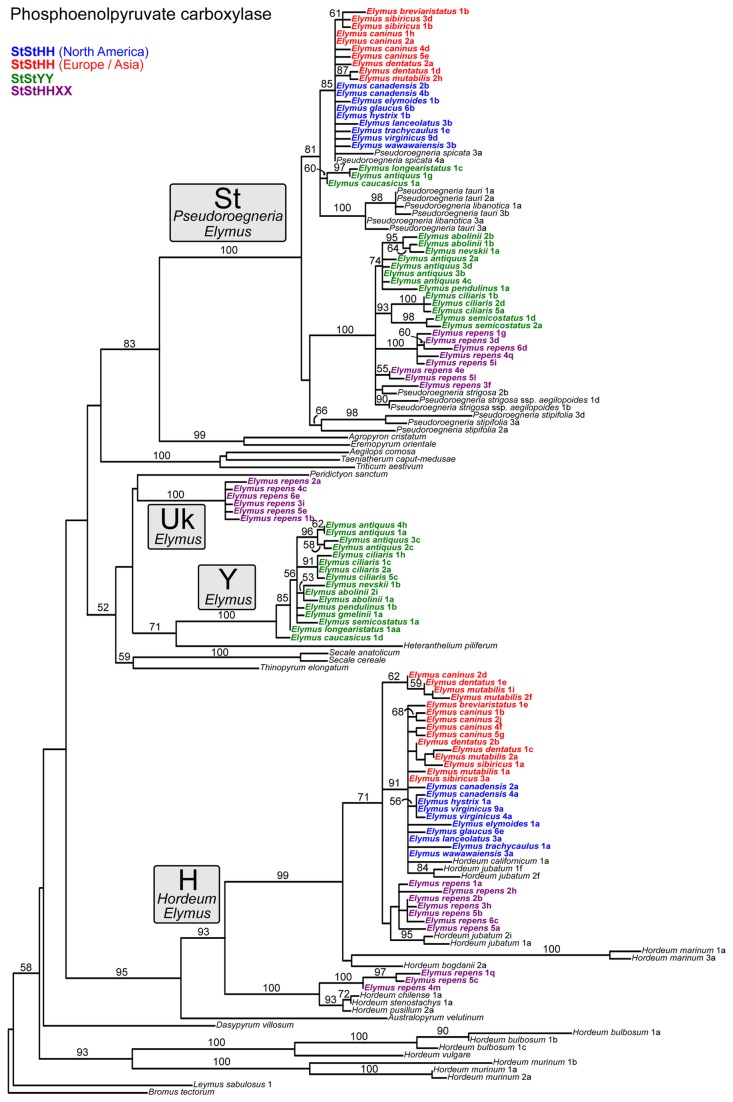
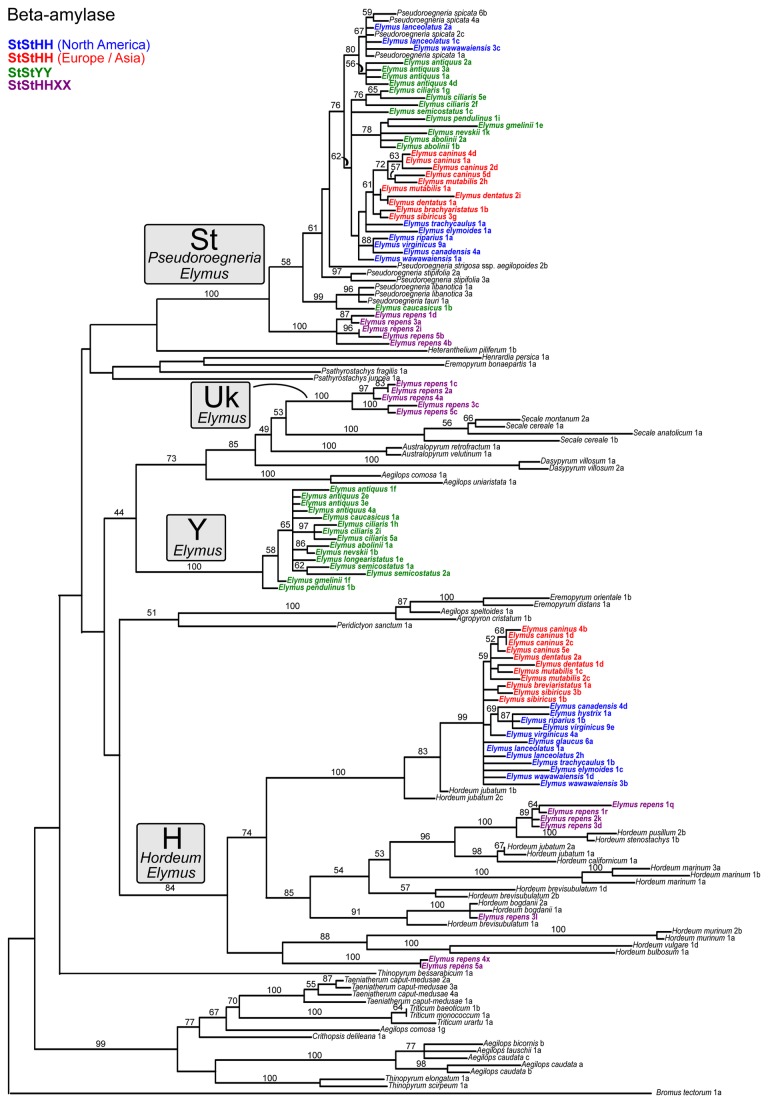
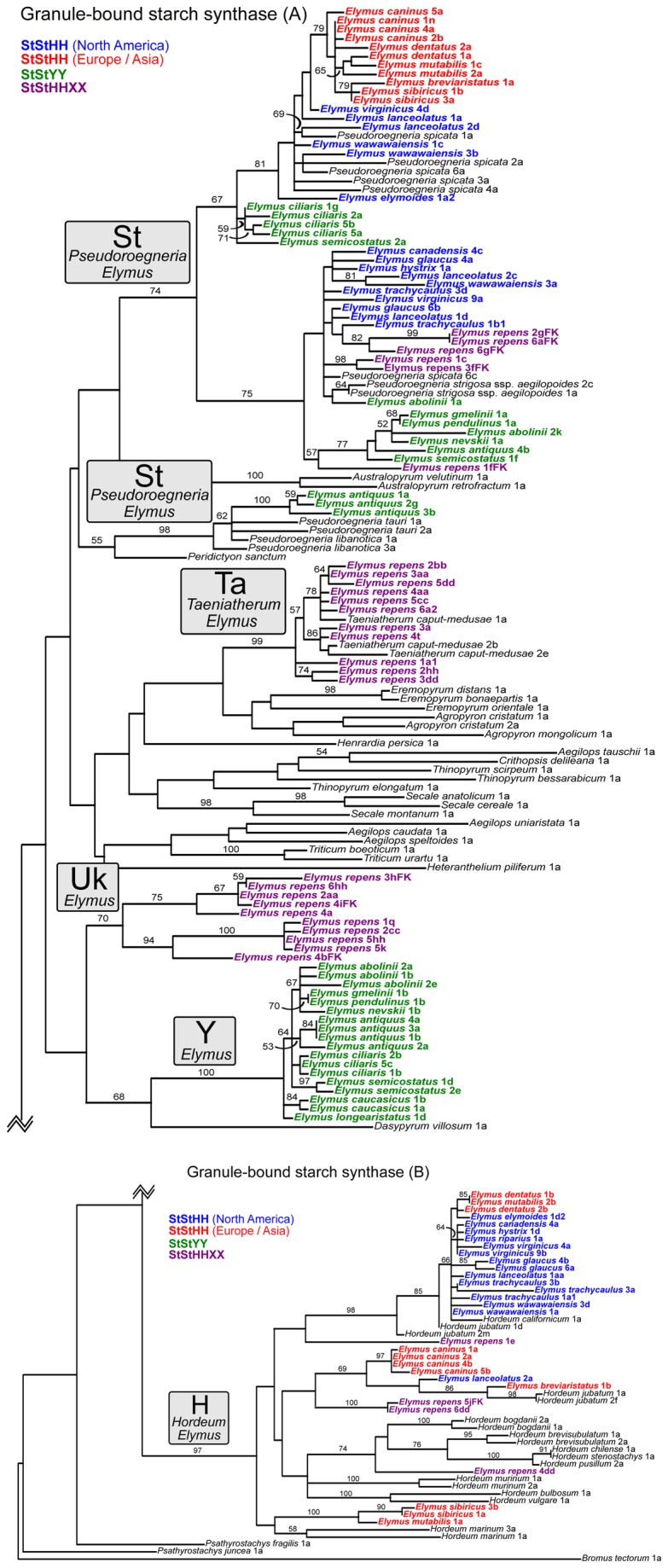
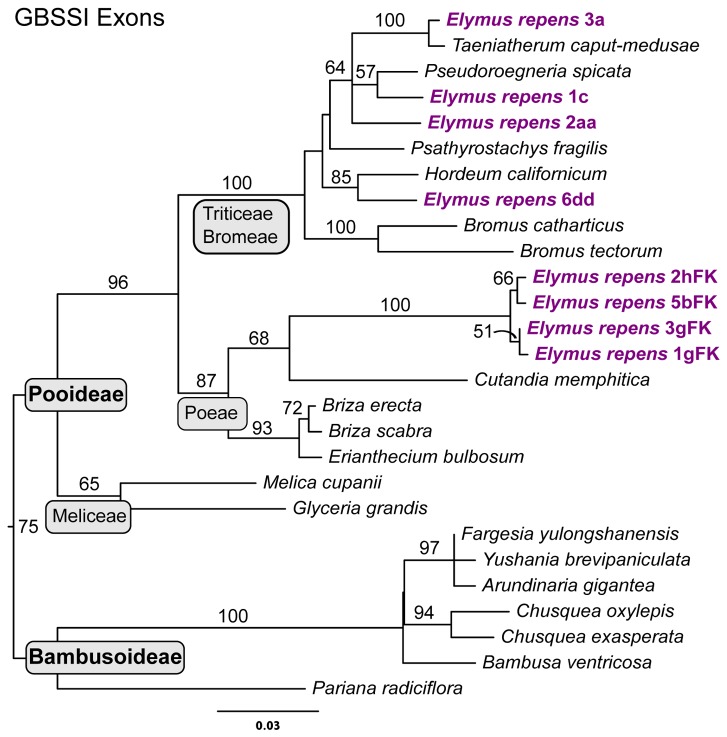
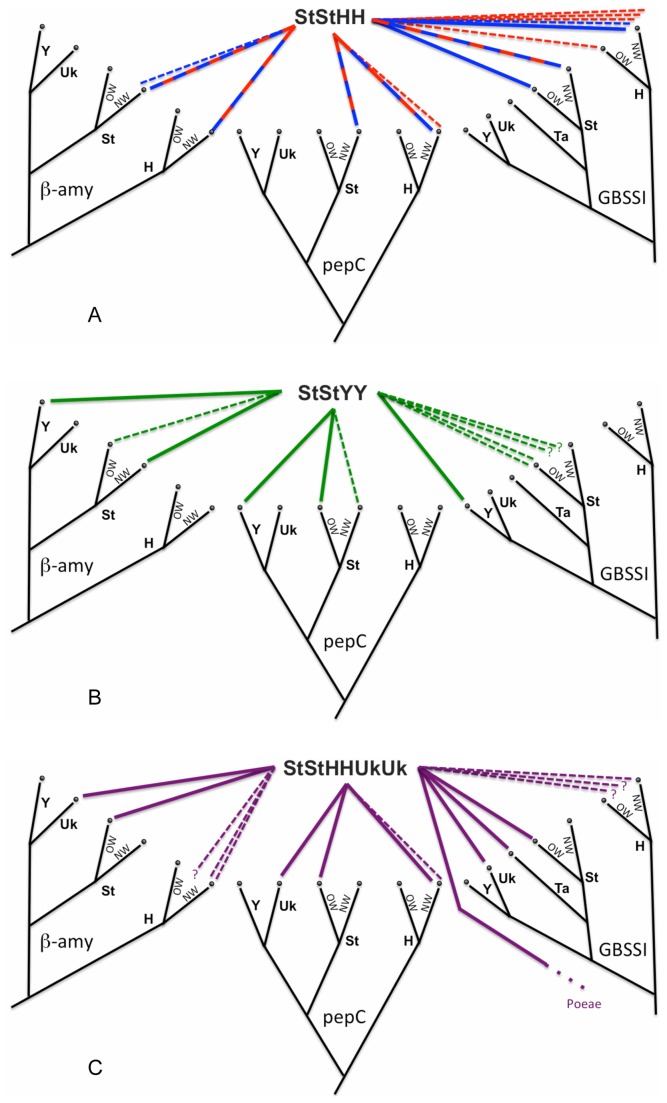
The grass tribe Triticeae (=Hordeeae) comprises only about 300 species, but it is well known for the economically important crop plants wheat, barley, and rye. The group is also recognized as a fascinating example of evolutionary complexity, with a history shaped by numerous events of auto- and allopolyploidy and apparent introgression involving diploids and polyploids. The genus Elymus comprises a heterogeneous collection of allopolyploid genome combinations, all of which include at least one set of homoeologs, designated St, derived from Pseudoroegneria. The current analysis includes a geographically and genomically diverse collection of 21 tetraploid Elymus species, and a single hexaploid species. Diploid and polyploid relationships were estimated using four molecular data sets, including one that combines two regions of the chloroplast genome, and three from unlinked nuclear genes: phosphoenolpyruvate carboxylase, β-amylase, and granule-bound starch synthase I. Four gene trees were generated using maximum likelihood, and the phylogenetic placement of the polyploid sequences reveals extensive reticulation beyond allopolyploidy alone. The trees were interpreted with reference to numerous phenomena known to complicate allopolyploid phylogenies, and introgression was identified as a major factor in their history. The work illustrates the interpretation of complicated phylogenetic results through the sequential consideration of numerous possible explanations, and the results highlight the value of careful inspection of multiple independent molecular phylogenetic estimates, with particular focus on the differences among them.
禾本科(Gramineae)的草族(Triticeae)包括大约 300 种植物,但它以经济上重要的作物小麦、大麦和黑麦而闻名。该类群还被认为是进化复杂性的一个引人注目的例子,其历史由众多的同源多倍体和异源多倍体事件以及涉及二倍体和多倍体的明显基因渗入所塑造。披碱草属(Elymus)包含一组异源多倍体基因组的混合体,所有这些基因组都至少包括一组来自拟鹅观草属(Pseudoroegneria)的同源基因对,称为 St。本研究分析了 21 种四倍体披碱草属物种和 1 种六倍体物种的地理和基因组多样性。使用四个分子数据集估计了二倍体和多倍体之间的关系,其中一个数据集结合了叶绿体基因组的两个区域,另外三个数据集来自不相关的核基因:磷酸烯醇式丙酮酸羧激酶、β-淀粉酶和颗粒结合淀粉合成酶 I。使用最大似然法生成了四个基因树,多倍体序列的系统发育位置揭示了除了异源多倍体之外,广泛的网状进化。这些树是根据许多已知会使异源多倍体系统发育复杂化的现象进行解释的,并确定基因渗入是其历史的一个主要因素。这项工作通过依次考虑许多可能的解释来解释复杂的系统发育结果,其结果强调了仔细检查多个独立分子系统发育估计值的价值,特别是要关注它们之间的差异。