Perez-Shibayama Christian, Gil-Cruz Cristina, Nussbacher Monika, Allgäuer Eva, Cervantes-Barragan Luisa, Züst Roland, Ludewig Burkhard
Institute of Immunobiology, Kantonsspital St. Gallen, St. Gallen, Switzerland.
PLoS One. 2013 Nov 28;8(11):e81442. doi: 10.1371/journal.pone.0081442. eCollection 2013.
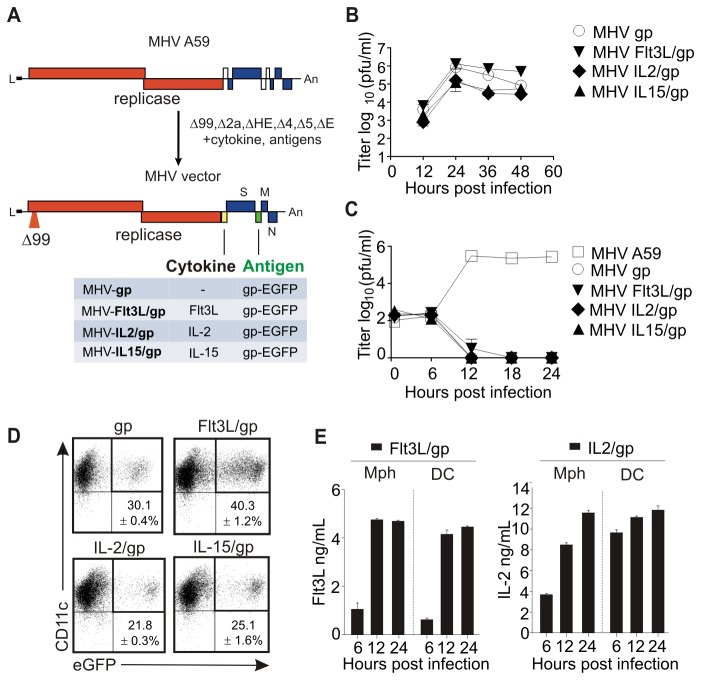
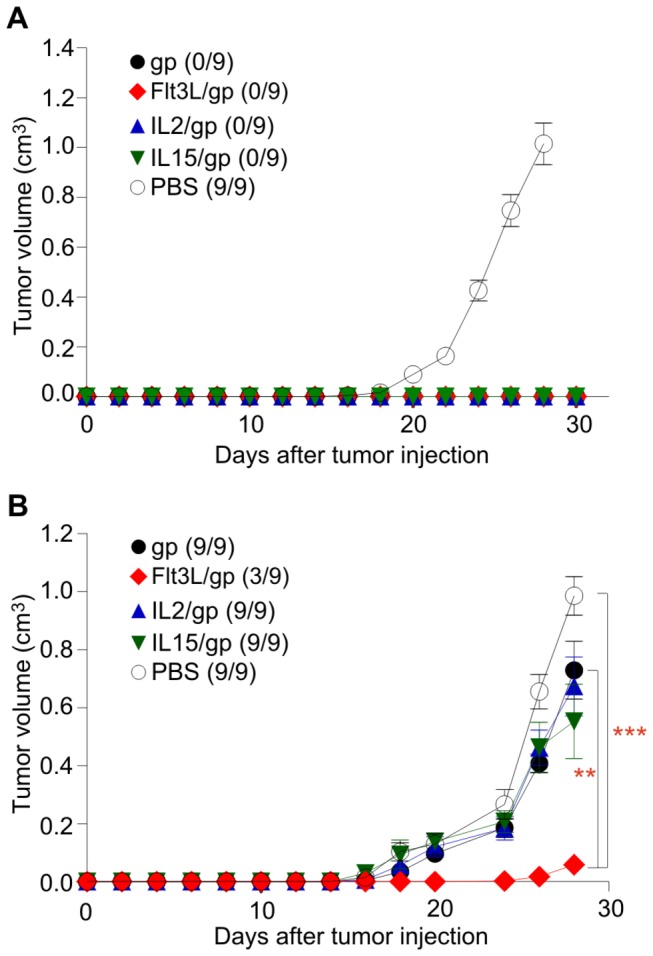
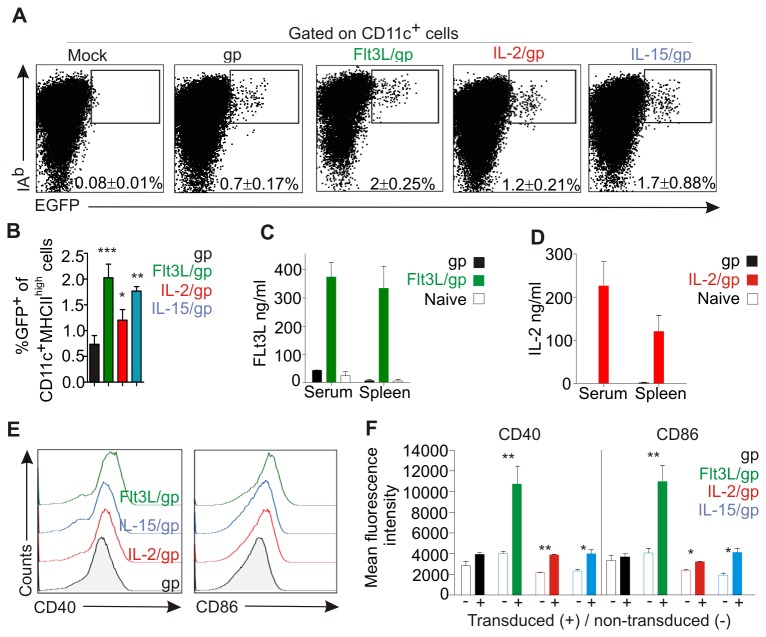
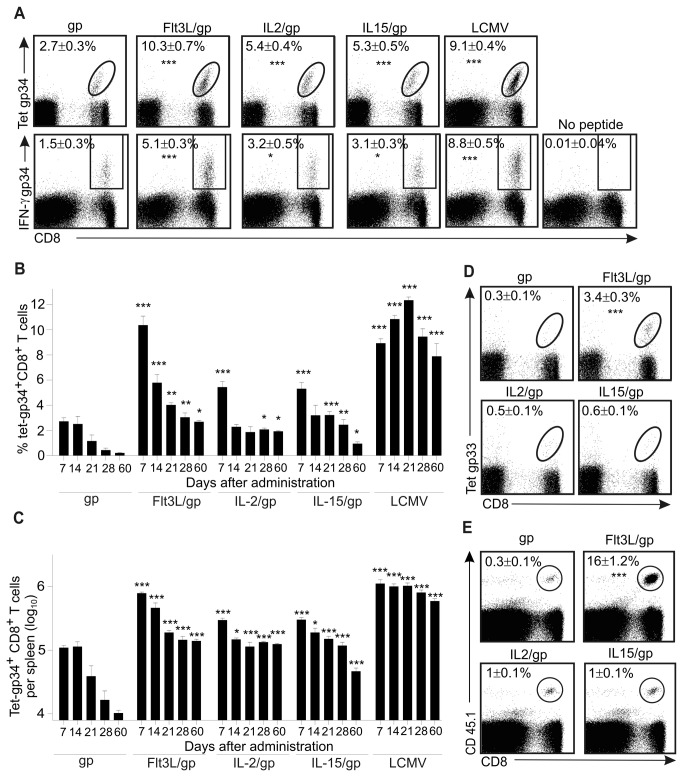
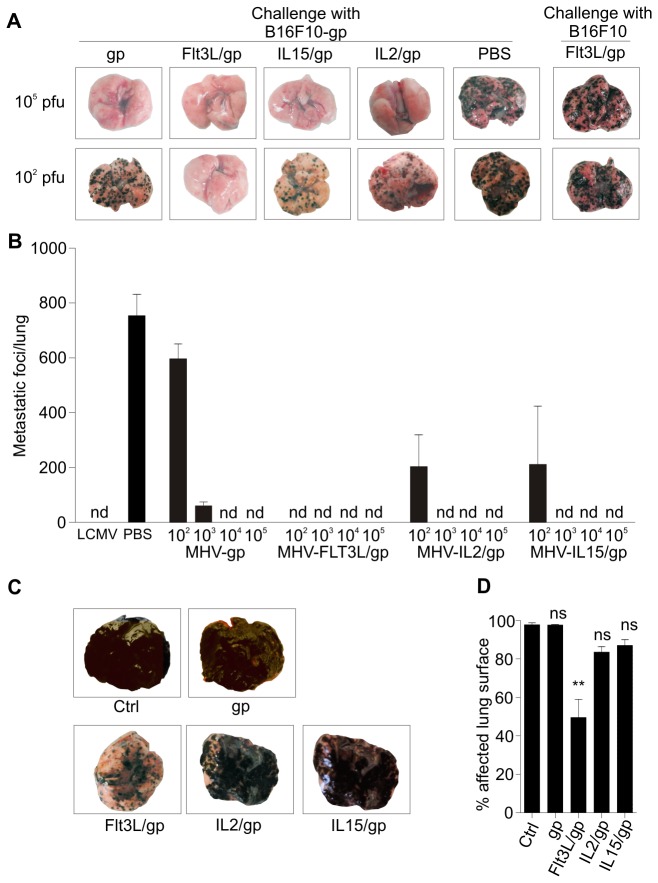
Efficacy of antitumor vaccination depends to a large extent on antigen targeting to dendritic cells (DCs). Here, we assessed antitumor immunity induced by attenuated coronavirus vectors which exclusively target DCs in vivo and express either lymphocyte- or DC-activating cytokines in combination with a GFP-tagged model antigen. Tracking of in vivo transduced DCs revealed that vectors encoding for Fms-like tyrosine kinase 3 ligand (Flt3L) exhibited a higher capacity to induce DC maturation compared to vectors delivering IL-2 or IL-15. Moreover, Flt3L vectors more efficiently induced tumor-specific CD8(+) T cells, expanded the epitope repertoire, and provided both prophylactic and therapeutic tumor immunity. In contrast, IL-2- or IL-15-encoding vectors showed a substantially lower efficacy in CD8(+) T cell priming and failed to protect the host once tumors had been established. Thus, specific in vivo targeting of DCs with coronavirus vectors in conjunction with appropriate conditioning of the microenvironment through Flt3L represents an efficient strategy for the generation of therapeutic antitumor immunity.
抗肿瘤疫苗的疗效在很大程度上取决于抗原靶向树突状细胞(DCs)。在此,我们评估了减毒冠状病毒载体诱导的抗肿瘤免疫,该载体在体内专门靶向DCs,并与绿色荧光蛋白标记的模型抗原联合表达淋巴细胞激活细胞因子或DC激活细胞因子。对体内转导的DCs的追踪显示,与递送IL-2或IL-15的载体相比,编码Fms样酪氨酸激酶3配体(Flt3L)的载体诱导DC成熟的能力更高。此外,Flt3L载体更有效地诱导肿瘤特异性CD8(+) T细胞,扩大表位库,并提供预防性和治疗性肿瘤免疫。相比之下,编码IL-2或IL-15的载体在CD8(+) T细胞启动方面显示出显著较低的疗效,并且一旦肿瘤形成就无法保护宿主。因此,用冠状病毒载体在体内特异性靶向DCs并通过Flt3L对微环境进行适当调节是产生治疗性抗肿瘤免疫的有效策略。