Gong Jianfeng, Zhu Lijing, Guo Zhen, Li Yi, Zhu Weiming, Li Ning, Li Jieshou
Department of General Surgery, Jinling hospital, Medical School of Nanjing University, Nanjing, PR China.
PLoS One. 2013 Nov 28;8(11):e81487. doi: 10.1371/journal.pone.0081487. eCollection 2013.
Inflammatory bowel disease (IBD) is commonly treated with thiopurines such as azathioprine and mercaptopurine for the maintenance of remission. Studies examining chemopreventive of these medications on colorectal neoplasm in IBD patients have yielded conflicting results. We performed a meta-analysis to assess the role of thiopurines for this indication.
We performed a systematic search of PubMed, Web of Science, EMBASE and Cochrane to identify studies reporting colorectal neoplasm from IBD patients treated with thiopurines and conducted a meta-analysis of pooled relative risk (RR) using the random effects model.
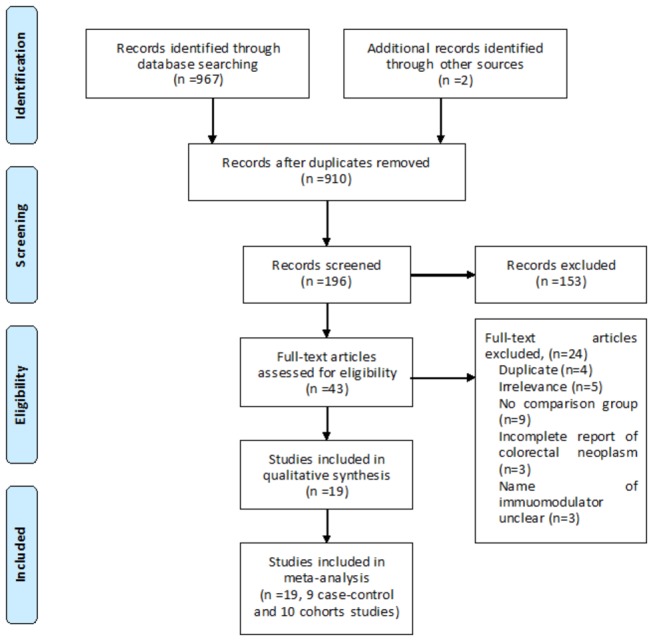
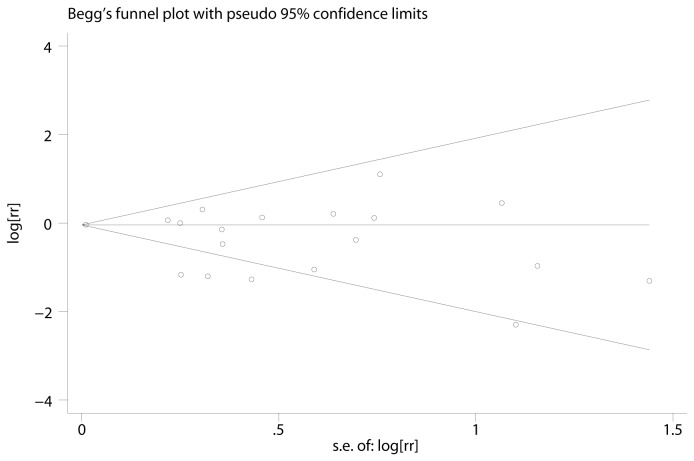
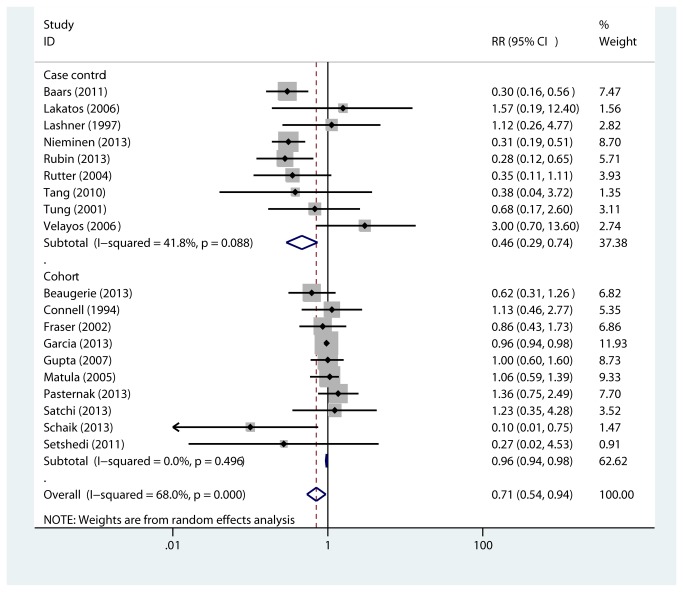
Nine case-control and ten cohort studies fulfilled the inclusion criteria. The use of thiopurines was associated with a statistically significant decreased incidence of colorectal neoplasm (summary RR=0.71, 95% CI=0.54-0.94, p=0.017), even after adjustment for duration and extent of the disease, but there was high heterogeneity among studies (I(2)=68.0%, p<0.001). The RR of advanced neoplasm (high-grade dysplasia and cancer) was 0.72 (95%CI=0.50-1.03, p=0.070) and that of cancer was 0.70 (95% CI=0.46-1.09, p=0.111) for thiopurine-treated patients. Heterogeneity of the studies was affected by the sample size (</≥ 100 cases) and whether the patients had longstanding colitis (≥ 7 years).
The current meta-analysis revealed that thiopurines had a chemopreventive effect of colorectal neoplasms and a tendency of reducing advanced colorectal neoplasms in IBD. Due to the heterogeneity of included studies, these results should be interpreted with caution.
炎症性肠病(IBD)通常使用硫唑嘌呤和巯嘌呤等硫嘌呤类药物维持缓解。关于这些药物对IBD患者结直肠肿瘤的化学预防作用的研究结果相互矛盾。我们进行了一项荟萃分析,以评估硫嘌呤类药物在这一适应症中的作用。
我们对PubMed、科学网、EMBASE和Cochrane进行了系统检索,以确定报告接受硫嘌呤类药物治疗的IBD患者结直肠肿瘤的研究,并使用随机效应模型对汇总相对风险(RR)进行荟萃分析。
9项病例对照研究和10项队列研究符合纳入标准。使用硫嘌呤类药物与结直肠肿瘤发病率在统计学上显著降低相关(汇总RR=0.71,95%CI=0.54-0.94,p=0.017),即使在对疾病持续时间和范围进行调整后也是如此,但研究之间存在高度异质性(I²=68.0%,p<0.001)。硫嘌呤类药物治疗患者的晚期肿瘤(高级别发育异常和癌症)RR为0.72(95%CI=0.50-1.03,p=0.070),癌症RR为0.70(95%CI=0.46-1.09,p=0.111)。研究的异质性受样本量(</≥100例)以及患者是否患有长期结肠炎(≥7年)的影响。
当前的荟萃分析表明,硫嘌呤类药物对IBD患者的结直肠肿瘤具有化学预防作用,并具有降低晚期结直肠肿瘤的趋势。由于纳入研究的异质性,这些结果应谨慎解读。