Department of Ophthalmology, the First Affiliated Hospital of Nanjing Medical University, Nanjing, P.R. China.
PLoS One. 2013 Nov 27;8(11):e82347. doi: 10.1371/journal.pone.0082347. eCollection 2013.
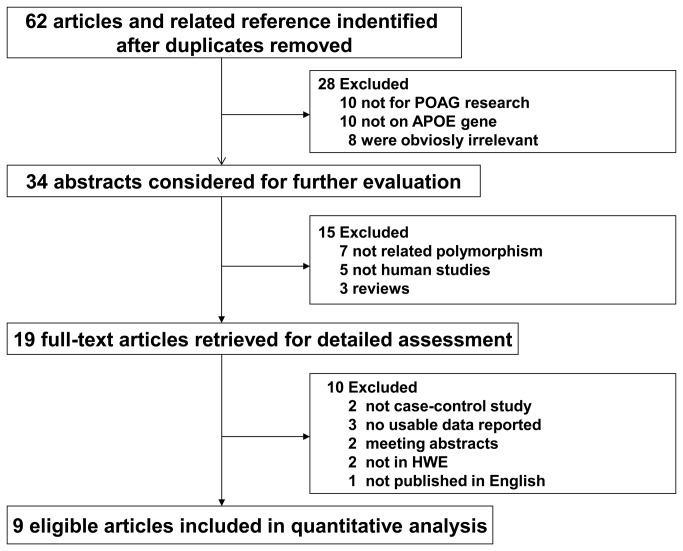
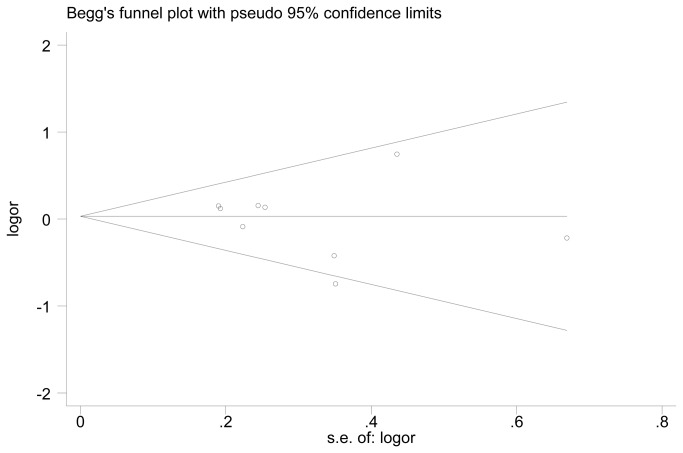
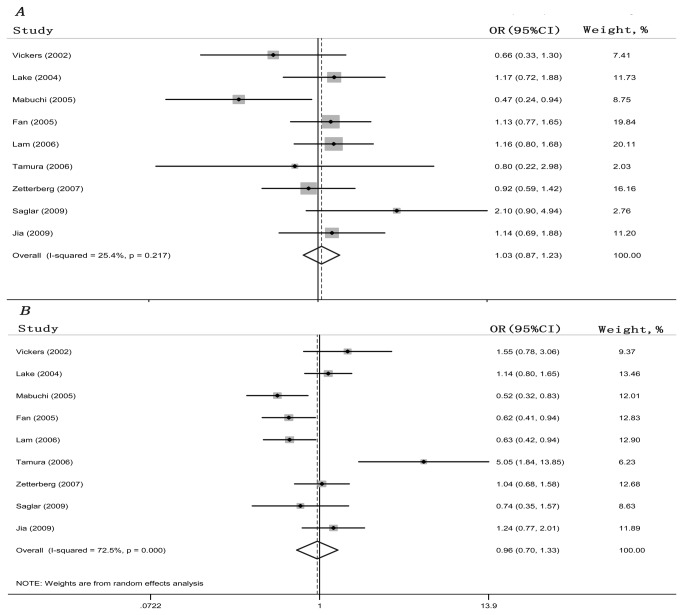
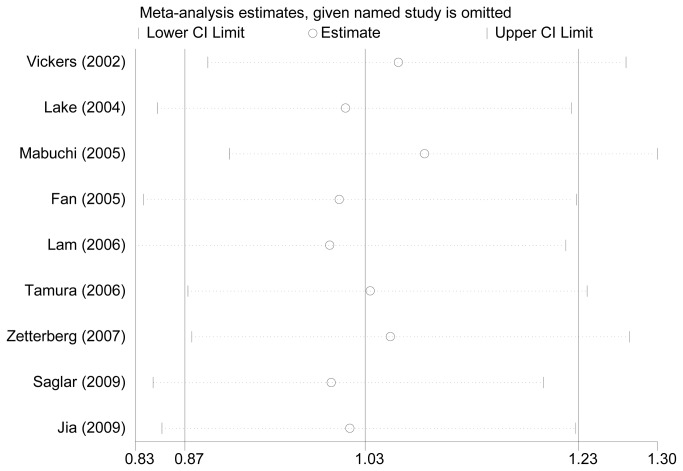
Primary open-angle glaucoma (POAG) is one of the leading causes of blindness worldwide. The association between the APOE ε2/ε3/ε4 polymorphism and the risk of POAG has been widely reported, but the results of previous studies remain controversial. To comprehensively evaluate the APOE ε2/ε3/ε4 polymorphism on the genetic risk for POAG, we performed a systematic review and meta-analysis of previously published studies. The PubMed and Web of Science databases were systematically searched to identify relevant studies. Data were extracted from these studies and odds ratios with corresponding 95% confidence intervals were computed to estimate the strength of the association. Stratified analyses according to ethnicity and sensitivity analyses were also conducted for further confirmation. A total of nine studies were eligible for the meta-analysis, and these studies included data on 1928 POAG cases and 1793 unrelated match controls. The combined results showed that there were no associations between the APOE ε2/ε3/ε4 polymorphism and POAG risk in any of the 10 comparison models. The analysis that was stratified by ethnicity subgroups also failed to reveal a significant association. The sensitivity analysis confirmed the stability and reliability of the findings. There was no risk of publication bias. Our meta-analysis provides strong evidence that the APOE ε2/ε3/ε4 polymorphism is not associated with POAG susceptibility in any populations.
原发性开角型青光眼 (POAG) 是全球致盲的主要原因之一。APOE ε2/ε3/ε4 多态性与 POAG 风险之间的关联已被广泛报道,但先前研究的结果仍存在争议。为了全面评估 APOE ε2/ε3/ε4 多态性对 POAG 的遗传风险,我们对先前发表的研究进行了系统评价和荟萃分析。系统地检索了 PubMed 和 Web of Science 数据库以识别相关研究。从这些研究中提取数据,并计算了比值比及其相应的 95%置信区间,以估计关联的强度。还进行了分层分析和敏感性分析以进一步确认。共有 9 项研究符合荟萃分析的纳入标准,这些研究包括 1928 例 POAG 病例和 1793 例无关匹配对照的数据。合并结果表明,在 10 种比较模型中的任何一种中,APOE ε2/ε3/ε4 多态性与 POAG 风险之间均无关联。按种族亚组分层的分析也未能显示出显著的关联。敏感性分析证实了研究结果的稳定性和可靠性。没有发表偏倚的风险。我们的荟萃分析提供了强有力的证据表明,APOE ε2/ε3/ε4 多态性与任何人群的 POAG 易感性无关。