Department of Pharmaceutical Sciences, School of Pharmacy and Pharmaceutical Sciences, State University of New York at Buffalo, Buffalo, New York, United States of America.
PLoS One. 2013 Dec 2;8(12):e81679. doi: 10.1371/journal.pone.0081679. eCollection 2013.
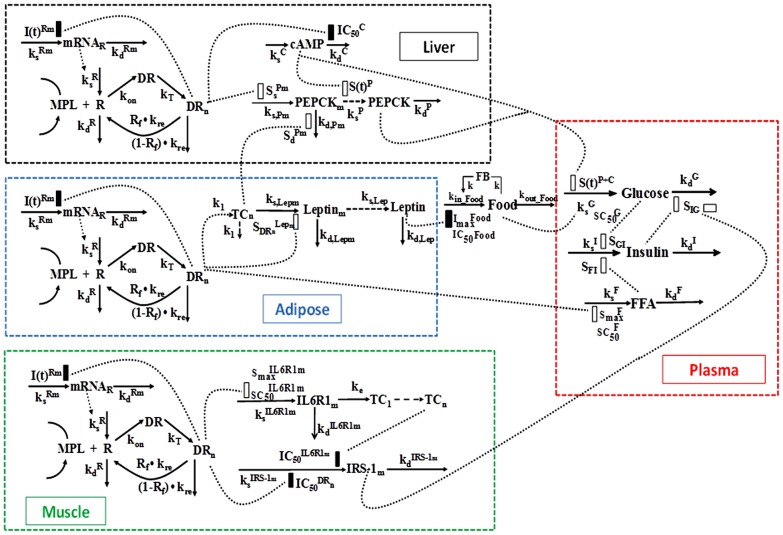
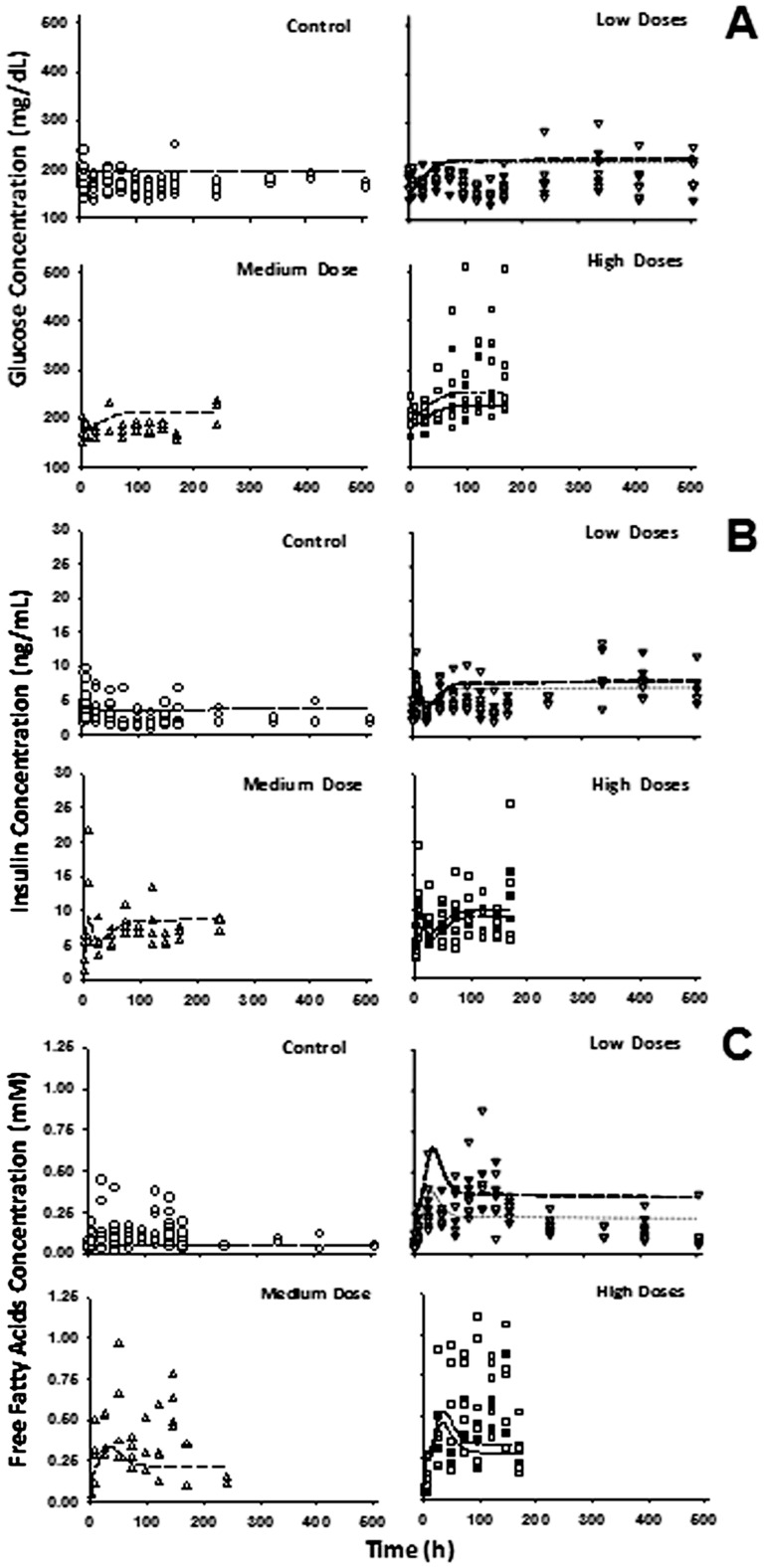
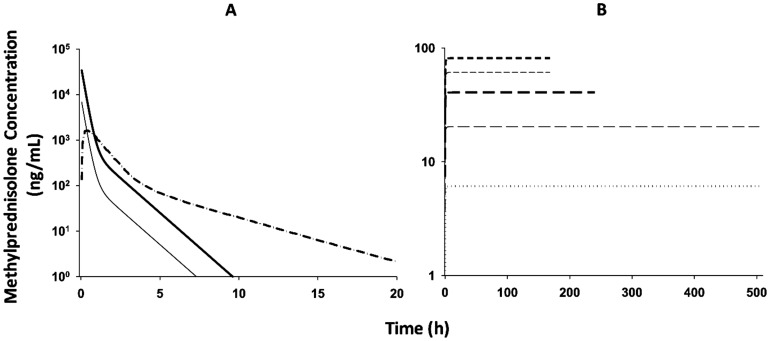
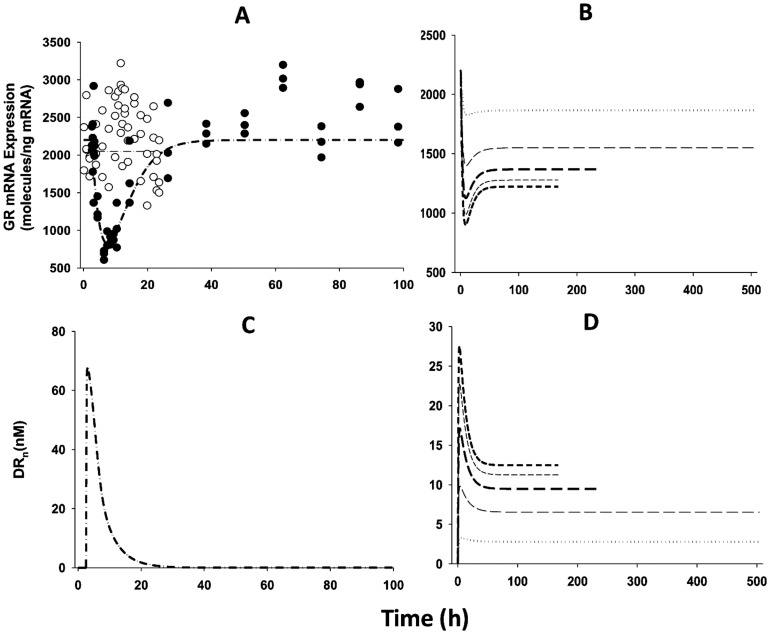
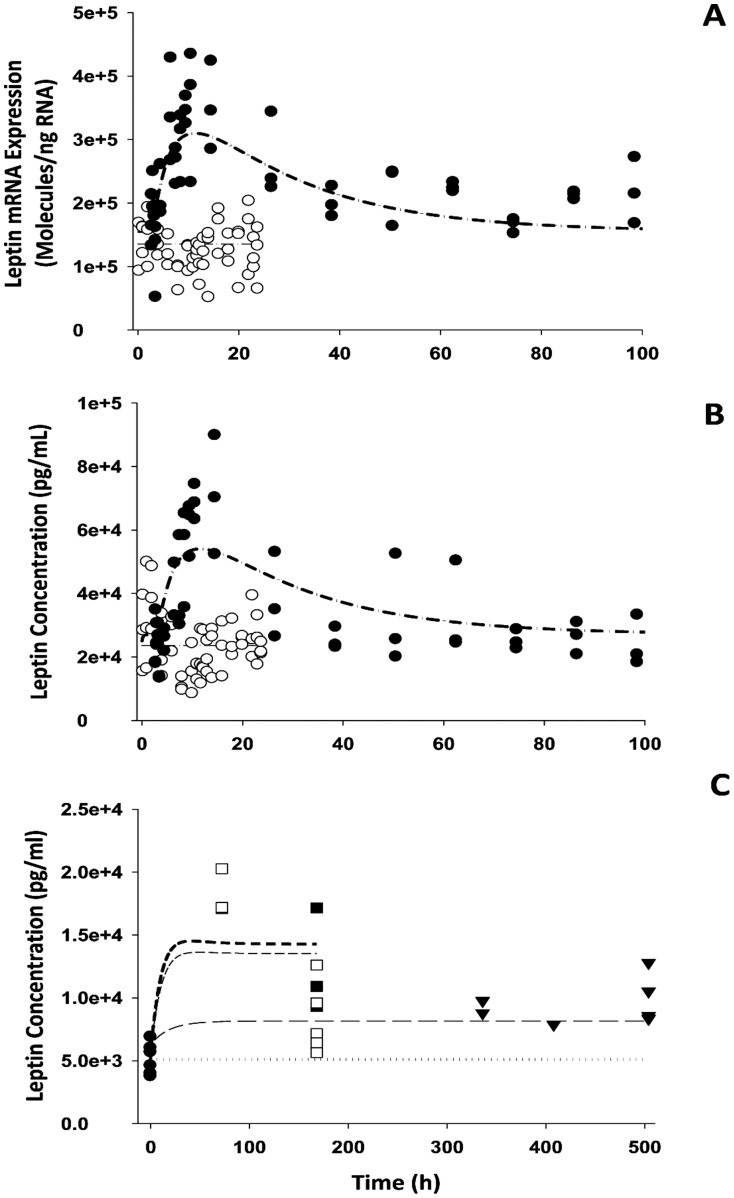
A retrospective meta-modeling analysis was performed to integrate previously reported data of glucocorticoid (GC) effects on glucose regulation following a single intramuscular dose (50 mg/kg), single intravenous doses (10, 50 mg/kg), and intravenous infusions (0.1, 0.2, 0.3 and 0.4 mg/kg/h) of methylprednisolone (MPL) in normal and adrenalectomized (ADX) male Wistar rats. A mechanistic pharmacodynamic (PD) model was developed based on the receptor/gene/protein-mediated GC effects on glucose regulation. Three major target organs (liver, white adipose tissue and skeletal muscle) together with some selected intermediate controlling factors were designated as important regulators involved in the pathogenesis of GC-induced glucose dysregulation. Assessed were dynamic changes of food intake and systemic factors (plasma glucose, insulin, free fatty acids (FFA) and leptin) and tissue-specific biomarkers (cAMP, phosphoenolpyruvate carboxykinase (PEPCK) mRNA and enzyme activity, leptin mRNA, interleukin 6 receptor type 1 (IL6R1) mRNA and Insulin receptor substrate-1 (IRS-1) mRNA) after acute and chronic dosing with MPL along with the GC receptor (GR) dynamics in each target organ. Upon binding to GR in liver, MPL dosing caused increased glucose production by stimulating hepatic cAMP and PEPCK activity. In adipose tissue, the rise in leptin mRNA and plasma leptin caused reduction of food intake, the exogenous source of glucose input. Down-regulation of IRS-1 mRNA expression in skeletal muscle inhibited the stimulatory effect of insulin on glucose utilization further contributing to hyperglycemia. The nuclear drug-receptor complex served as the driving force for stimulation or inhibition of downstream target gene expression within different tissues. Incorporating information such as receptor dynamics, as well as the gene and protein induction, allowed us to describe the receptor-mediated effects of MPL on glucose regulation in each important tissue. This advanced mechanistic model provides unique insights into the contributions of major tissues and quantitative hypotheses for the multi-factor control of a complex metabolic system.
进行了回顾性的荟萃分析,以整合先前报道的关于单次肌内注射(50mg/kg)、单次静脉注射(10、50mg/kg)和静脉输注(0.1、0.2、0.3 和 0.4mg/kg/h)甲泼尼龙(MPL)对正常和肾上腺切除(ADX)雄性 Wistar 大鼠葡萄糖调节影响的研究数据。该模型基于受体/基因/蛋白介导的糖皮质激素对葡萄糖调节的作用,建立了一种机制性药效动力学(PD)模型。三个主要靶器官(肝脏、白色脂肪组织和骨骼肌)以及一些选定的中间控制因素被指定为参与糖皮质激素诱导的葡萄糖失调发病机制的重要调节因子。评估了急性和慢性 MPL 给药后食物摄入和全身因素(血浆葡萄糖、胰岛素、游离脂肪酸(FFA)和瘦素)以及组织特异性生物标志物(cAMP、磷酸烯醇丙酮酸羧激酶(PEPCK)mRNA 和酶活性、瘦素 mRNA、白细胞介素 6 受体类型 1(IL6R1)mRNA 和胰岛素受体底物-1(IRS-1)mRNA)的动态变化,以及每个靶器官中糖皮质激素受体(GR)的动力学。MPL 与 GR 结合后,在肝脏中刺激 cAMP 和 PEPCK 活性,导致葡萄糖生成增加。在脂肪组织中,瘦素 mRNA 和血浆瘦素的升高导致食物摄入减少,即葡萄糖的外源性输入源。骨骼肌中 IRS-1mRNA 表达的下调抑制了胰岛素对葡萄糖利用的刺激作用,进一步导致高血糖。核药物-受体复合物作为刺激或抑制不同组织中下游靶基因表达的驱动力。纳入受体动力学以及基因和蛋白诱导等信息,使我们能够描述 MPL 在每个重要组织中对葡萄糖调节的受体介导作用。该先进的机制模型为主要组织的贡献提供了独特的见解,并为复杂代谢系统的多因素控制提供了定量假设。