Verma Raj K, Gunda Venugopal, Pawar Smita C, Sudhakar Yakkanti Akul
Irma Lerma Rangel College of Pharmacy, Texas A&M Health Science Center, Kingsville, Texas, United States of America.
PLoS One. 2013 Dec 4;8(12):e80555. doi: 10.1371/journal.pone.0080555. eCollection 2013.
Antiangiogenic treatments are beginning to give promising outcomes in many vascular diseases including tumor angiogenesis. In this current study the antiangiogenic and pro-apoptotic actions of α1(IV)NC1 and its N- and C- peptides α1S1(IV)NC1, α1S2(IV)NC1 were investigated in-vitro and in-vivo.
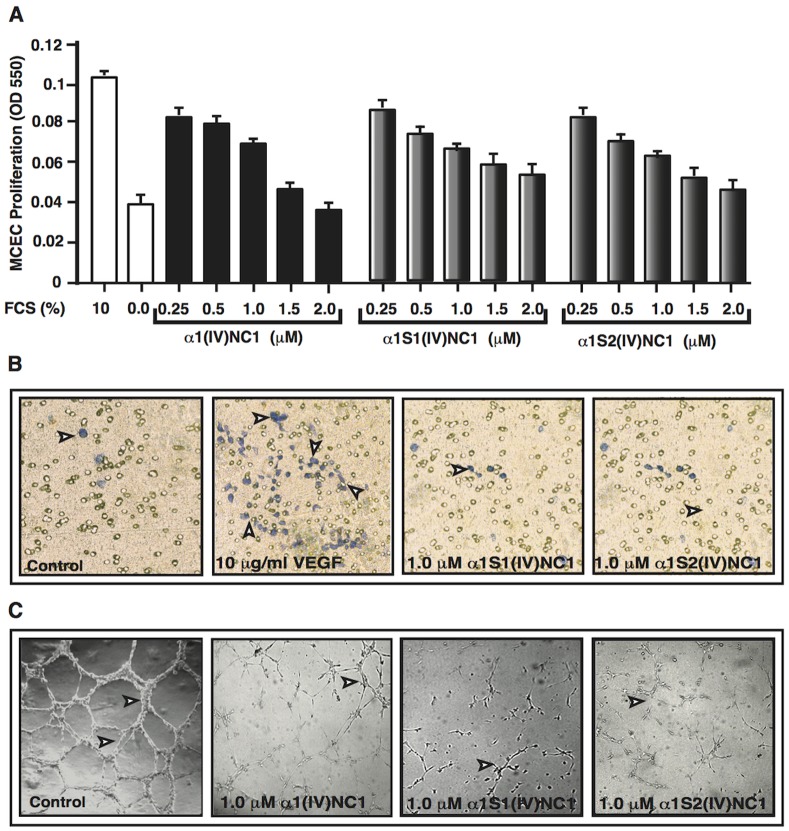
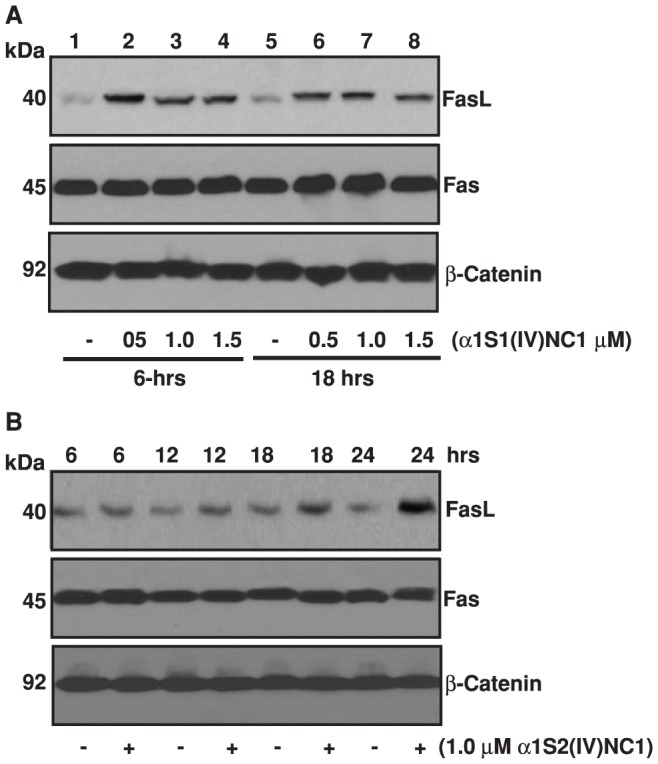
Endothelial cells (ECs) were treated with α1(IV)NC1, α1S1(IV)NC1, α1S2(IV)NC1 and in-vitro proliferation, migration, tube formation and apoptotic assays were executed. FasL, Fas, Caspase-8, -3 and PARP activations were studied using immunoblotting analysis using specific antibodies. Also the in-vivo antiangiogenic and pro-apoptotic effects were tested using α1(IV)NC1 in a mice model.
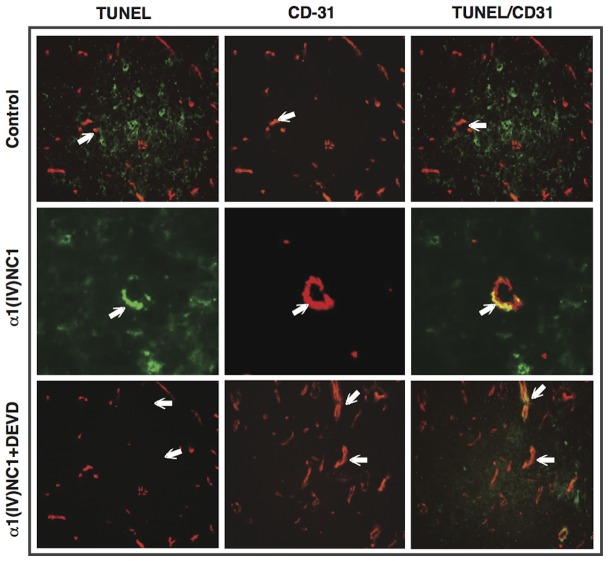
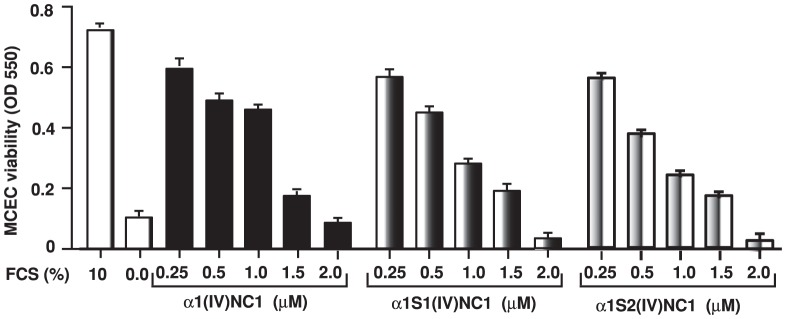
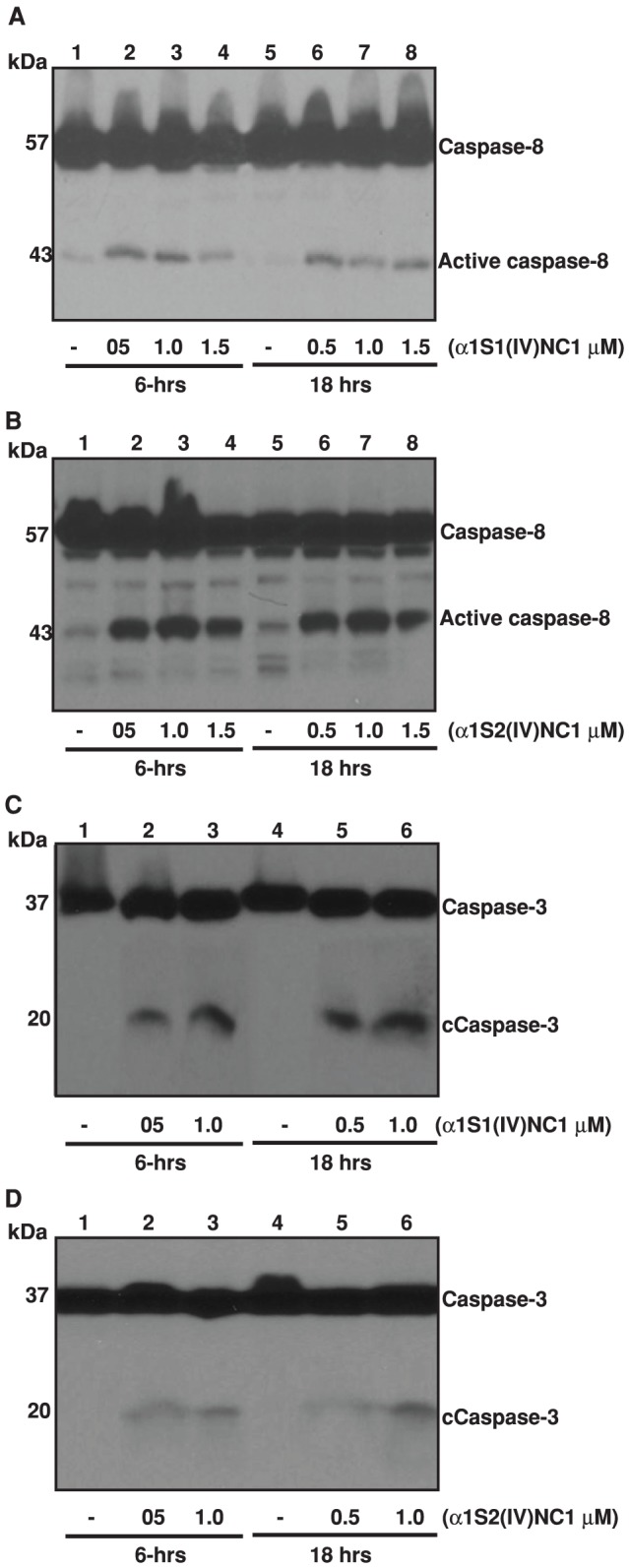
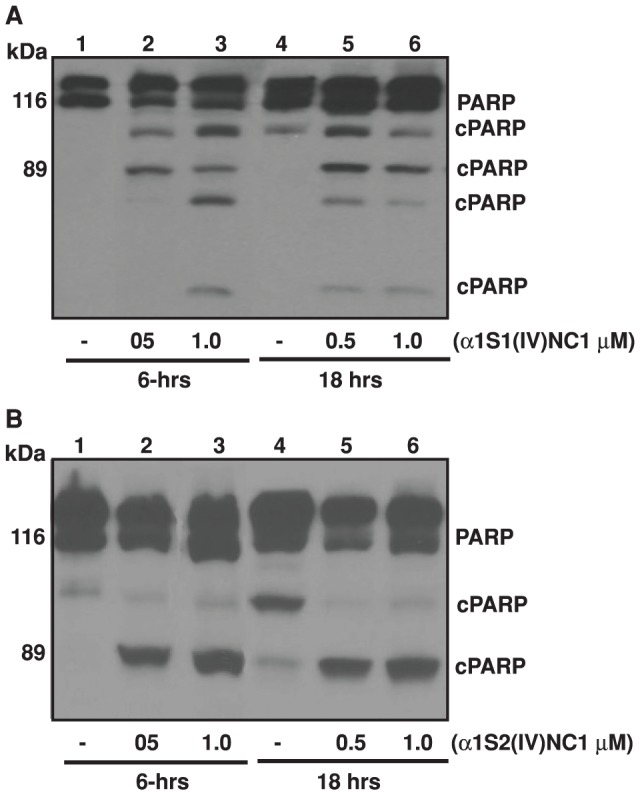
Like α1(IV)NC1, its N- and C- terminal α1S2(IV)NC1 and α1S1(IV)NC1 domains posses anti-proliferative, pro-apoptotic activity and inhibit ECs migration and tube formation in-vitro. Both α1S1(IV)NC1 and α1S2(IV)NC1 domains promote apoptosis by activating FasL and down stream apoptotic events including activation of caspase-8, -3 and PARP cleavage in a dose dependent manner in-vitro in ECs. Tumors in mice showed apoptotic TUNEL positive microvasculature upon α1(IV)NC1 treatment, indicating inhibition of tumor angiogenesis and tumor growth. Further, the antitumor activity of α1(IV)NC1 was abrogated when caspase-3 inhibitor was used. These results conform additional properties of α1(IV)NC1 as an endogenous angioinhibitor that induces apoptosis in-vitro and in-vivo by activating FasL mediated caspase-3.
α1(IV)NC1 and its N- and C- terminal α1S1(IV)NC1 and α1S2(IV)NC1 domains also posses pro-apoptotic and angioinhibitory activity in-vitro and in-vivo. α1(IV)NC1 regulates tumor angiogenesis by activating FasL mediated apoptosis in-vitro and in-vivo. These results demonstrate that α1(IV)NC1 and its peptides inhibit neo-vascular diseases.
抗血管生成治疗在包括肿瘤血管生成在内的许多血管疾病中开始展现出有前景的结果。在本研究中,对α1(IV)NC1及其N端和C端肽段α1S1(IV)NC1、α1S2(IV)NC1的抗血管生成和促凋亡作用进行了体内和体外研究。
用α1(IV)NC1、α1S1(IV)NC1、α1S2(IV)NC1处理内皮细胞(ECs),并进行体外增殖、迁移、管腔形成和凋亡检测。使用特异性抗体通过免疫印迹分析研究FasL、Fas、半胱天冬酶-8、-3和PARP的激活情况。此外,在小鼠模型中使用α1(IV)NC1测试其体内抗血管生成和促凋亡作用。
与α1(IV)NC1一样,其N端和C端α1S2(IV)NC1和α1S1(IV)NC1结构域具有抗增殖、促凋亡活性,并在体外抑制ECs迁移和管腔形成。α1S1(IV)NC1和α1S2(IV)NC所有结构域都通过激活FasL以及下游凋亡事件(包括在体外ECs中以剂量依赖方式激活半胱天冬酶-8、-3和PARP裂解)来促进凋亡。用α1(IV)NC1处理后,小鼠肿瘤显示凋亡TUNEL阳性微血管,表明肿瘤血管生成和肿瘤生长受到抑制。此外,当使用半胱天冬酶-3抑制剂时,α1(IV)NC1的抗肿瘤活性被消除。这些结果证实了α1(IV)NC1作为一种内源性血管生成抑制剂的其他特性,即通过激活FasL介导的半胱天冬酶-3在体内和体外诱导凋亡。
α1(IV)NC1及其N端和C端α1S1(IV)NC1和α1S2(IV)NC1结构域在体内和体外也具有促凋亡和血管生成抑制活性。α1(IV)NC1在体内和体外通过激活FasL介导的凋亡来调节肿瘤血管生成。这些结果表明α1(IV)NC1及其肽段可抑制新生血管疾病。