Department of Cellular and Physiological Sciences, University of British Columbia, Vancouver, British Columbia, Canada.
PLoS One. 2013 Dec 4;8(12):e82076. doi: 10.1371/journal.pone.0082076. eCollection 2013.
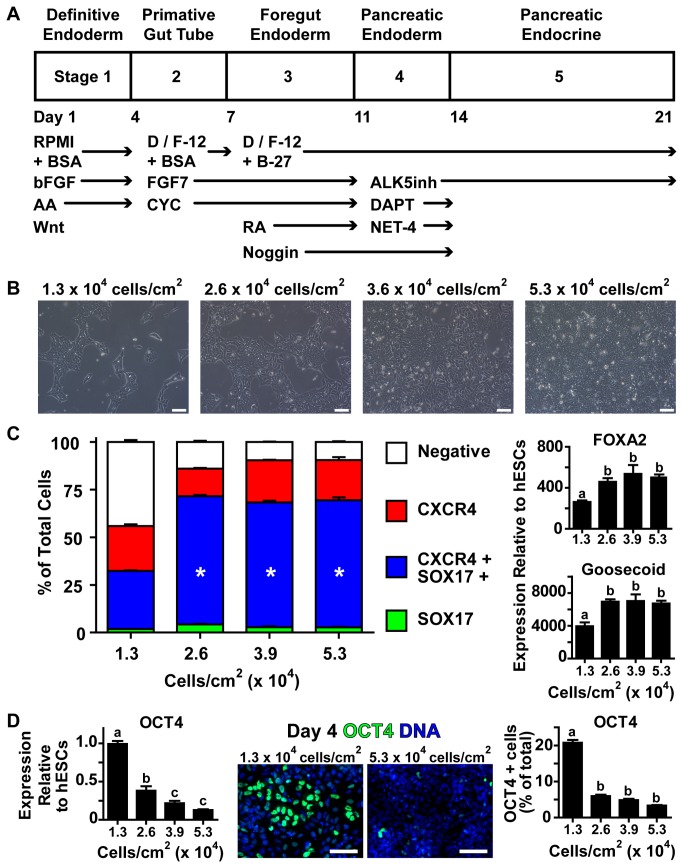
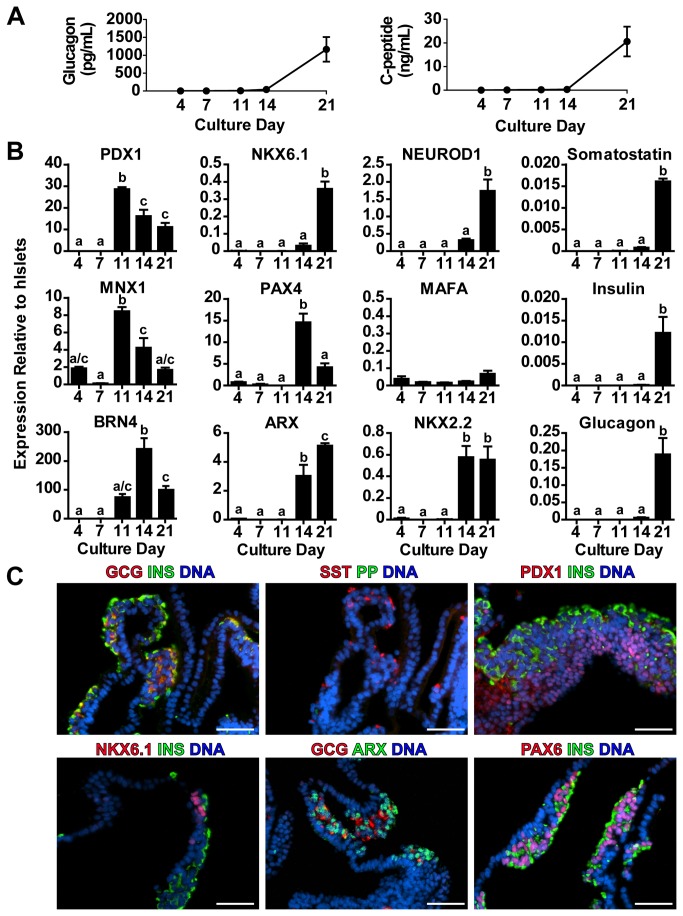
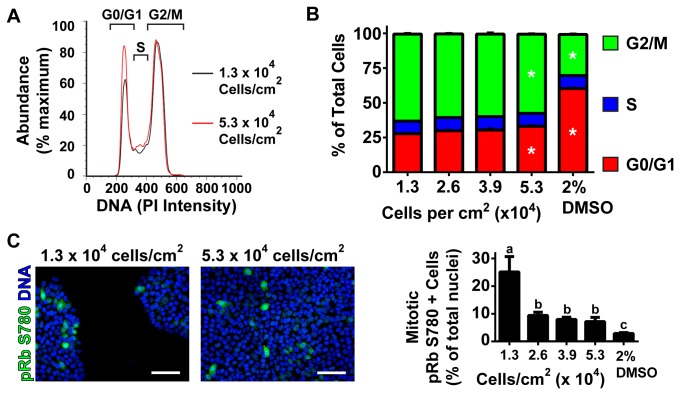
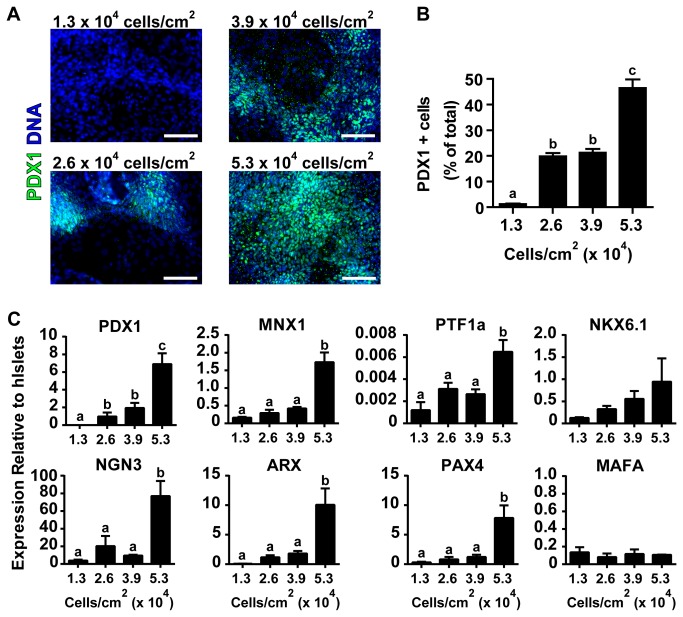
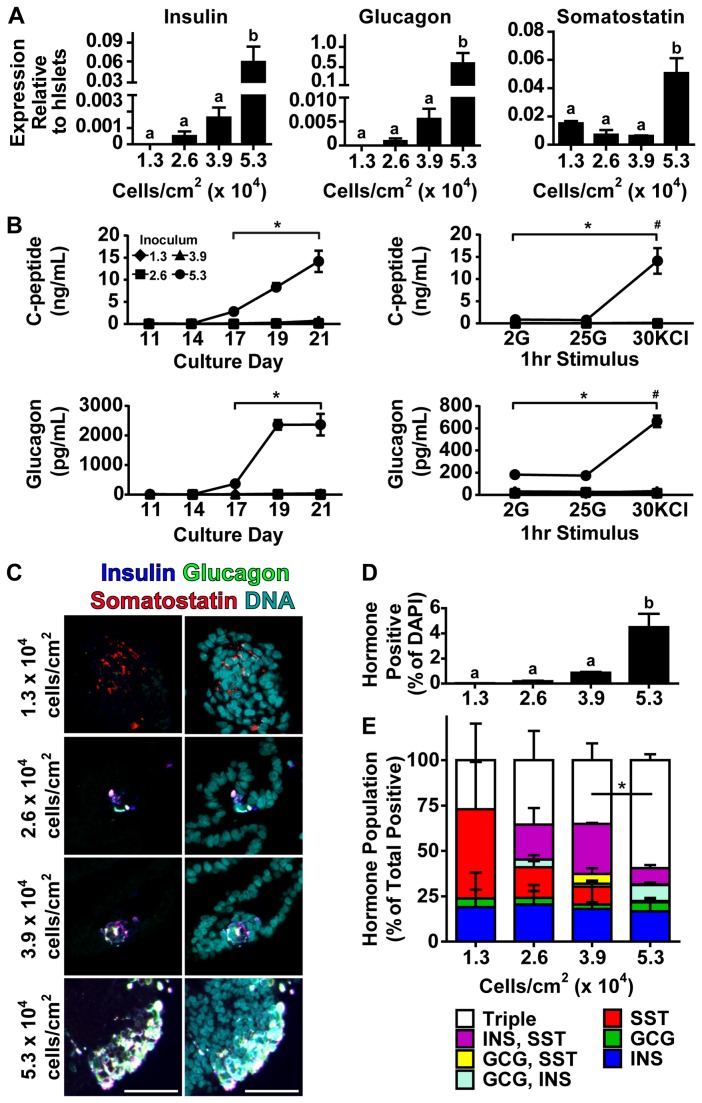
Human embryonic stem cells (hESCs) have the ability to form cells derived from all three germ layers, and as such have received significant attention as a possible source for insulin-secreting pancreatic beta-cells for diabetes treatment. While considerable advances have been made in generating hESC-derived insulin-producing cells, to date in vitro-derived glucose-responsive beta-cells have remained an elusive goal. With the objective of increasing the in vitro formation of pancreatic endocrine cells, we examined the effect of varying initial cell seeding density from 1.3 x 10(4) cells/cm(2) to 5.3 x 10(4) cells/cm(2) followed by a 21-day pancreatic endocrine differentiation protocol. Low density-seeded cells were found to be biased toward the G2/M phases of the cell cycle and failed to efficiently differentiate into SOX17-CXCR4 co-positive definitive endoderm cells leaving increased numbers of OCT4 positive cells in day 4 cultures. Moderate density cultures effectively formed definitive endoderm and progressed to express PDX1 in approximately 20% of the culture. High density cultures contained approximately double the numbers of PDX1 positive pancreatic progenitor cells and also showed increased expression of MNX1, PTF1a, NGN3, ARX, and PAX4 compared to cultures seeded at moderate density. The cultures seeded at high density displayed increased formation of polyhormonal pancreatic endocrine cell populations co-expressing insulin, glucagon and somatostatin. The maturation process giving rise to these endocrine cell populations followed the expected cascade of pancreatic progenitor marker (PDX1 and MNX1) expression, followed by pancreatic endocrine specification marker expression (BRN4, PAX4, ARX, NEUROD1, NKX6.1 and NKX2.2) and then pancreatic hormone expression (insulin, glucagon and somatostatin). Taken together these data suggest that initial cell seeding density plays an important role in both germ layer specification and pancreatic progenitor commitment, which precedes pancreatic endocrine cell formation. This work highlights the need to examine standard culture variables such as seeding density when optimizing hESC differentiation protocols.
人类胚胎干细胞(hESC)具有形成来自三个胚层的细胞的能力,因此作为治疗糖尿病的胰岛素分泌胰腺β细胞的可能来源而受到广泛关注。虽然在生成 hESC 衍生的胰岛素产生细胞方面已经取得了相当大的进展,但迄今为止,体外衍生的葡萄糖反应性β细胞仍然是一个难以实现的目标。为了增加体外胰腺内分泌细胞的形成,我们研究了初始细胞接种密度从 1.3×10(4)细胞/cm(2)到 5.3×10(4)细胞/cm(2)变化对胰腺内分泌分化方案的影响。发现低细胞密度接种的细胞偏向于细胞周期的 G2/M 期,并且未能有效地分化为 SOX17-CXCR4 共阳性的确定内胚层细胞,导致第 4 天培养物中增加了 OCT4 阳性细胞的数量。中等密度培养物有效地形成确定内胚层,并在大约 20%的培养物中表达 PDX1。高细胞密度培养物含有大约两倍数量的 PDX1 阳性胰腺祖细胞,并且与中等密度接种的培养物相比,也显示 MNX1、PTF1a、NGN3、ARX 和 PAX4 的表达增加。高细胞密度接种的培养物显示出增加的多激素胰腺内分泌细胞群体的形成,这些细胞群体共表达胰岛素、胰高血糖素和生长抑素。这些内分泌细胞群体的成熟过程遵循预期的胰腺祖细胞标志物(PDX1 和 MNX1)表达的级联,随后是胰腺内分泌特化标志物(BRN4、PAX4、ARX、NEUROD1、NKX6.1 和 NKX2.2)的表达,然后是胰腺激素(胰岛素、胰高血糖素和生长抑素)的表达。总的来说,这些数据表明初始细胞接种密度在胚层特化和胰腺祖细胞决定中起着重要作用,这先于胰腺内分泌细胞的形成。这项工作强调了在优化 hESC 分化方案时需要检查细胞接种密度等标准培养变量的必要性。