Division of Immunology, Boston Children's Hospital, Harvard Medical School, Boston, Massachusetts, USA.
Harvard School of Public Health, Boston, Massachusetts, USA.
Nat Med. 2014 Jan;20(1):54-61. doi: 10.1038/nm.3423. Epub 2013 Dec 15.
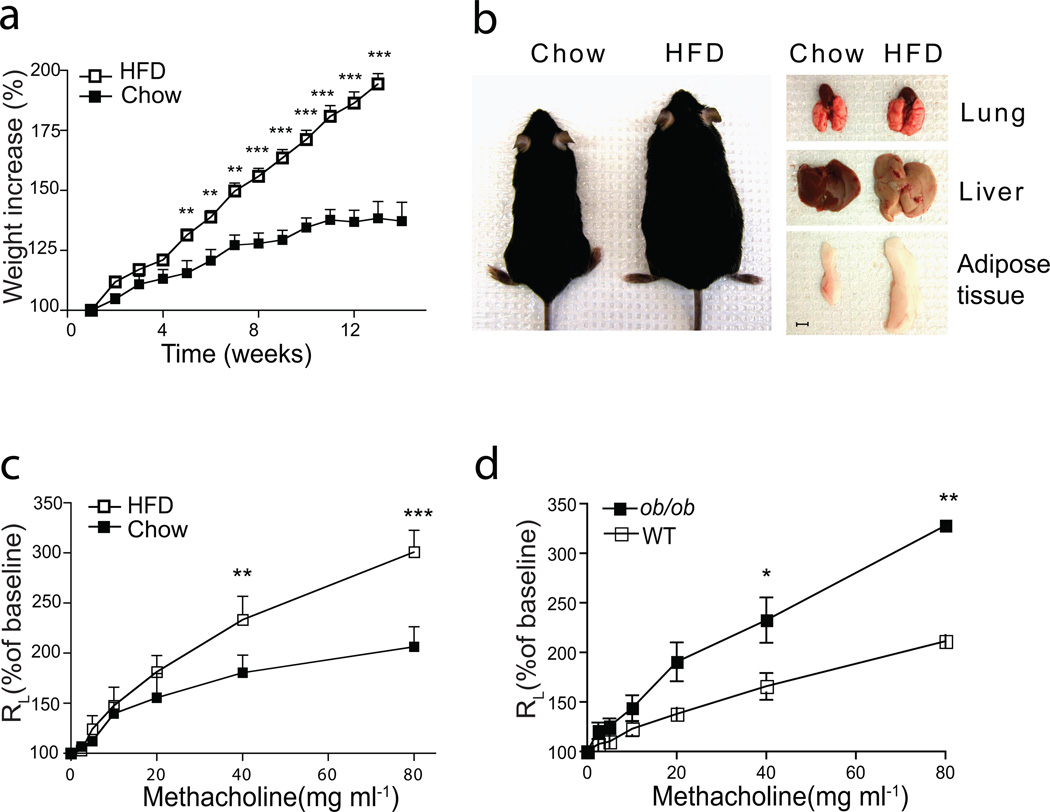
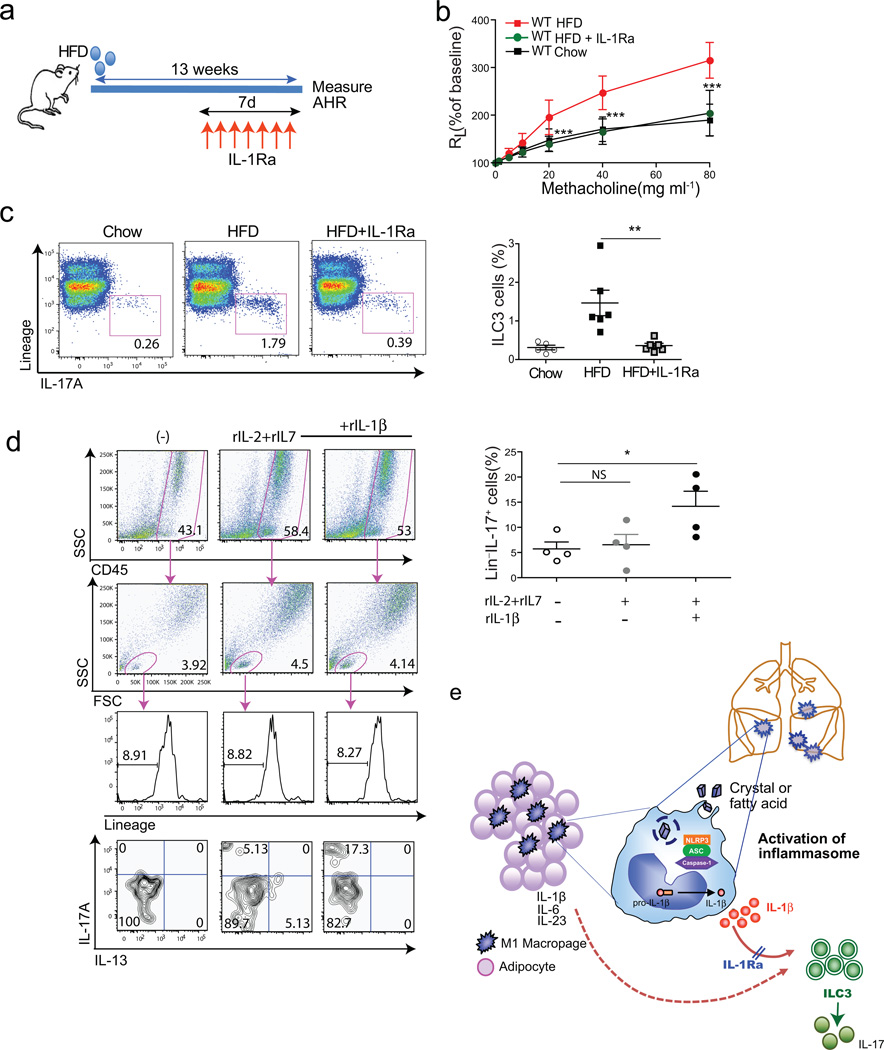
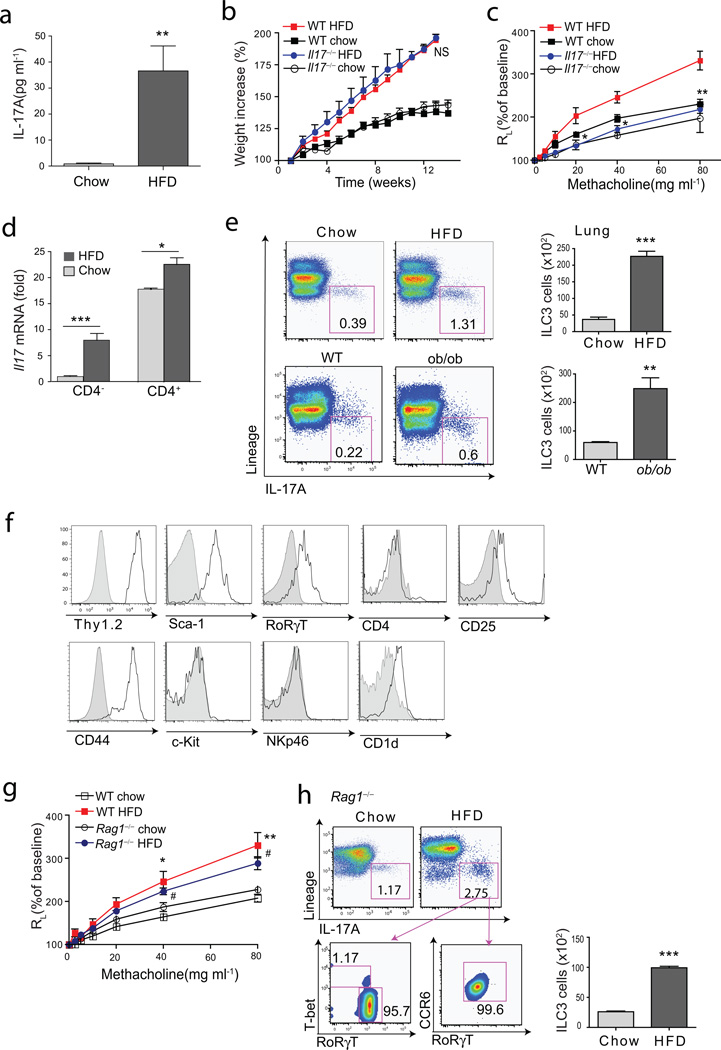
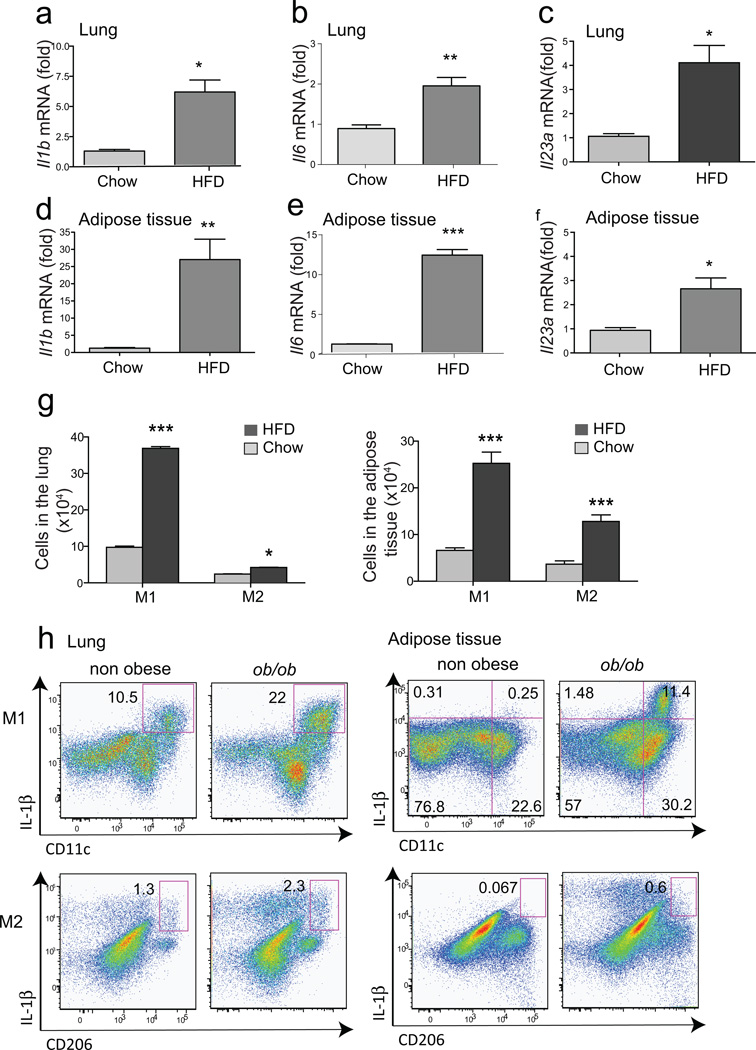
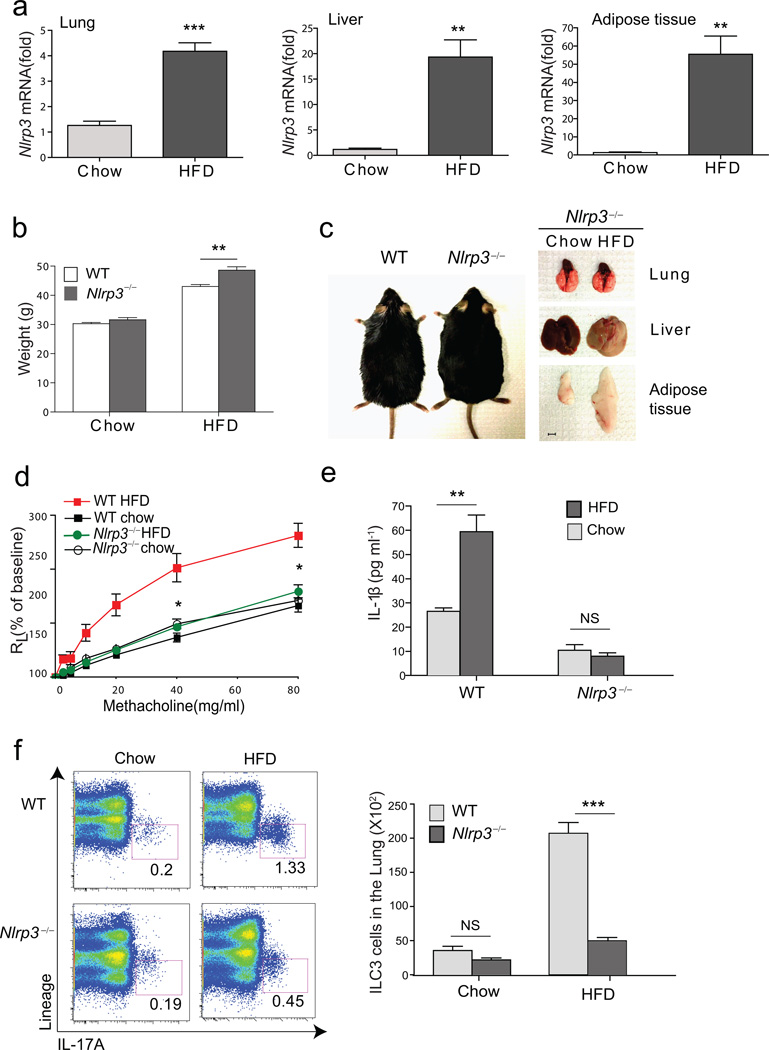
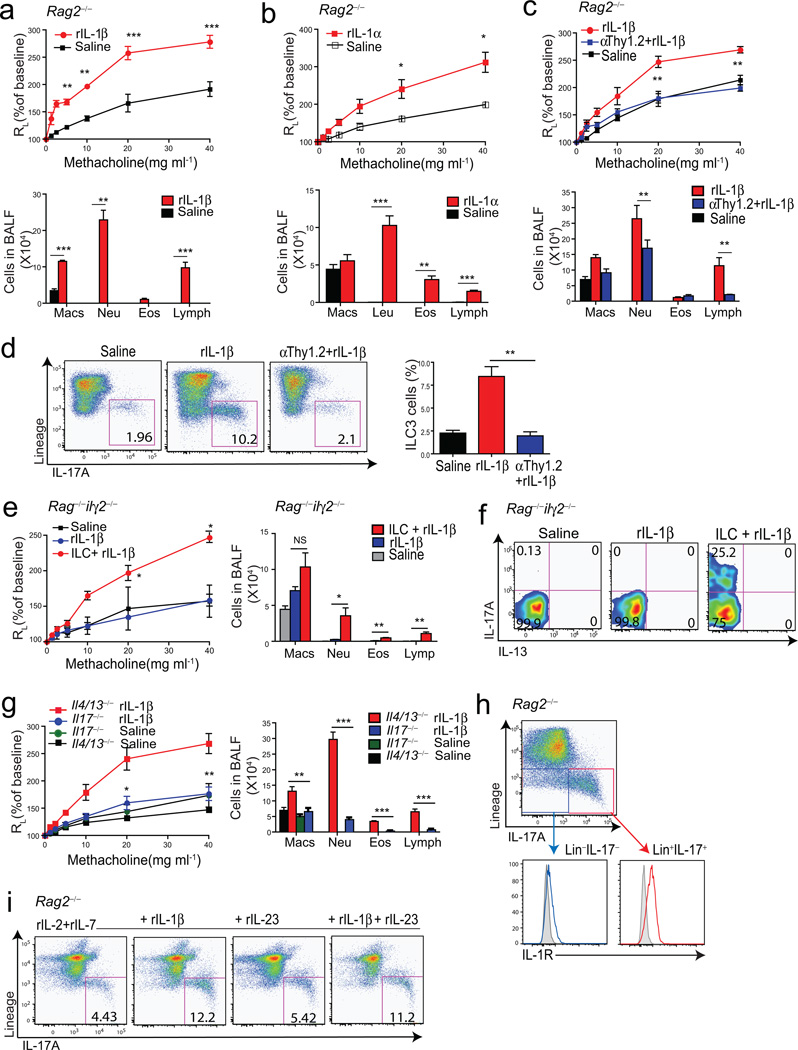
Obesity is associated with the development of asthma, which is often difficult to control. To understand the immunological pathways that lead to obesity-associated asthma, we fed mice a high-fat diet for 12 weeks, which resulted in obesity and the development of airway hyperreactivity (AHR), a cardinal feature of asthma. This AHR was independent of adaptive immunity, as it occurred in obese Rag1(-/-) mice, which lack B and T cells, and was dependent on interleukin-17A (IL-17A) and the NLRP3 inflammasome, as it did not develop in obese Il17a(-/-) or Nlrp3(-/-) mice. AHR was also associated with the expansion of CCR6(+) type 3 innate lymphoid cells (ILCs) producing IL-17A (ILC3 cells) in the lung, which could by themselves mediate AHR when adoptively transferred into Rag2(-/-); Il2rg(-/-) mice treated with recombinant IL-1β. Macrophage-derived IL-1β production was induced by HFD and expanded the number of lung ILC3 cells. Blockade of IL-1β with an IL-1 receptor antagonist abolished obesity-induced AHR and reduced the number of ILC3 cells. As we found ILC3-like cells in the bronchoalveolar lavage fluid of individuals with asthma, we suggest that obesity-associated asthma is facilitated by inflammation mediated by NLRP3, IL-1β and ILC3 cells.
肥胖与哮喘的发展有关,而哮喘往往难以控制。为了了解导致肥胖相关哮喘的免疫途径,我们用高脂肪饮食喂养小鼠 12 周,导致肥胖和气道高反应性(AHR)的发展,这是哮喘的一个主要特征。这种 AHR 不依赖适应性免疫,因为在缺乏 B 和 T 细胞的肥胖 Rag1(-/-)小鼠中发生,并且依赖于白细胞介素-17A(IL-17A)和 NLRP3 炎性体,因为在肥胖 Il17a(-/-)或 Nlrp3(-/-)小鼠中没有发生。AHR 还与肺中 CCR6(+) 3 型固有淋巴细胞(ILC)的扩张有关,这些细胞产生 IL-17A(ILC3 细胞),当它们被过继转移到 Rag2(-/-);Il2rg(-/-)并用重组 IL-1β处理的小鼠中时,可自身介导 AHR。HFD 诱导巨噬细胞衍生的 IL-1β产生,并扩大了肺 ILC3 细胞的数量。用 IL-1 受体拮抗剂阻断 IL-1β 可消除肥胖诱导的 AHR 并减少 ILC3 细胞的数量。由于我们在哮喘患者的支气管肺泡灌洗液中发现了 ILC3 样细胞,因此我们认为肥胖相关哮喘是由 NLRP3、IL-1β 和 ILC3 细胞介导的炎症所促进的。