Division of Trauma, Surgical Critical Care, and Burns, University of California, San Diego, 200 West Arbor Dr,, #8896, San Diego CA 92103-8896, United States of America.
World J Emerg Surg. 2013 Dec 17;8(1):53. doi: 10.1186/1749-7922-8-53.
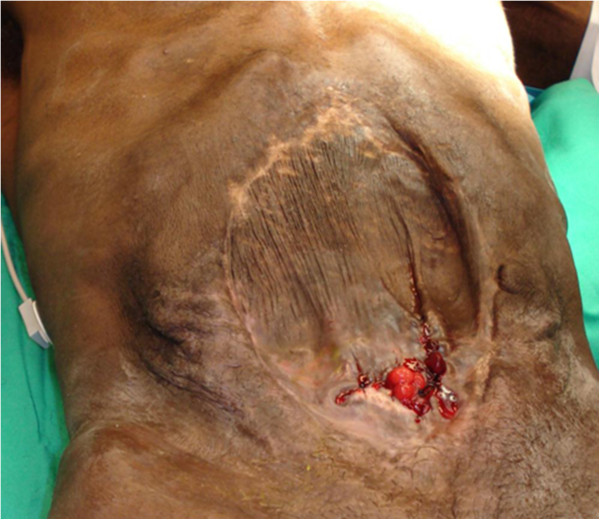
Damage control laparotomy was first described by Dr. Harlan Stone in 1983 when he suggested that patients with severe trauma should have their primary procedures abbreviated when coagulopathy was encountered. He recommended temporizing patients with abdominal packing and temporary closure to allow restoration of normal physiology prior to returning to the operating room for definitive repair. The term damage control in the trauma setting was coined by Rotondo et al., in 1993. Studies in subsequent years have validated this technique by demonstrating decreased mortality and immediate post-operative complications. The indications for damage control laparotomy have evolved to encompass abdominal compartment syndrome, abdominal sepsis, vascular and acute care surgery cases. The perioperative critical care provided to these patients, including sedation, paralysis, nutrition, and fluid management strategies may improve closure rates and recovery. In the rare cases of inability to primarily close the abdomen, there are a number of reconstructive strategies that may be used in the acute and chronic phases of abdominal closure.
损伤控制性剖腹术最早由 Harlan Stone 博士于 1983 年描述,他建议当遇到凝血功能障碍时,严重创伤患者应简化主要手术。他建议用腹部填塞和临时关闭来临时处理患者,以在返回手术室进行确定性修复之前恢复正常生理机能。1993 年,Rotondo 等人在创伤环境中创造了“损伤控制”一词。近年来的研究通过证明死亡率和术后即刻并发症降低验证了这一技术。损伤控制剖腹术的适应证已经发展到包括腹腔间隔室综合征、腹部脓毒症、血管和急性外科手术病例。为这些患者提供的围手术期重症监护,包括镇静、麻痹、营养和液体管理策略,可能会提高关闭率和恢复速度。在极少数无法直接关闭腹部的情况下,在腹部闭合的急性和慢性阶段,可以使用多种重建策略。