De Montigny Audrée, Elhiri Ismaël, Allyson Julie, Cyr Michel, Massicotte Guy
Groupe de Recherche en Neuroscience, Département de Biologie Médicale, Université du Québec à Trois-Rivières, Trois-Rivières, QC, Canada G9A 5H7.
Neural Plast. 2013;2013:261593. doi: 10.1155/2013/261593. Epub 2013 Nov 20.
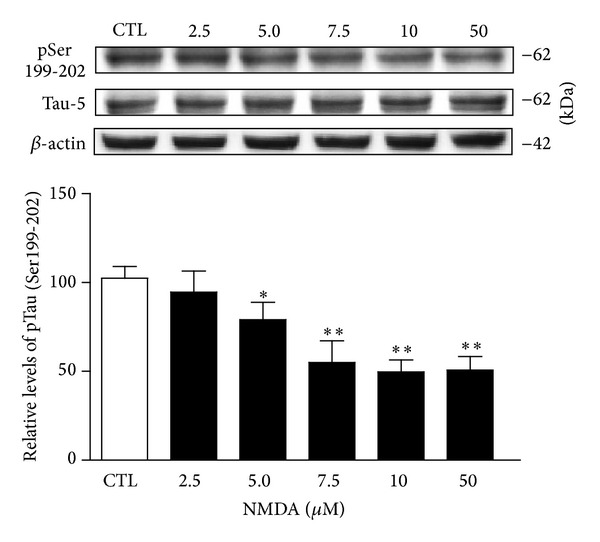
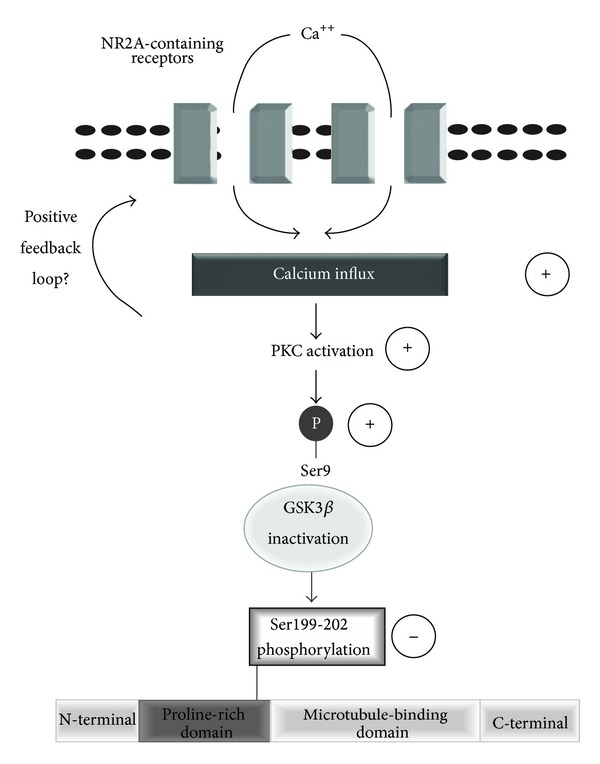
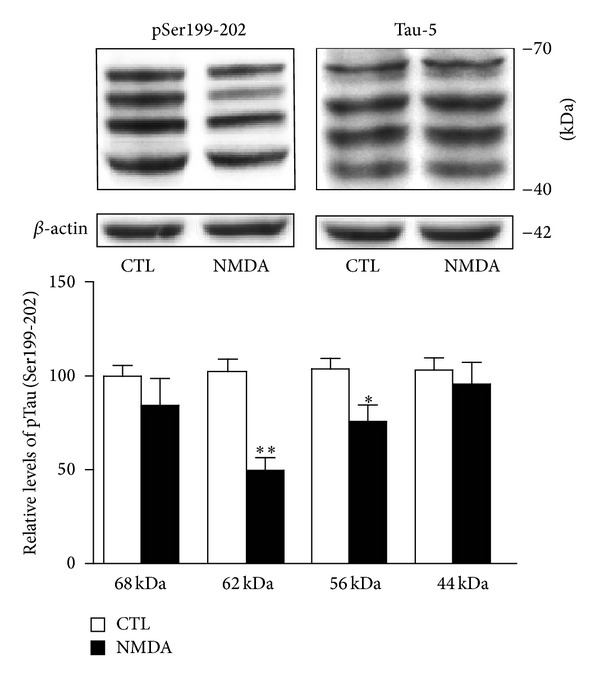
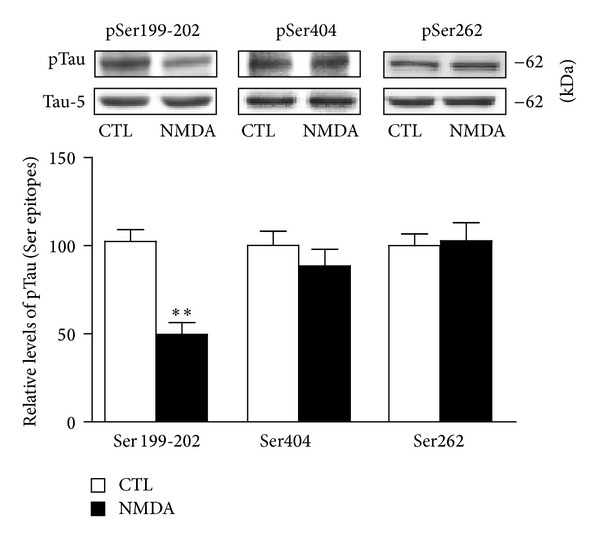
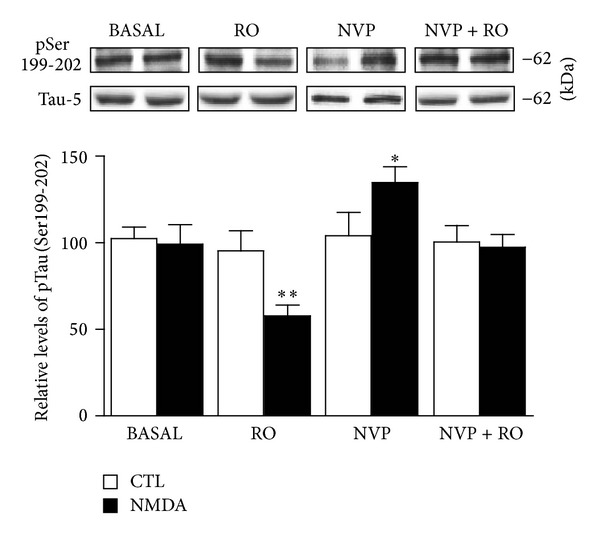
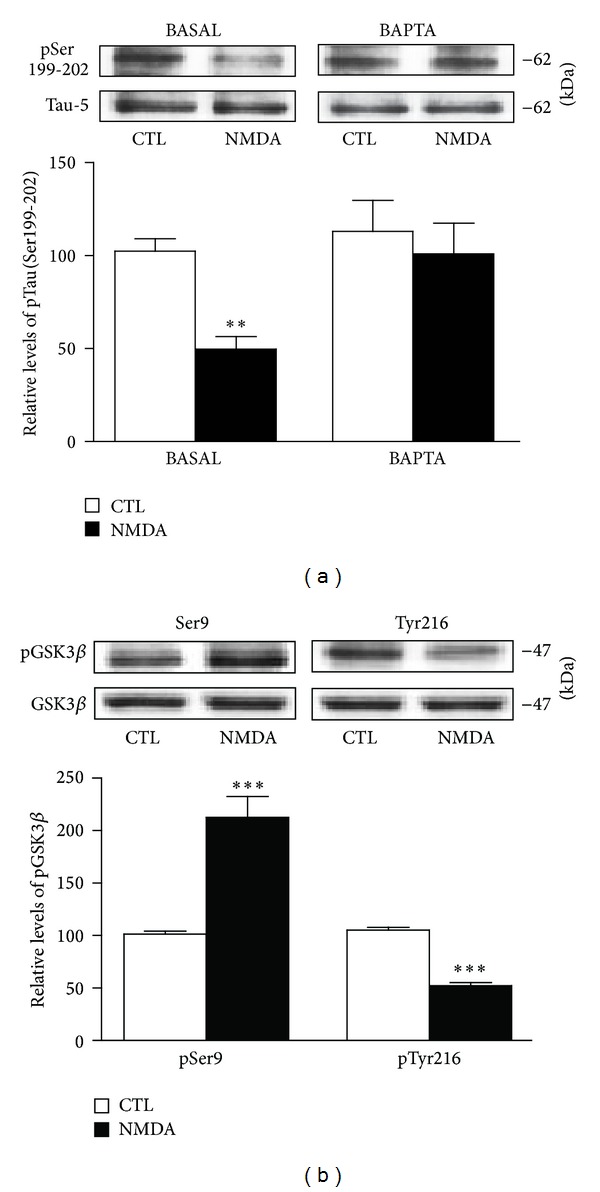
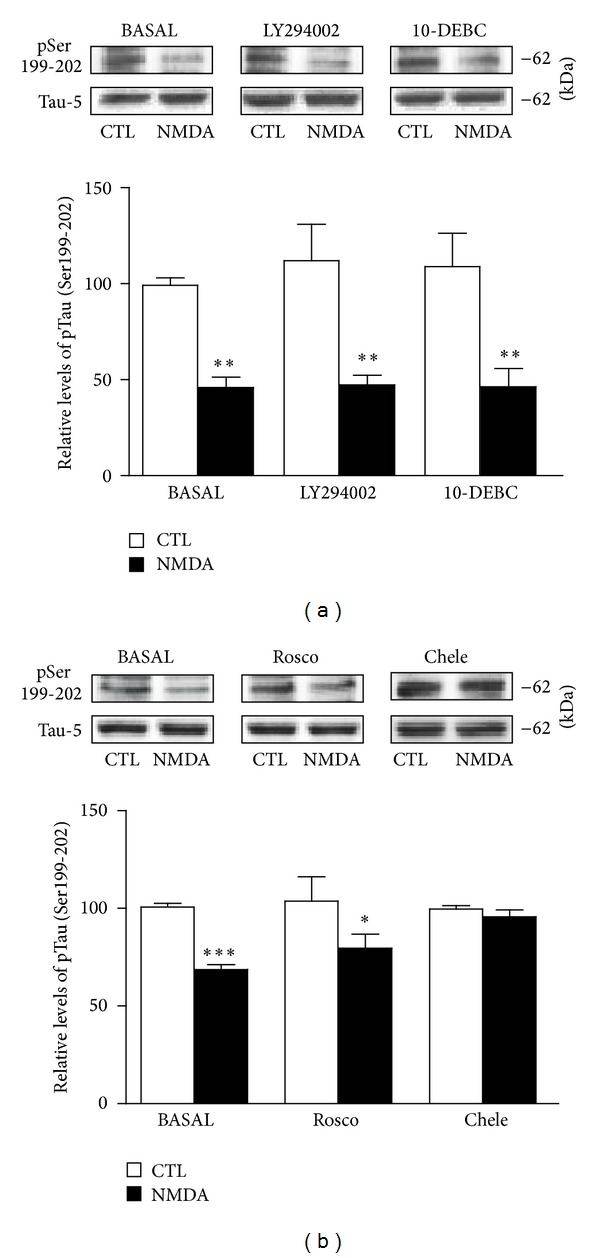
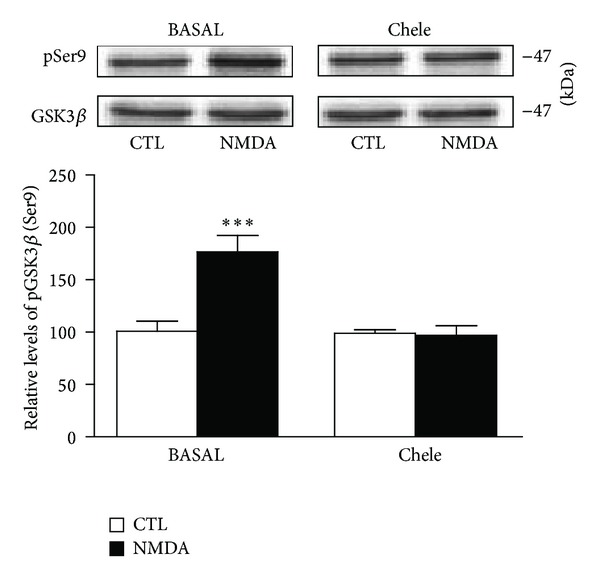
The molecular mechanisms that regulate Tau phosphorylation are complex and currently incompletely understood. In the present study, pharmacological inhibitors were deployed to investigate potential processes by which the N-methyl-D-aspartate (NMDA) subtype of glutamate receptors modulates Tau phosphorylation in rat hippocampal slices. Our results demonstrated that Tau phosphorylation at Ser199-202 residues was decreased in NMDA-treated hippocampal slices, an effect that was not reproduced at Ser262 and Ser404 epitopes. NMDA-induced reduction of Tau phosphorylation at Ser199-202 was further promoted when NR2A-containing receptors were pharmacologically isolated and were completely abrogated by the NR2A receptor antagonist NVP-AAM077. Compared with nontreated slices, we observed that NMDA receptor activation was reflected in high Ser9 and low Tyr216 phosphorylation of glycogen synthase kinase-3 beta (GSK3β), suggesting that NMDA receptor activation might diminish Tau phosphorylation via a pathway involving GSK3β inhibition. Accordingly, we found that GSK3β inactivation by a protein kinase C- (PKC-) dependent mechanism is involved in the NMDA-induced reduction of Tau phosphorylation at Ser199-202 epitopes. Taken together, these data indicate that NR2A receptor activation may be important in limiting Tau phosphorylation by a PKC/GSK3β pathway and strengthen the idea that these receptors might act as an important molecular device counteracting neuronal cell death mechanisms in various pathological conditions.
调节 Tau 蛋白磷酸化的分子机制十分复杂,目前尚未完全明确。在本研究中,我们使用了药理学抑制剂来探究谷氨酸受体的 N-甲基-D-天冬氨酸(NMDA)亚型调节大鼠海马切片中 Tau 蛋白磷酸化的潜在过程。我们的结果表明,在 NMDA 处理的海马切片中,Ser199 - 202 位点的 Tau 蛋白磷酸化水平降低,而在 Ser262 和 Ser404 表位未出现这种效应。当通过药理学方法分离含 NR2A 的受体时,NMDA 诱导的 Ser199 - 202 位点 Tau 蛋白磷酸化的降低进一步加剧,并且被 NR2A 受体拮抗剂 NVP - AAM077 完全消除。与未处理的切片相比,我们观察到 NMDA 受体激活表现为糖原合酶激酶 - 3β(GSK3β)的 Ser9 高磷酸化和 Tyr216 低磷酸化,这表明 NMDA 受体激活可能通过涉及抑制 GSK3β 的途径减少 Tau 蛋白磷酸化。因此,我们发现蛋白激酶 C(PKC)依赖性机制导致的 GSK3β 失活参与了 NMDA 诱导的 Ser199 - 202 表位 Tau 蛋白磷酸化的降低。综上所述,这些数据表明 NR2A 受体激活可能通过 PKC/GSK3β 途径在限制 Tau 蛋白磷酸化方面发挥重要作用,并强化了这些受体可能作为一种重要分子机制在各种病理条件下对抗神经元细胞死亡的观点。