State Key Laboratory of Biocontrol and School of Life Sciences, Sun Yat-sen University Guangzhou, 510275, China ; Evolutionary Ecology Group and Computational and Molecular Population Genetics, Institute of Evolution and Ecology, University Bern Balzerstrasse 6, Bern, CH-3012, Switzerland.
Centre for Ornithology, University of Birmingham Edgbaston, Birmingham, BT15 2TT, UK.
Ecol Evol. 2013 Nov;3(14):4683-95. doi: 10.1002/ece3.856. Epub 2013 Oct 28.
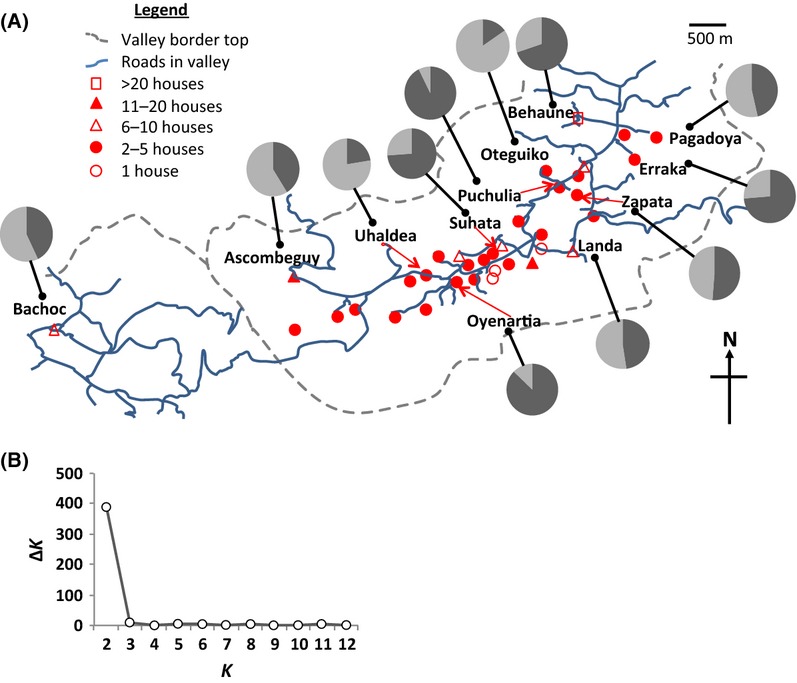
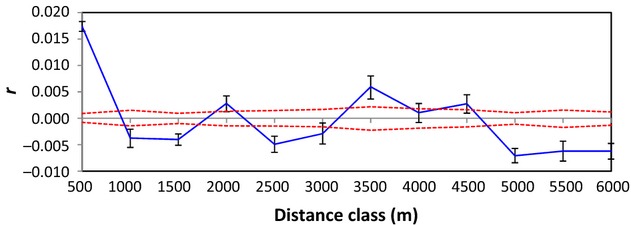
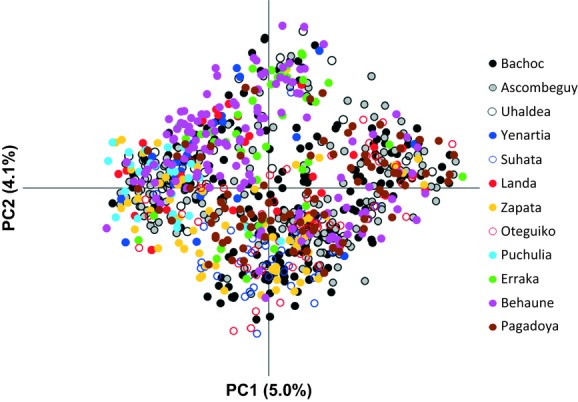
Genetic diversity is one of the key evolutionary variables that correlate with population size, being of critical importance for population viability and the persistence of species. Genetic diversity can also have important ecological consequences within populations, and in turn, ecological factors may drive patterns of genetic diversity. However, the relationship between the genetic diversity of a population and how this interacts with ecological processes has so far only been investigated in a few studies. Here, we investigate the link between ecological factors, local population size, and allelic diversity, using a field study of a common bird species, the house sparrow (Passer domesticus). We studied sparrows outside the breeding season in a confined small valley dominated by dispersed farms and small-scale agriculture in southern France. Population surveys at 36 locations revealed that sparrows were more abundant in locations with high food availability. We then captured and genotyped 891 house sparrows at 10 microsatellite loci from a subset of these locations (N = 12). Population genetic analyses revealed weak genetic structure, where each locality represented a distinct substructure within the study area. We found that food availability was the main factor among others tested to influence the genetic structure between locations. These results suggest that ecological factors can have strong impacts on both population size per se and intrapopulation genetic variation even at a small scale. On a more general level, our data indicate that a patchy environment and low dispersal rate can result in fine-scale patterns of genetic diversity. Given the importance of genetic diversity for population viability, combining ecological and genetic data can help to identify factors limiting population size and determine the conservation potential of populations.
遗传多样性是与种群大小相关的关键进化变量之一,对种群的生存能力和物种的存续至关重要。遗传多样性在种群内也可能产生重要的生态后果,而生态因素反过来又可能影响遗传多样性的模式。然而,到目前为止,只有少数研究调查了一个种群的遗传多样性与其与生态过程相互作用的关系。在这里,我们使用对一种常见鸟类——家麻雀(Passer domesticus)的实地研究来调查生态因素、当地种群大小和等位基因多样性之间的联系。我们在法国南部一个以分散的农场和小规模农业为主的封闭小山谷中对非繁殖季节的麻雀进行了研究。在 36 个地点进行的种群调查显示,在食物供应丰富的地方麻雀更为丰富。然后,我们从这些地点中的一部分(N = 12)捕获并在 10 个微卫星基因座上对 891 只家麻雀进行了基因型分析。种群遗传分析显示出微弱的遗传结构,每个地点都代表了研究区域内的一个独特的亚结构。我们发现,食物供应是影响地点间遗传结构的主要因素之一,其他因素也在测试中。这些结果表明,即使在小规模的情况下,生态因素也可以对种群大小本身和种群内遗传变异产生强烈的影响。从更普遍的意义上讲,我们的数据表明,斑块状环境和低扩散率可能导致遗传多样性的精细尺度模式。鉴于遗传多样性对种群生存能力的重要性,结合生态和遗传数据可以帮助确定限制种群大小的因素,并确定种群的保护潜力。