Riedel N, Fasold H
Biochem J. 1987 Jan 1;241(1):203-12. doi: 10.1042/bj2410203.
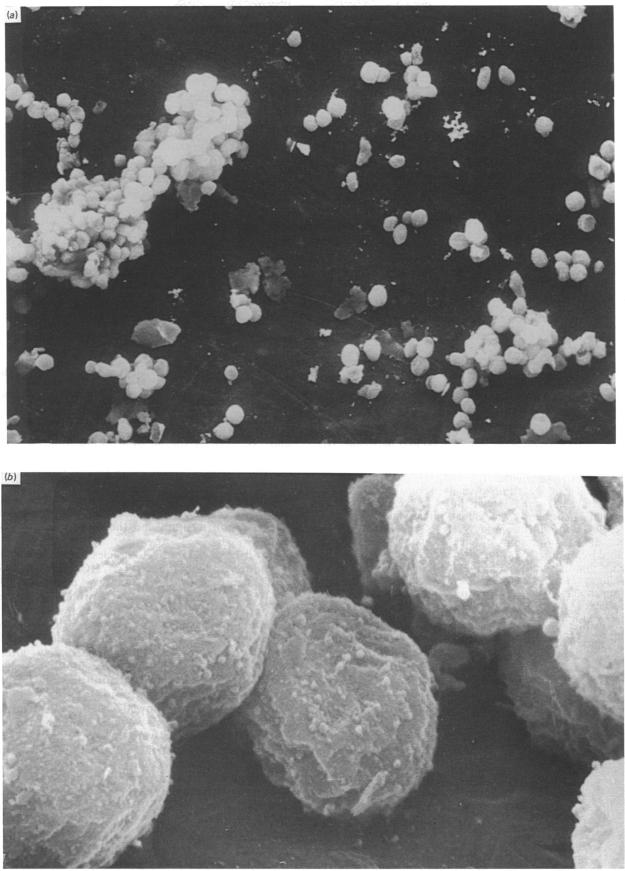
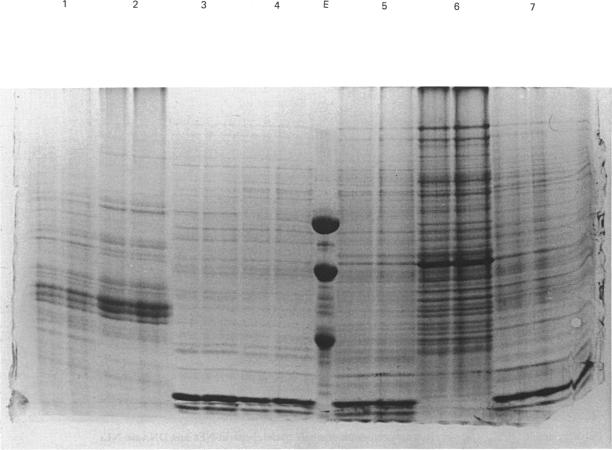
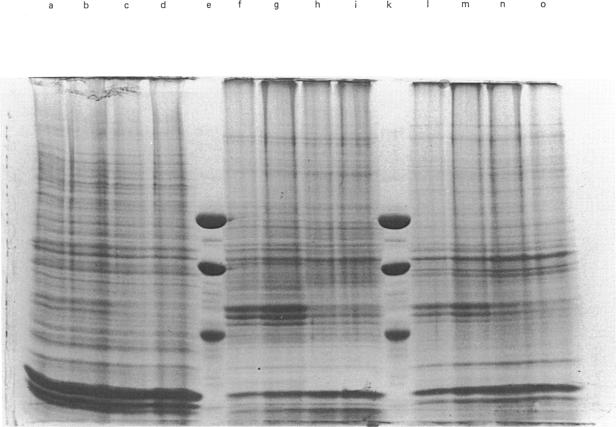
We describe a procedure for the preparation of sealed nuclear-envelope vesicles from rat liver nuclei. These vesicles are strikingly similar in their polypeptide composition when compared with those of nuclear envelopes prepared conventionally using deoxyribonuclease I. Subfractionation analysis by means of extraction with high salt and urea show that the components of the nuclear envelope, e.g. the pore-complex/lamina fraction, are present. The residual DNA content is only 1.5%, and typical preparations consist of about 80% vesicles, with the vesicular character of these envelopes shown by microscopic and biochemical studies. The vesicles can be obtained in high yield, are tight and stable for at least two days and are enriched in a nucleoside triphosphatase thought to be involved in nucleocytoplasmic transport processes. Because the vesicles are largely free of components of the nuclear interior, but retain properties of intact nuclei, we believe that they are a valuable model system to study nucleocytoplasmic transport. Although in transport studies with isolated nuclei interference from intranuclear events has to be considered, the nuclear-envelope vesicles provide the possibility of studying translocation alone. Furthermore, the less complex nature of these vesicles compared with whole nuclei should facilitate investigation of the components involved in the regulation of nuclear transport processes.
我们描述了一种从大鼠肝细胞核制备密封核膜囊泡的方法。与使用脱氧核糖核酸酶I常规制备的核膜相比,这些囊泡的多肽组成惊人地相似。通过高盐和尿素提取进行的亚分级分析表明,核膜的成分,如孔复合体/核纤层部分,是存在的。残余DNA含量仅为1.5%,典型的制备物约由80%的囊泡组成,这些膜的囊泡特征通过显微镜和生化研究得以显示。囊泡可以高产率获得,紧密且至少两天内稳定,并富含一种被认为参与核质运输过程的核苷三磷酸酶。由于这些囊泡基本不含核内成分,但保留了完整细胞核的特性,我们认为它们是研究核质运输的有价值的模型系统。尽管在对分离细胞核的运输研究中必须考虑来自核内事件的干扰,但核膜囊泡提供了单独研究转运的可能性。此外,与整个细胞核相比,这些囊泡的性质不太复杂,这应该有助于对参与核运输过程调节的成分进行研究。