Ocean Research Institute, the University of Tokyo, Tokyo, Japan .
Center for Advanced Marine Core Research, Kochi University, Kochi, Japan .
Proc Jpn Acad Ser B Phys Biol Sci. 2007 Nov;83(7):199-204. doi: 10.2183/pjab/83.199.
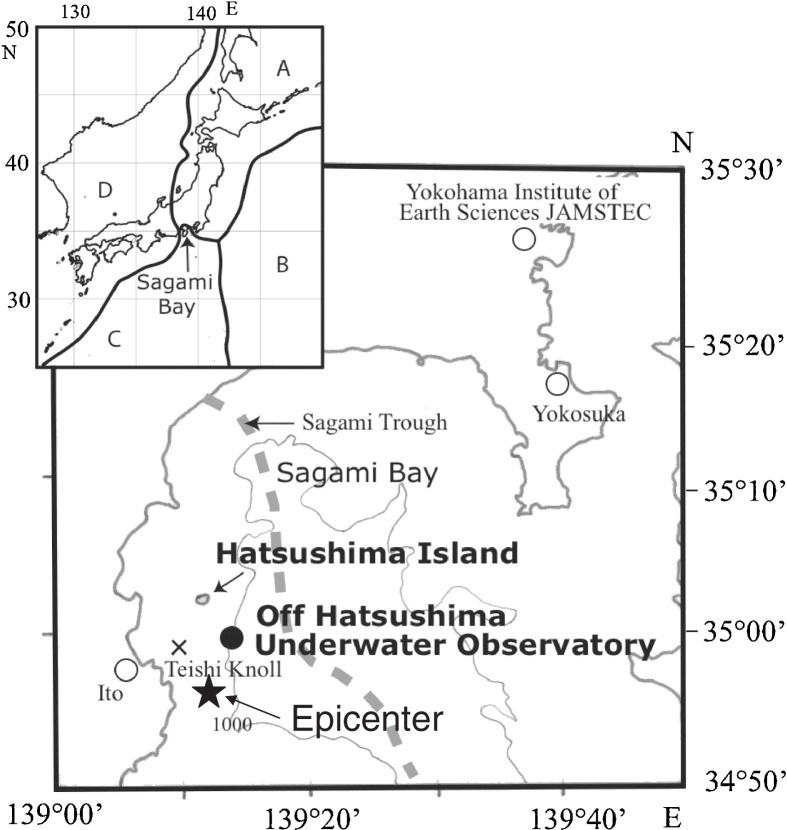
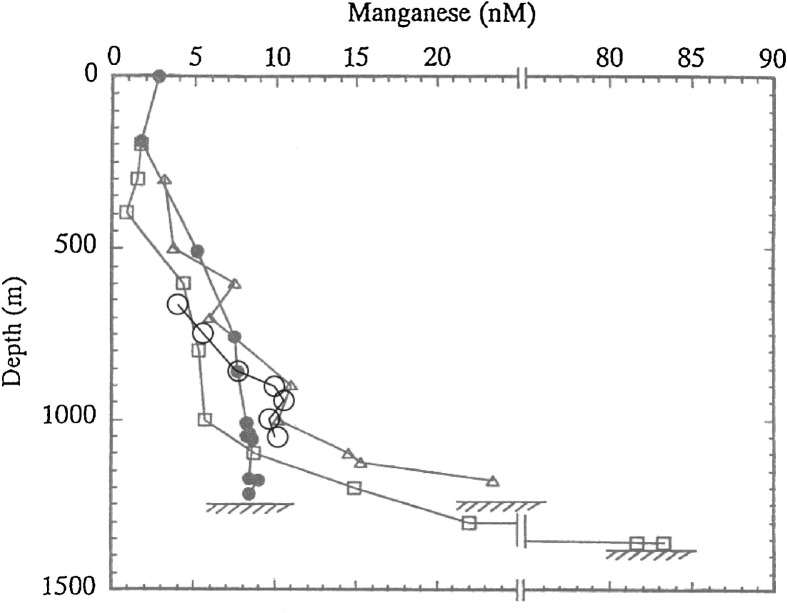
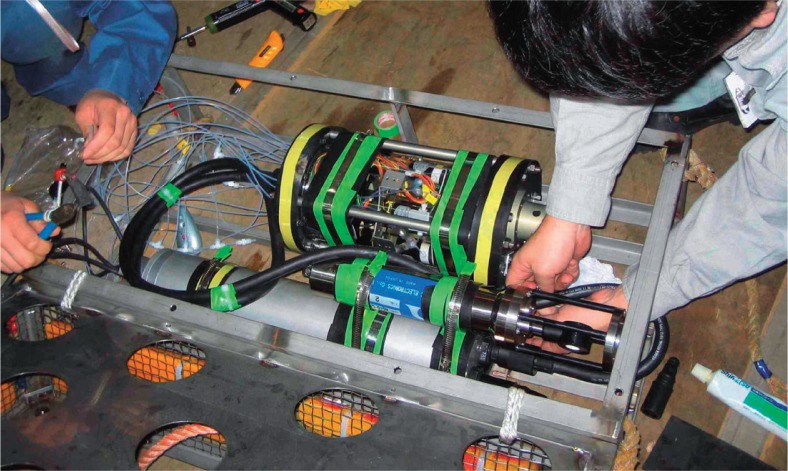
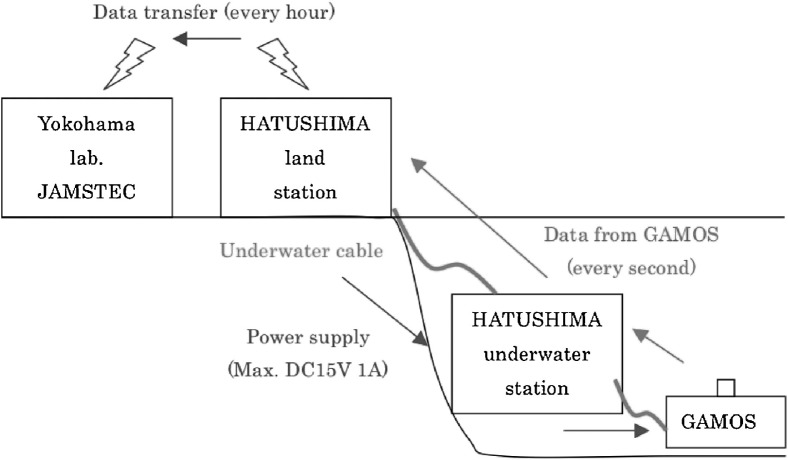
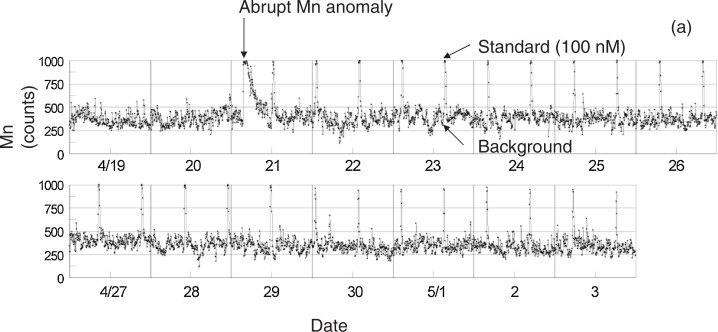
We successfully deployed an in situ automatic chemical analyzer sensitive to manganese (Mn) in seawater for a period of 81 days for the first time on the deep seafloor of Sagami Bay along a convergent plate boundary south of Japan. The in situ Mn analyzer (GAMOS-IV) was connected to a submarine cable as a means to supply power and to relay real time data. During the observation period from April 5 till June 25, 2006, the amount of measured Mn was seen to increase abruptly up to 10 times that of the background level only on April 21, probably triggered by a M5.8 earthquake which occurred ∼7 km south-southwest of the observation site. This study demonstrates the suitability of submarine cables for the long-term geochemical monitoring of deep sea environments.
我们首次成功地在日本南部 Sagami 湾沿聚合板块边界的深海海底部署了原位自动海水锰(Mn)化学分析仪,该仪器可连续工作 81 天。原位 Mn 分析仪(GAMOS-IV)通过海底电缆连接,为其提供电力并传输实时数据。在 2006 年 4 月 5 日至 6 月 25 日的观测期间,仅在 4 月 21 日观察到测量的 Mn 量突然增加到背景水平的 10 倍,这可能是由观测点西南偏南约 7 公里处发生的 M5.8 地震引发的。本研究证明了海底电缆在深海环境的长期地球化学监测中的适用性。