Department of Neuroscience, Section Anatomy, University Medical Center Groningen, University of Groningen Groningen, Netherlands.
Department of Neuroscience, Section Medical Physiology, University Medical Center Groningen, University of Groningen Groningen, Netherlands.
Front Neuroanat. 2013 Dec 6;7:41. doi: 10.3389/fnana.2013.00041. eCollection 2013.
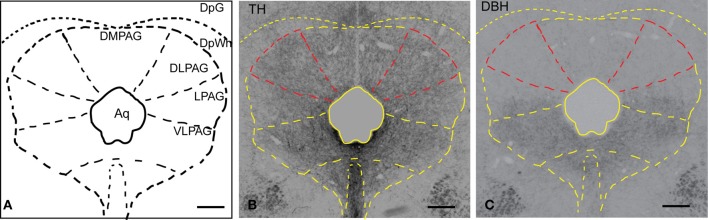
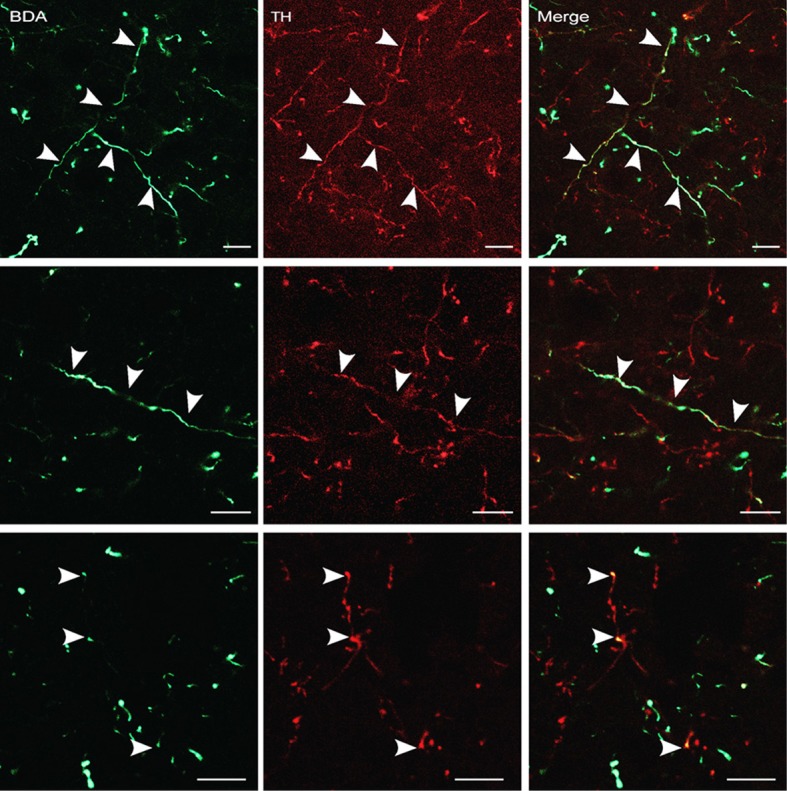
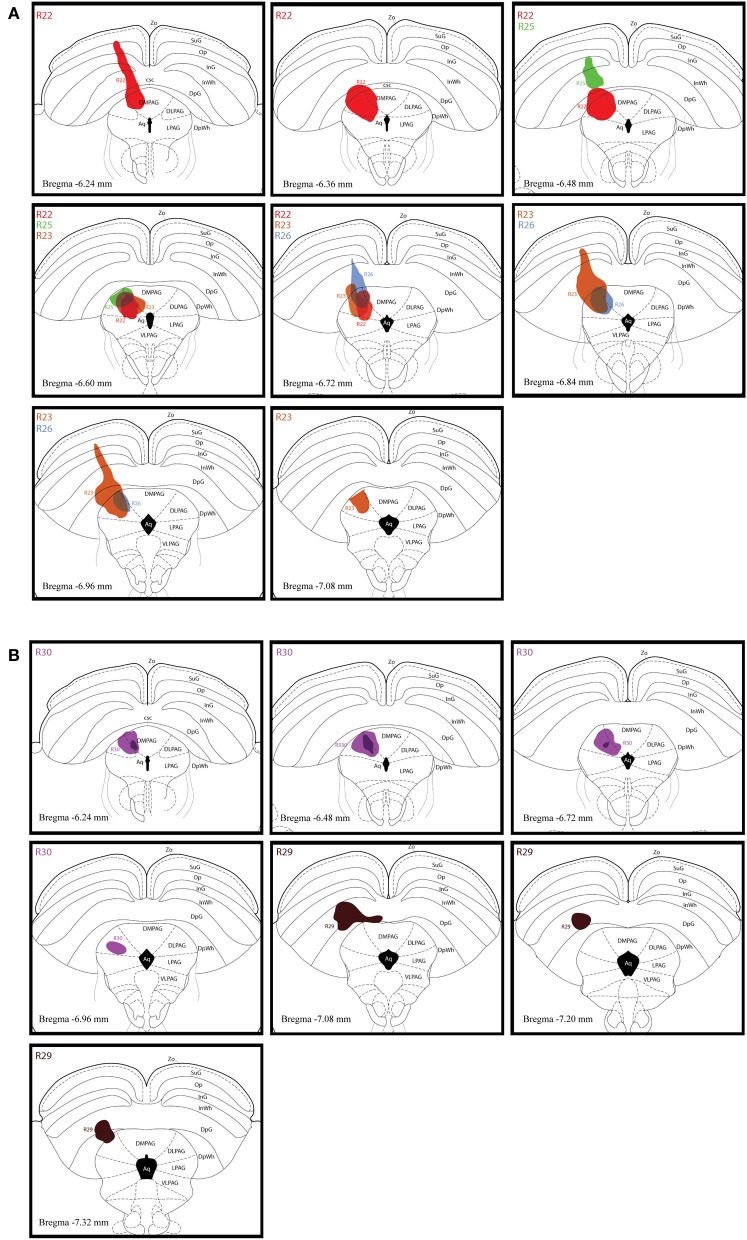
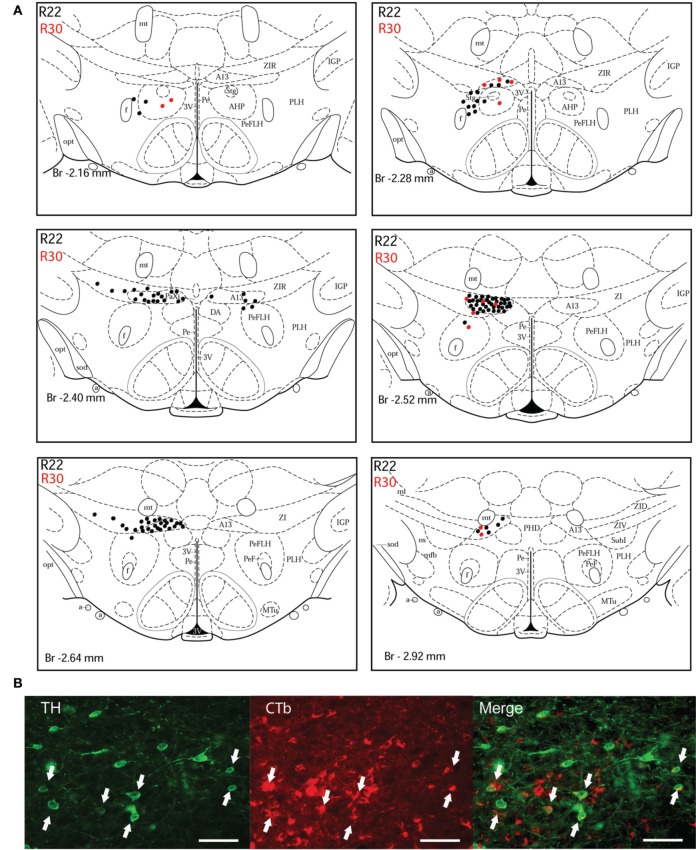
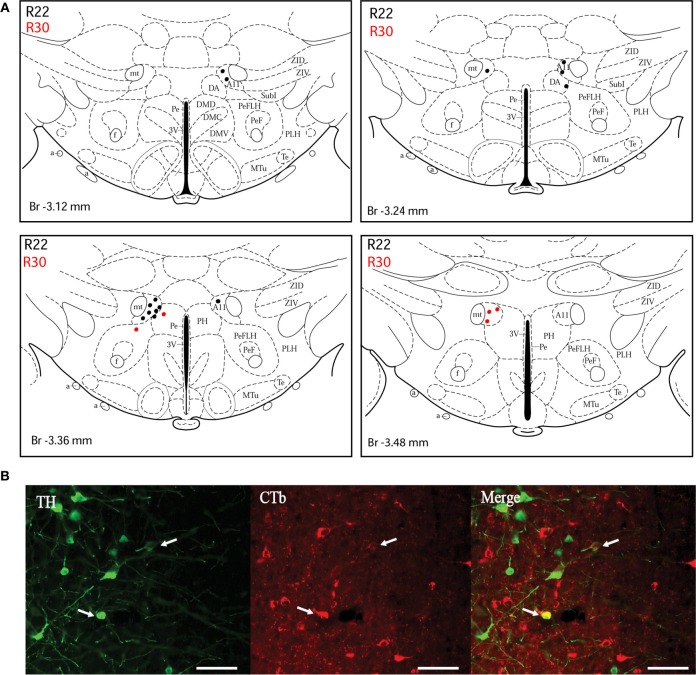
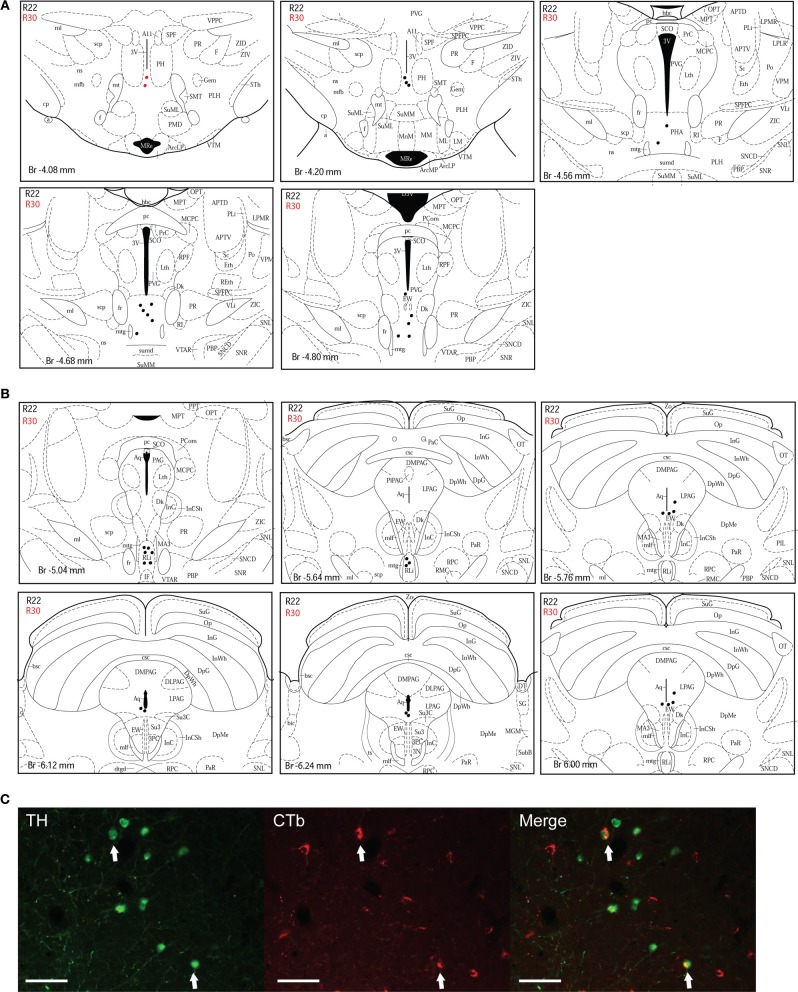
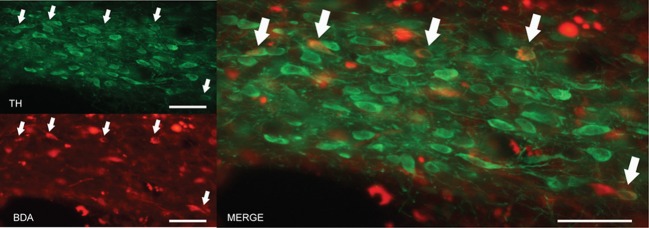
Several findings have indicated an involvement of dopamine in panic and defensive behaviors. The dorsolateral column of the periaqueductal gray (dlPAG) is crucially involved in the expression of panic attacks in humans and defensive behaviors, also referred to as panic-like behaviors, in animals. Although the dlPAG is known to receive a specific innervation of dopaminergic fibers and abundantly expresses dopamine receptors, the origin of this dopaminergic input is largely unknown. This study aimed at mapping the dopaminergic projections to the dlPAG in order to provide further insight into the panic-like related behavior circuitry of the dlPAG. For this purpose, the retrograde tracer cholera toxin subunit b (CTb) was injected into the dlPAG of male Wistar rats and double immunofluorescence for CTb and tyrosine hydroxylase (TH), the rate-limiting enzyme in the synthesis of dopamine, was performed. Neurons labeled for both CTb and TH were counted in different dopaminergic cell groups. The findings indicate that the dopaminergic nerve terminals present in the dlPAG originate from multiple dopamine-containing cell groups in the hypothalamus and mesencephalon. Interestingly, the A13 cell group is the main source of dopaminergic afferents to the dlPAG and contains at least 45% of the total number of CTb/TH-positive neurons. Anterograde tracing with biotinylated dextran amine (BDA) combined with double immunofluorescence for BDA and TH confirmed the projections from the A13 cell group to the dlPAG. The remainder of the dopamine-positive terminals present in the dlPAG was found to originate from the extended A10 cell group and the A11 group. The A13 cell group is known to send dopaminergic efferents to several other brain regions implicated in defensive behavior, including the central amygdala and ventromedial hypothalamus. Therefore, although direct behavioral evidence is lacking, our finding that the A13 cell group is also the main source of dopaminergic input to the dlPAG suggests that dopamine might contribute to the regulation of dlPAG-mediated defensive behaviors.
一些研究结果表明,多巴胺参与了恐慌和防御行为。中脑导水管周围灰质(periaqueductal gray,PAG)的背外侧柱在人类惊恐发作的表达和动物的防御行为(也称为类似惊恐的行为)中起着至关重要的作用。尽管已知背外侧柱接收多巴胺能纤维的特定神经支配,并大量表达多巴胺受体,但这种多巴胺能输入的来源在很大程度上尚不清楚。本研究旨在绘制多巴胺能投射到背外侧柱的图谱,以进一步深入了解背外侧柱与类似惊恐相关的行为回路。为此,将逆行示踪剂霍乱毒素亚单位 b(cholera toxin subunit b,CTb)注入雄性 Wistar 大鼠的背外侧柱,并进行 CTb 和酪氨酸羟化酶(tyrosine hydroxylase,TH)的双重免疫荧光染色,TH 是多巴胺合成的限速酶。在不同的多巴胺能细胞群中对同时标记 CTb 和 TH 的神经元进行计数。研究结果表明,存在于背外侧柱中的多巴胺能神经末梢源自下丘脑和中脑的多个多巴胺能细胞群。有趣的是,A13 细胞群是多巴胺能传入纤维投射到背外侧柱的主要来源,包含至少 45%的 CTb/TH 阳性神经元总数。用生物素化葡聚糖胺(biotinylated dextran amine,BDA)进行顺行示踪,结合 BDA 和 TH 的双重免疫荧光染色,证实了来自 A13 细胞群的投射到背外侧柱。在背外侧柱中发现的其余多巴胺阳性终末起源于扩展的 A10 细胞群和 A11 细胞群。已知 A13 细胞群向包括中央杏仁核和腹内侧下丘脑在内的其他几个与防御行为相关的脑区发出多巴胺能传出纤维。因此,尽管缺乏直接的行为证据,但我们发现 A13 细胞群也是背外侧柱多巴胺能传入的主要来源,这表明多巴胺可能有助于调节背外侧柱介导的防御行为。