Institute of Human Genetics, Medical University of Graz, Harrachgasse 21/8, A-8010 Graz, Austria.
BMC Med Genet. 2013 Dec 29;14:129. doi: 10.1186/1471-2350-14-129.
Germline genetic testing for familial cancer syndromes is usually performed serially for the most likely genetic causes. In recent years the way genetic testing carried out has changed, as next generation sequencing now allows the simultaneous testing of multiple susceptibility genes at low costs.
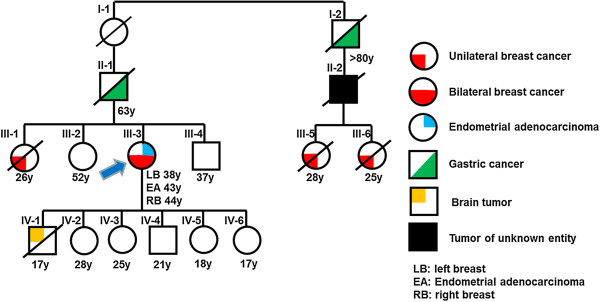
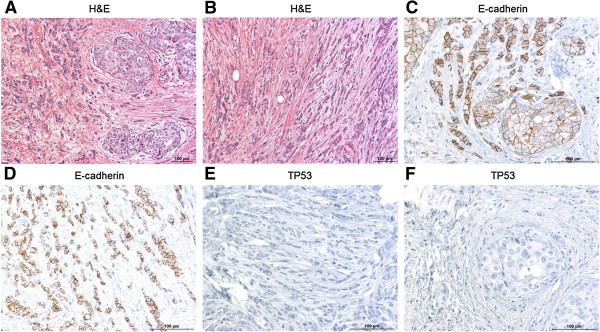
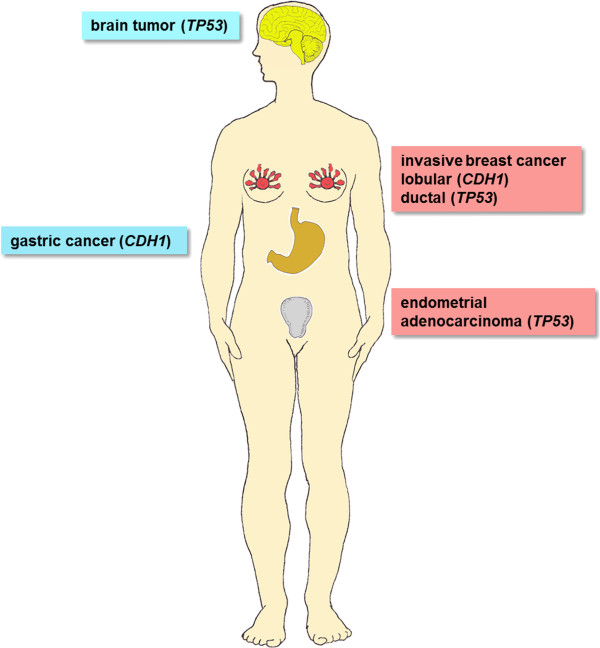
Here, we present a female with bilateral breast cancer and endometrial adenocarcinoma. After simultaneous sequencing of 150 genes (890 kb) associated with hereditary cancer we identified pathogenic mutations in two high-penetrance genes, i.e. TP53 and CDH1 that would most likely not have been elucidated by serial screening of candidate genes.
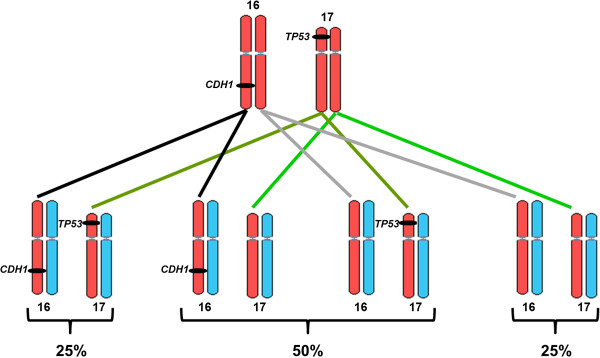
As the two mutated genes are located on different chromosomes and cause different cancer syndromes these findings had a tremendous impact not only on genetic counseling of the index patient and her family but also on subsequent surveillance strategies.
家族性癌症综合征的种系基因检测通常是针对最可能的遗传原因进行的。近年来,随着下一代测序技术的发展,它可以以较低的成本同时检测多个易感性基因,因此基因检测的方式发生了变化。
这里,我们介绍一位双侧乳腺癌和子宫内膜腺癌的女性患者。对与遗传性癌症相关的 150 个基因(890kb)进行同时测序后,我们在两个高外显率基因 TP53 和 CDH1 中发现了致病性突变,如果对候选基因进行连续筛查,这些突变很可能无法被发现。
由于这两个突变基因位于不同的染色体上,并导致不同的癌症综合征,这些发现不仅对索引患者及其家族的遗传咨询产生了巨大影响,而且对后续的监测策略也产生了巨大影响。