Clark Bryan W, Bone A J, Di Giulio R T
Nicholas School of the Environment, Duke University, Durham, NC, 27708, USA,
Environ Sci Pollut Res Int. 2014 Dec;21(24):13898-908. doi: 10.1007/s11356-013-2446-7. Epub 2013 Dec 28.
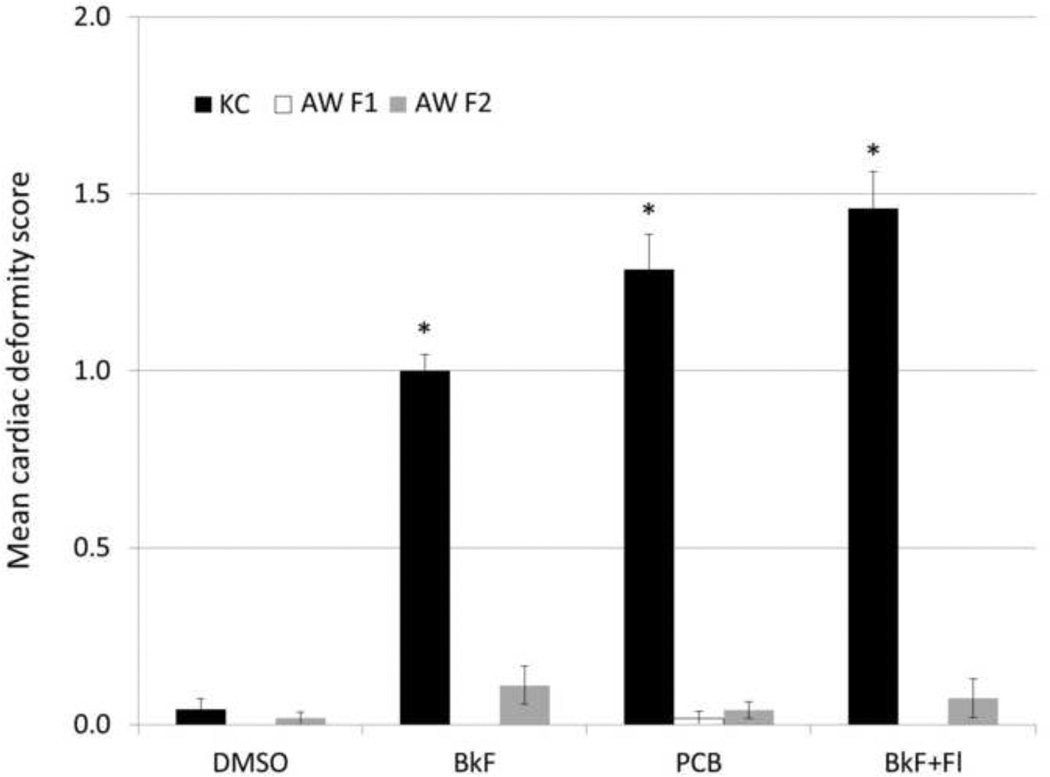
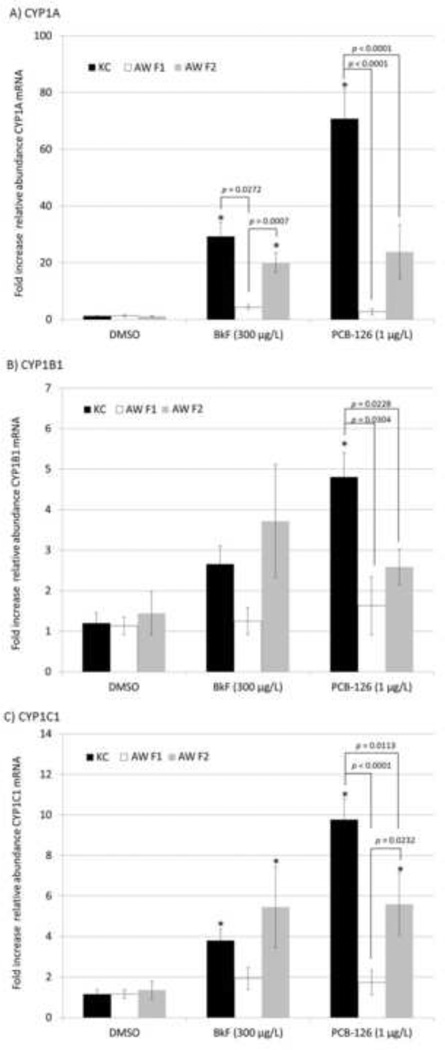
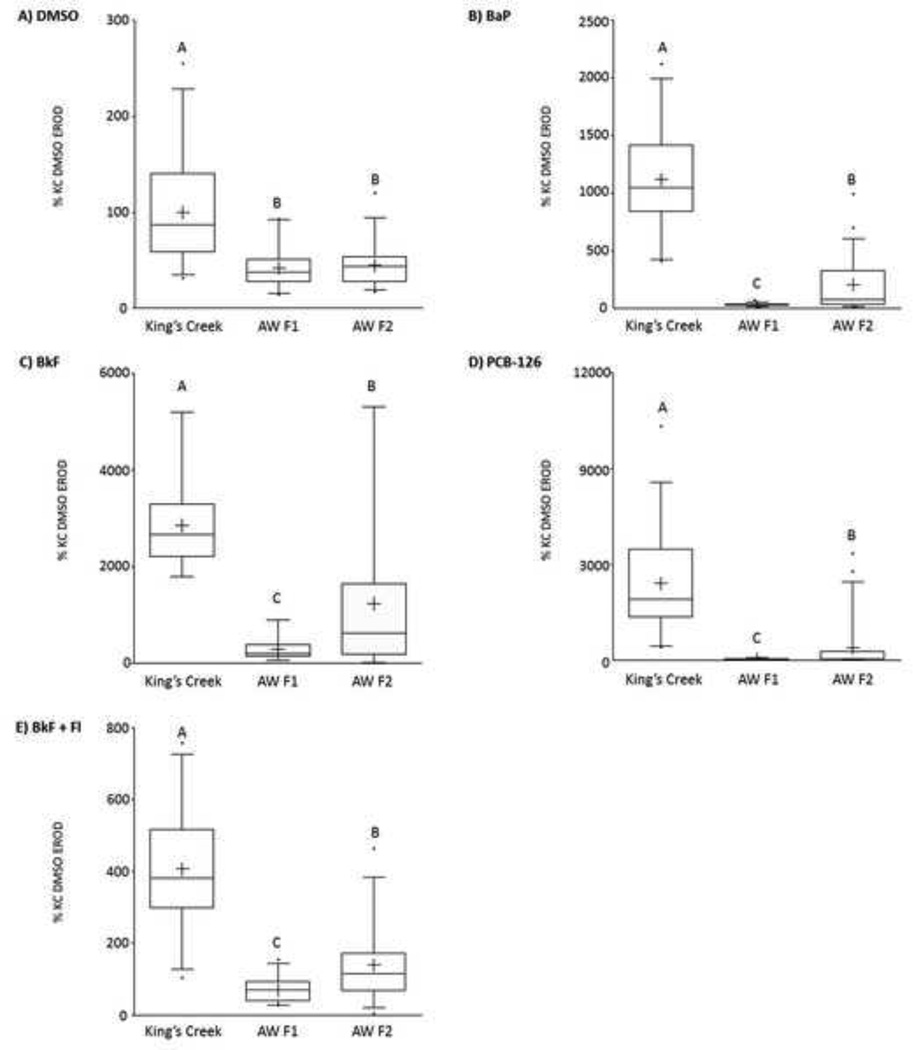
Atlantic killifish (Fundulus heteroclitus) inhabiting the Atlantic Wood Superfund site on the Elizabeth River (Portsmouth, VA, USA) are exposed to a complex mixture of polycyclic aromatic hydrocarbons (PAHs) from former creosote operations, but are resistant to the acute toxicity and cardiac teratogenesis caused by PAHs. The resistance is associated with a dramatic recalcitrance to induction of cytochrome P450 (CYP1) metabolism enzymes following exposure to aryl hydrocarbon receptor (AHR) agonists, along with an elevated antioxidant response and increased expression of several other xenobiotic metabolism and excretion enzymes. However, the heritability of the resistance in the absence of chemical stressors has been inconsistently demonstrated. Understanding the heritability of this resistance will help clarify the nature of population-level responses to chronic exposure to PAH mixtures and aid in identifying the important mechanistic components of resistance to aryl hydrocarbons. We compared the response of Atlantic Wood F1 and F2 embryos to benzo[k]fluoranthene (BkF), benzo[a]pyrene (BaP), 3,3',4,4',5-pentachlorobiphenyl (PCB-126), and a mixture of BkF and fluoranthene (Fl) to that of F1 embryos of reference site killifish. Resistance to cardiac teratogenesis and induction of CYP mRNA expression and CYP activity was determined. We found that both Atlantic Wood F1 and F2 embryos were highly resistance to cardiac teratogenesis. However, the resistance by Atlantic Wood F2 embryos to induction of CYP mRNA expression and enzyme activity was intermediate between that of Atlantic Wood F1 embryos and reference embryos. These results suggest that resistance to cardiac teratogenesis in Atlantic Wood fish is conferred by multiple factors, not all of which appear to be fully genetically heritable.
栖息在美国弗吉尼亚州朴茨茅斯市伊丽莎白河大西洋木材超级基金污染场地的大西洋鳉鱼(Fundulus heteroclitus),会接触到来自以前杂酚油作业的多环芳烃(PAHs)复杂混合物,但它们对PAHs引起的急性毒性和心脏致畸作用具有抗性。这种抗性与暴露于芳烃受体(AHR)激动剂后细胞色素P450(CYP1)代谢酶诱导的显著顽固性有关,同时抗氧化反应增强,其他几种外源性物质代谢和排泄酶的表达增加。然而,在没有化学应激源的情况下,这种抗性的遗传性尚未得到一致证明。了解这种抗性的遗传性将有助于阐明种群水平对长期暴露于PAH混合物的反应性质,并有助于确定对芳烃抗性的重要机制组成部分。我们比较了大西洋木材F1和F2胚胎对苯并[k]荧蒽(BkF)、苯并[a]芘(BaP)、3,3',4,4',5-五氯联苯(PCB-126)以及BkF和荧蒽(Fl)混合物的反应,与参考场地鳉鱼F1胚胎的反应进行比较。测定了对心脏致畸作用的抗性以及CYP mRNA表达和CYP活性的诱导情况。我们发现,大西洋木材F1和F2胚胎对心脏致畸作用都具有高度抗性。然而,大西洋木材F2胚胎对CYP mRNA表达和酶活性诱导的抗性介于大西洋木材F1胚胎和参考胚胎之间。这些结果表明,大西洋木材鱼类对心脏致畸作用的抗性是由多种因素赋予的,并非所有因素似乎都完全具有遗传遗传性。