Romon Marjorie, Soustre-Gacougnolle Isabelle, Schmitt Carine, Perrin Mireille, Burdloff Yannick, Chevalier Elodie, Mutterer Jérome, Himber Christophe, Zervudacki Jérôme, Montavon Thomas, Zimmermann Aude, Elmayan Taline, Vaucheret Hervé, Dunoyer Patrice, Masson Jean E
UMR1131 Santé de la Vigne et Qualité du Vin, INRA-Université de Strasbourg, Colmar, France.
Laboratoire Vigne, Biotechnologies et Environnement, Université de Haute Alsace, Colmar, France.
PLoS One. 2013 Dec 20;8(12):e82652. doi: 10.1371/journal.pone.0082652. eCollection 2013.
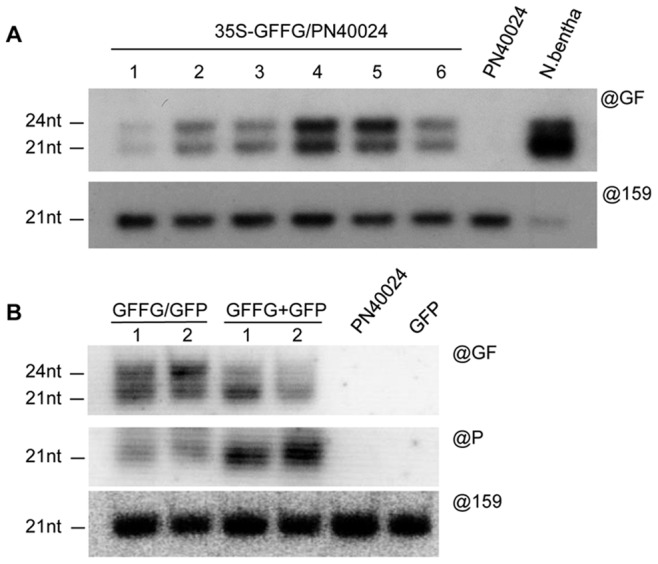
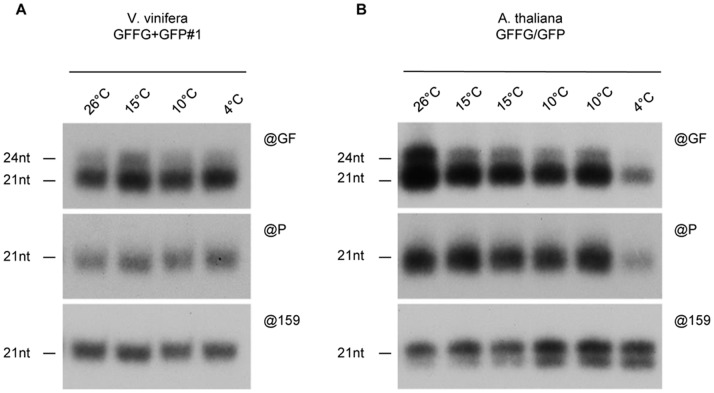
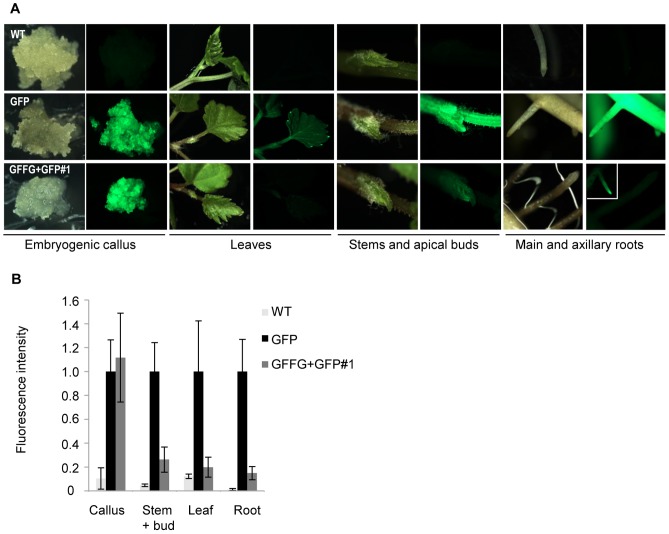
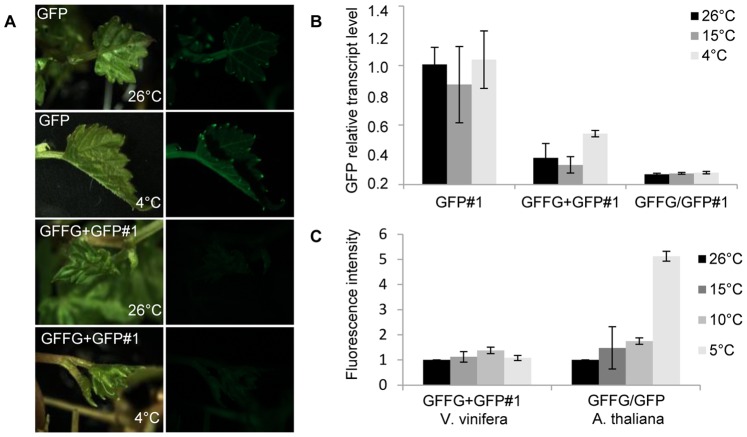
RNA silencing is a natural defence mechanism against viruses in plants, and transgenes expressing viral RNA-derived sequences were previously shown to confer silencing-based enhanced resistance against the cognate virus in several species. However, RNA silencing was shown to dysfunction at low temperatures in several species, questioning the relevance of this strategy in perennial plants such as grapevines, which are often exposed to low temperatures during the winter season. Here, we show that inverted-repeat (IR) constructs trigger a highly efficient silencing reaction in all somatic tissues in grapevines. Similarly to other plant species, IR-derived siRNAs trigger production of secondary transitive siRNAs. However, and in sharp contrast to other species tested to date where RNA silencing is hindered at low temperature, this process remained active in grapevine cultivated at 4°C. Consistently, siRNA levels remained steady in grapevines cultivated between 26°C and 4°C, whereas they are severely decreased in Arabidopsis grown at 15°C and almost undetectable at 4°C. Altogether, these results demonstrate that RNA silencing operates in grapevine in a conserved manner but is resistant to far lower temperatures than ever described in other species.
RNA沉默是植物中抵御病毒的一种天然防御机制,先前研究表明,表达病毒RNA衍生序列的转基因在多个物种中能赋予基于沉默的针对同源病毒的增强抗性。然而,在多个物种中,RNA沉默在低温下会功能失调,这使得这种策略在多年生植物(如葡萄藤)中的相关性受到质疑,因为葡萄藤在冬季常常会遭遇低温。在此,我们表明反向重复(IR)构建体在葡萄藤的所有体细胞组织中引发高效的沉默反应。与其他植物物种类似,IR衍生的小干扰RNA(siRNA)会引发次级传递性siRNA的产生。然而,与迄今为止测试的其他物种形成鲜明对比的是,在这些物种中RNA沉默在低温下会受到阻碍,而在4°C培养的葡萄藤中,这个过程仍然活跃。一致地,在26°C至4°C培养的葡萄藤中,siRNA水平保持稳定,而在15°C生长的拟南芥中,siRNA水平则严重下降,在4°C时几乎检测不到。总之,这些结果表明RNA沉默在葡萄藤中以保守的方式发挥作用,但对低温的耐受性比其他物种中所描述的要低得多。