Institut National de la Santé Et de la Recherche Médicale, Unité mixte de Recherche 1064, Nantes, France.
Institut National de la Santé Et de la Recherche Médicale, Unité mixte de Recherche 892, Nantes, France ; Cellular and Tissular Imaging Core Facility (MicroPICell), Nantes, France.
PLoS One. 2013 Dec 23;8(12):e83139. doi: 10.1371/journal.pone.0083139. eCollection 2013.
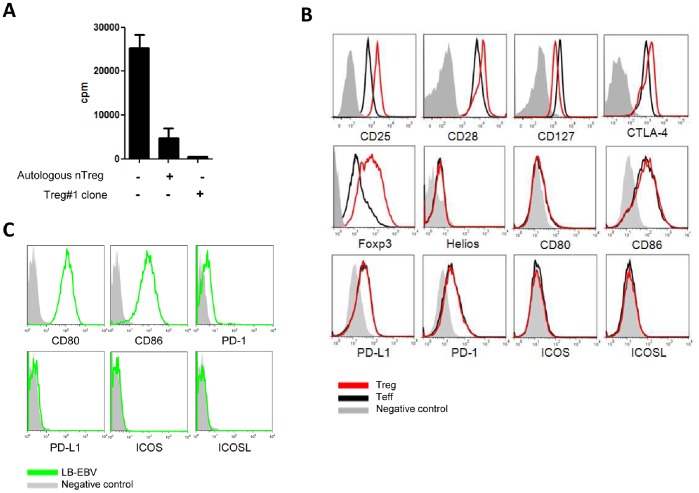
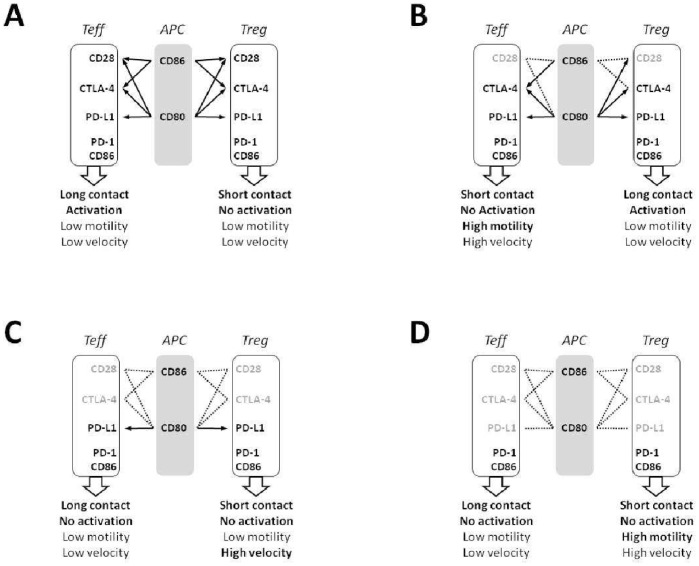
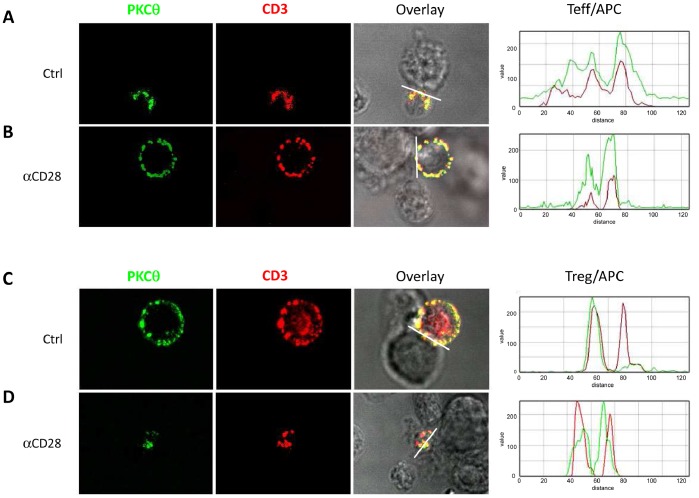
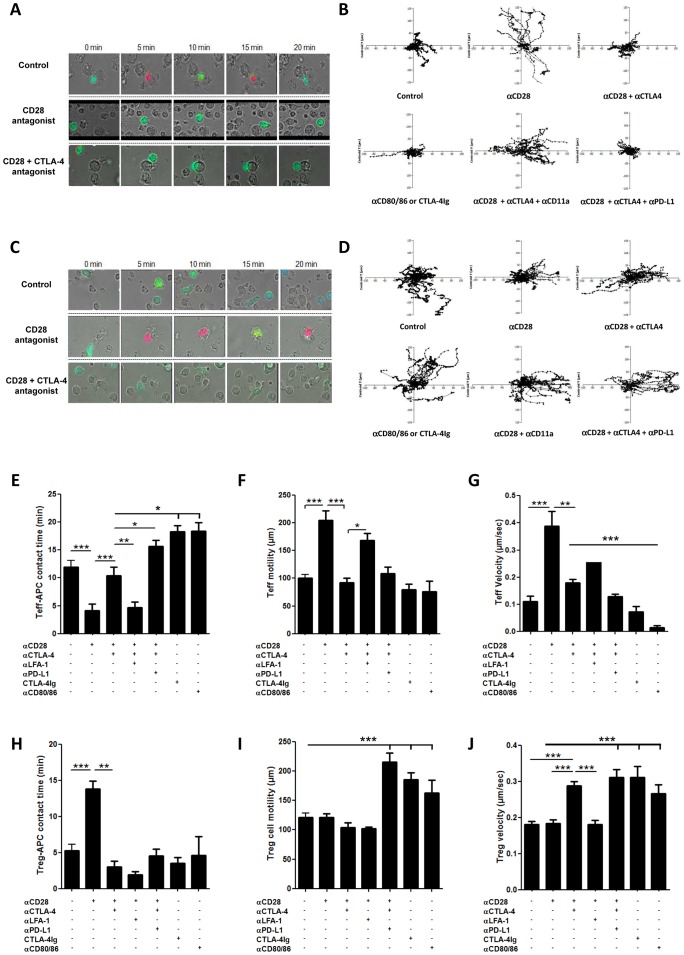
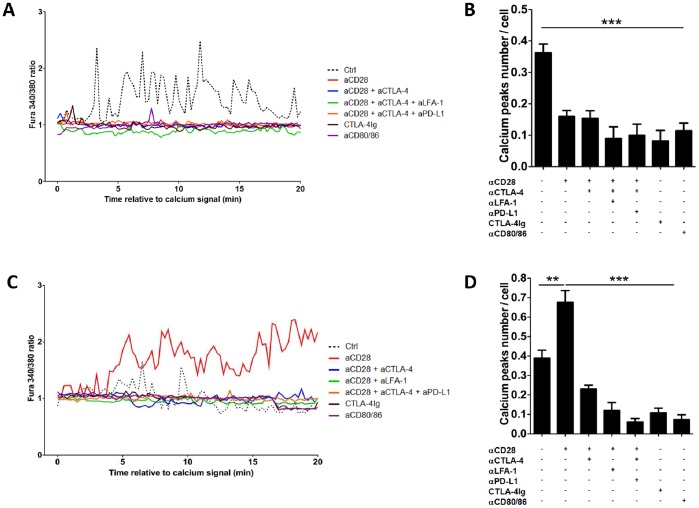
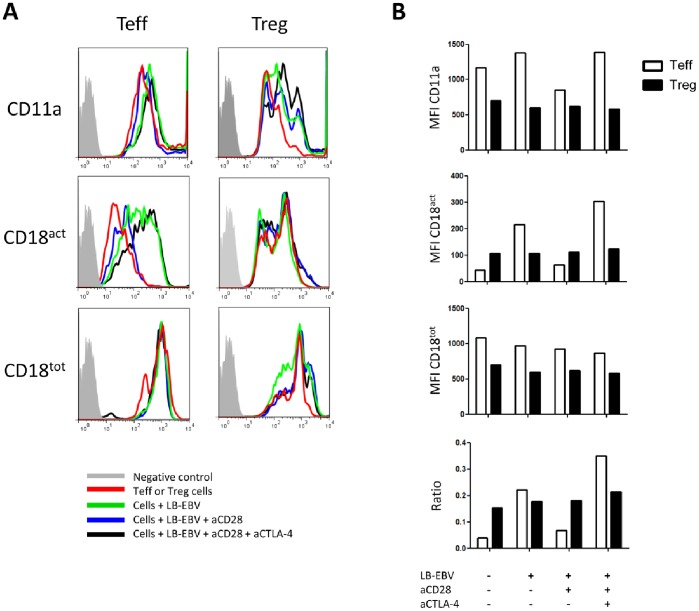
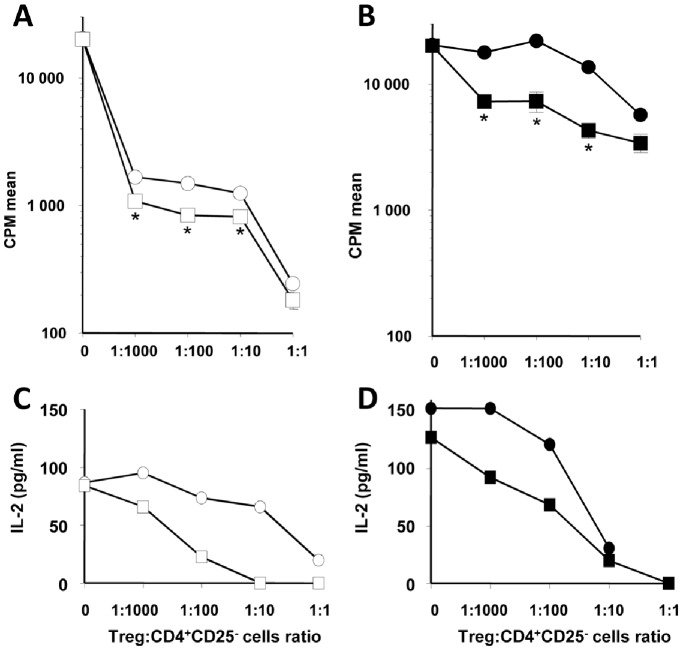
CD28, CTLA-4 and PD-L1, the three identified ligands for CD80/86, are pivotal positive and negative costimulatory molecules that, among other functions, control T cell motility and formation of immune synapse between T cells and antigen-presenting cells (APCs). What remains incompletely understood is how CD28 leads to the activation of effector T cells (Teff) but inhibition of suppression by regulatory T cells (Tregs), while CTLA-4 and PD-L1 inhibit Teff function but are crucial for the suppressive function of Tregs. Using alloreactive human T cells and blocking antibodies, we show here by live cell dynamic microscopy that CD28, CTLA-4, and PD-L1 differentially control velocity, motility and immune synapse formation in activated Teff versus Tregs. Selectively antagonizing CD28 costimulation increased Treg dwell time with APCs and induced calcium mobilization which translated in increased Treg suppressive activity, in contrast with the dampening effect on Teff responses. The increase in Treg suppressive activity after CD28 blockade was also confirmed with polyclonal Tregs. Whereas CTLA-4 played a critical role in Teff by reversing TCR-induced STOP signals, it failed to affect motility in Tregs but was essential for formation of the Treg immune synapse. Furthermore, we identified a novel role for PD-L1-CD80 interactions in suppressing motility specifically in Tregs. Thus, our findings reveal that the three identified ligands of CD80/86, CD28, CTLA-4 and PD-L1, differentially control immune synapse formation and function of the human Teff and Treg cells analyzed here. Individually targeting CD28, CTLA-4 and PD-L1 might therefore represent a valuable therapeutic strategy to treat immune disorders where effector and regulatory T cell functions need to be differentially targeted.
CD28、CTLA-4 和 PD-L1 是三种已鉴定的 CD80/86 配体,它们是关键的正向和负向共刺激分子,除其他功能外,还控制 T 细胞的迁移和 T 细胞与抗原呈递细胞 (APC) 之间免疫突触的形成。目前尚不完全清楚的是,CD28 如何导致效应 T 细胞 (Teff) 的激活,但抑制调节性 T 细胞 (Treg) 的抑制,而 CTLA-4 和 PD-L1 抑制 Teff 功能,但对 Treg 的抑制功能至关重要。使用同种反应性人 T 细胞和阻断抗体,我们通过活细胞动态显微镜显示,CD28、CTLA-4 和 PD-L1 以不同的方式控制激活的 Teff 与 Treg 中速度、迁移和免疫突触的形成。选择性拮抗 CD28 共刺激增加了 Treg 与 APC 的停留时间并诱导钙动员,这转化为 Treg 抑制活性的增加,与对 Teff 反应的抑制作用相反。在用多克隆 Treg 进行的实验中也证实了阻断 CD28 后 Treg 抑制活性的增加。虽然 CTLA-4 通过逆转 TCR 诱导的 STOP 信号在 Teff 中发挥关键作用,但它不能影响 Treg 的迁移,但对于 Treg 免疫突触的形成是必需的。此外,我们发现 PD-L1-CD80 相互作用在抑制 Treg 迁移方面具有新的作用。因此,我们的研究结果表明,CD80/86 的三种已鉴定配体 CD28、CTLA-4 和 PD-L1 以不同的方式控制这里分析的人类 Teff 和 Treg 细胞的免疫突触形成和功能。单独靶向 CD28、CTLA-4 和 PD-L1 可能是一种有价值的治疗策略,可用于治疗需要靶向效应和调节性 T 细胞功能的免疫紊乱。