Joshua Chijioke J, Perez Luis D, Keasling Jay D
Department of Plant and Microbial Biology, University of California, Berkeley, Berkeley, California, United States of America ; Physical Biosciences Division, Lawrence Berkeley National Laboratory, Berkeley, California, United States of America ; Joint BioEnergy Institute, Emeryville, California, United States of America.
Department of Molecular and Cell Biology, University of California, Berkeley, Berkeley, California, United States of America ; Physical Biosciences Division, Lawrence Berkeley National Laboratory, Berkeley, California, United States of America ; Joint BioEnergy Institute, Emeryville, California, United States of America.
PLoS One. 2013 Dec 20;8(12):e84664. doi: 10.1371/journal.pone.0084664. eCollection 2013.
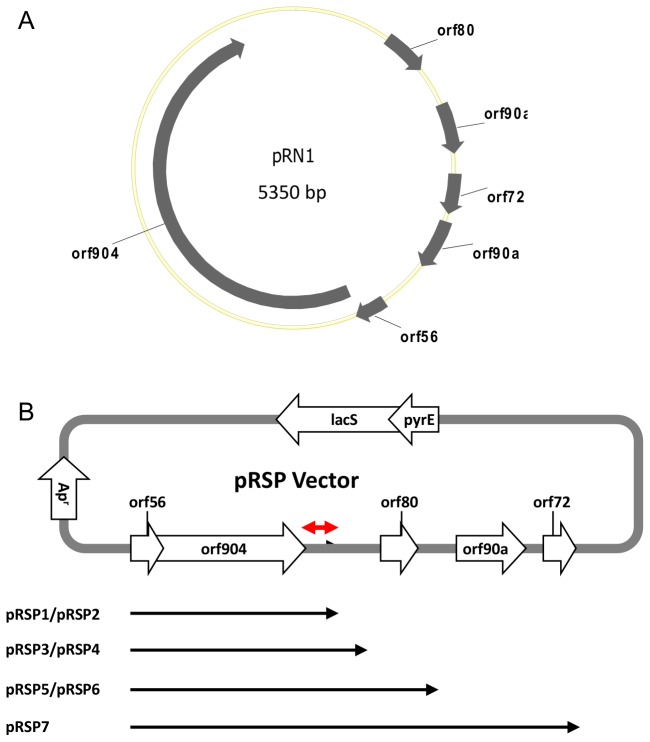
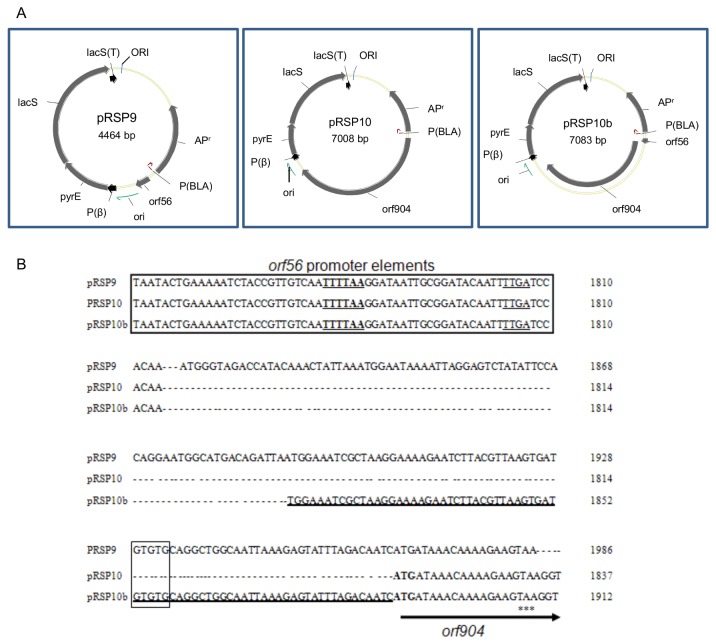
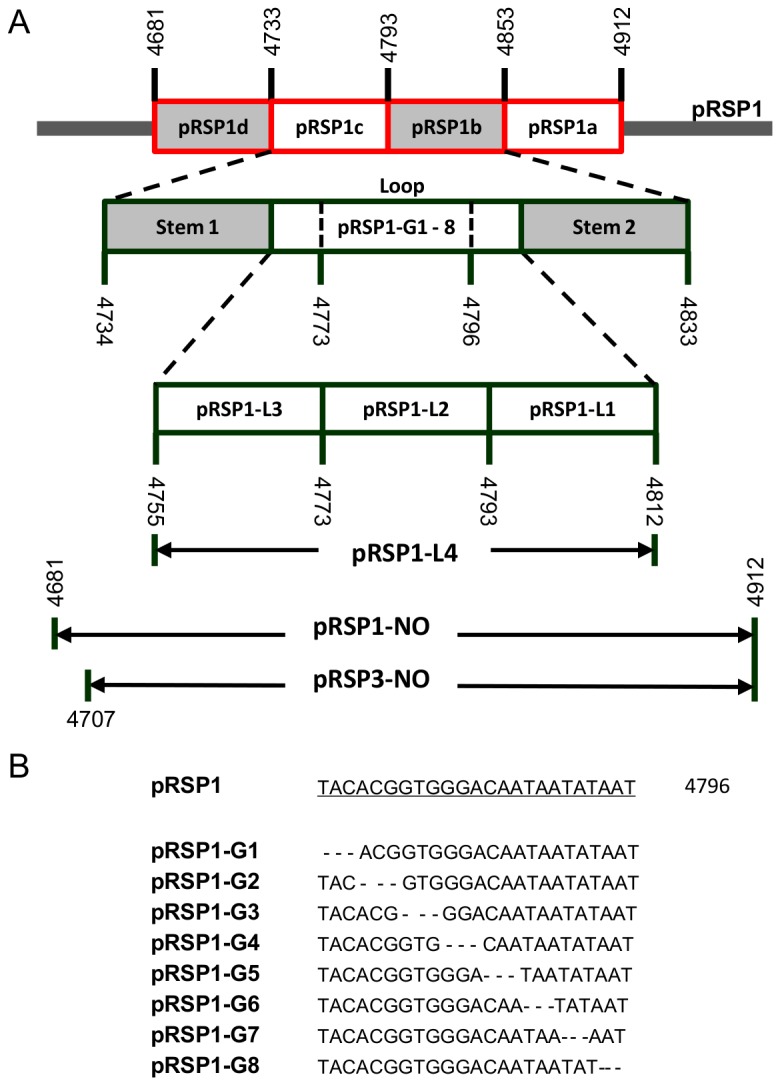
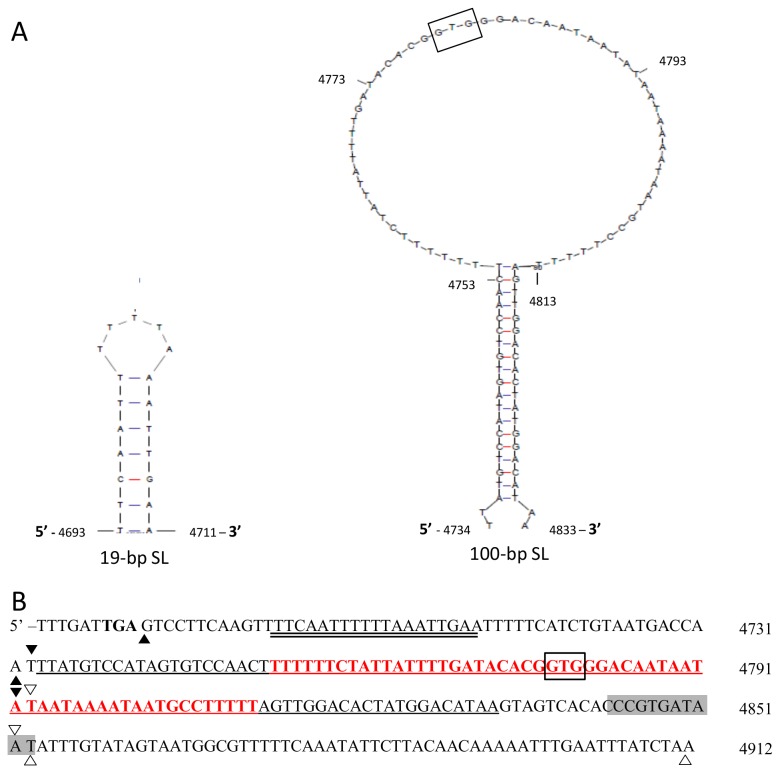
Plasmid pRN1 from Sulfolobus islandicus REN1H1 is believed to replicate by a rolling circle mechanism but its origin and mechanism of replication are not well understood. We sought to create minimal expression vectors based on pRN1 that would be useful for heterologous gene expression in S. acidocaldarius, and in the process improve our understanding of the mechanism of replication. We constructed and transformed shuttle vectors that harbored different contiguous stretches of DNA from pRN1 into S. acidocaldarius E4-39, a uracil auxotroph. A 232-bp region 3' of orf904 was found to be critical for pRN1 replication and is therefore proposed to be the putative origin of replication. This 232-bp region contains a 100-bp stem-loop structure believed to be the double-strand origin of replication. The loop of the 100-bp structure contains a GTG tri-nucleotide motif, a feature that was previously reported to be important for the primase activity of Orf904. This putative origin and the associated orf56 and orf904 were identified as the minimal replicon of pRN1 because transformants of plasmids lacking any of these three features were not recovered. Plasmids lacking orf904 and orf56 but harboring the putative origin were transformable when orf904 and orf56 were provided in-trans; a 75-bp region 5' of the orf904 start codon was found to be essential for this complementation. Detailed knowledge of the pRN1 origin of replication will broaden the application of the plasmid as a genetic tool for Sulfolobus species.
来自冰岛硫化叶菌REN1H1的质粒pRN1被认为通过滚环机制进行复制,但其复制起点和机制尚未完全清楚。我们试图构建基于pRN1的最小表达载体,用于嗜酸硫化叶菌中的异源基因表达,并在此过程中加深对复制机制的理解。我们构建了穿梭载体,并将来自pRN1的不同连续DNA片段转化到尿嘧啶营养缺陷型的嗜酸硫化叶菌E4 - 39中。发现orf904下游232 bp的区域对pRN1复制至关重要,因此被认为是假定的复制起点。这个232 bp的区域包含一个100 bp的茎环结构,被认为是双链复制起点。100 bp结构的环中包含一个GTG三核苷酸基序,这一特征先前被报道对Orf904的引发酶活性很重要。这个假定的起点以及相关的orf56和orf904被确定为pRN1的最小复制子,因为缺乏这三个特征中任何一个的质粒转化子都未获得。缺乏orf904和orf56但含有假定起点的质粒在反式提供orf904和orf56时是可转化的;发现orf904起始密码子上游75 bp的区域对这种互补是必需的。对pRN1复制起点的详细了解将拓宽该质粒作为硫化叶菌属遗传工具的应用。