Gruhn Jennifer R, Rubio Carmen, Broman Karl W, Hunt Patricia A, Hassold Terry
School of Molecular Biosciences and Center for Reproductive Biology, Washington State University, Pullman, Washington, United States of America.
Preimplantation Genetic Diagnosis Unit, Iviomics, Paterna, Valencia, Spain.
PLoS One. 2013 Dec 20;8(12):e85075. doi: 10.1371/journal.pone.0085075. eCollection 2013.
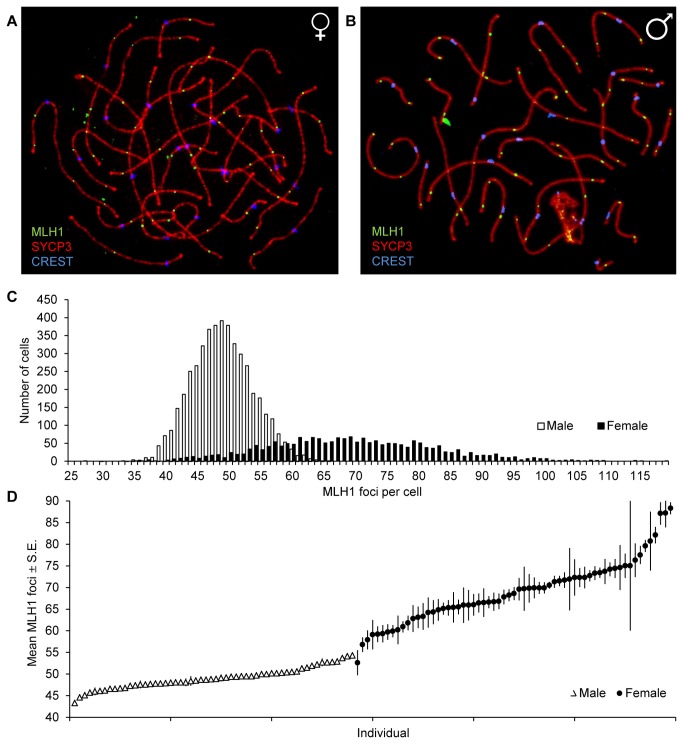
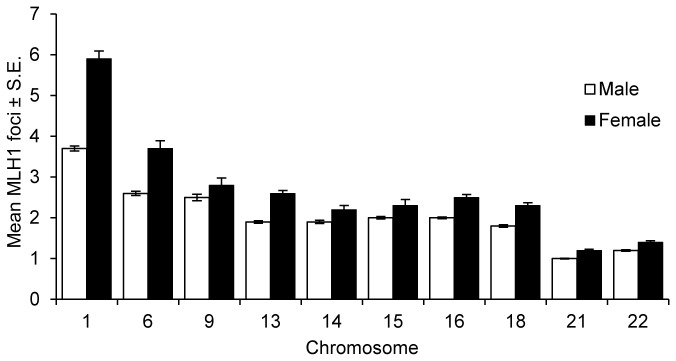
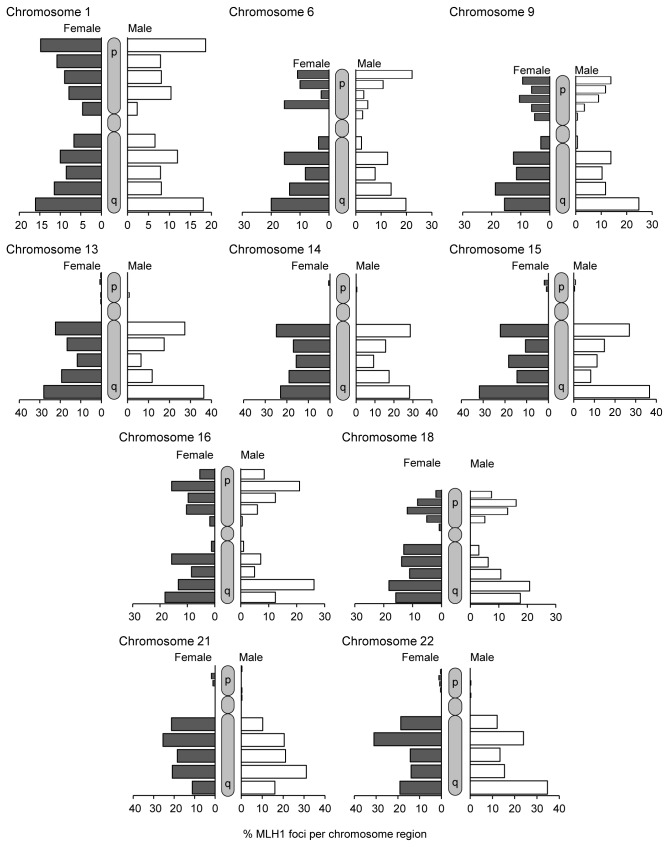
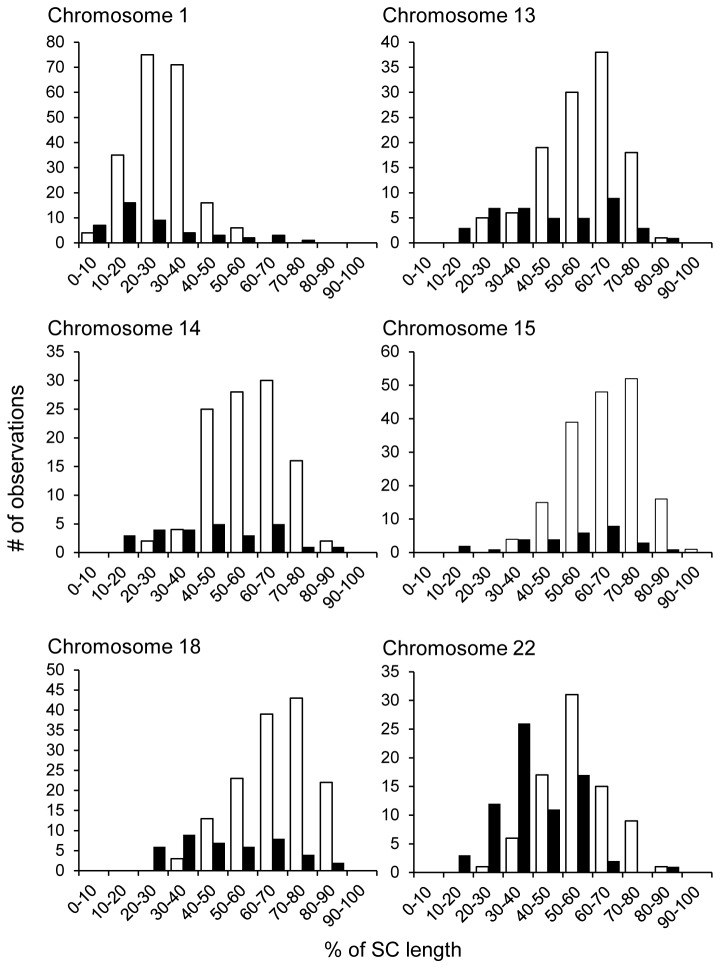
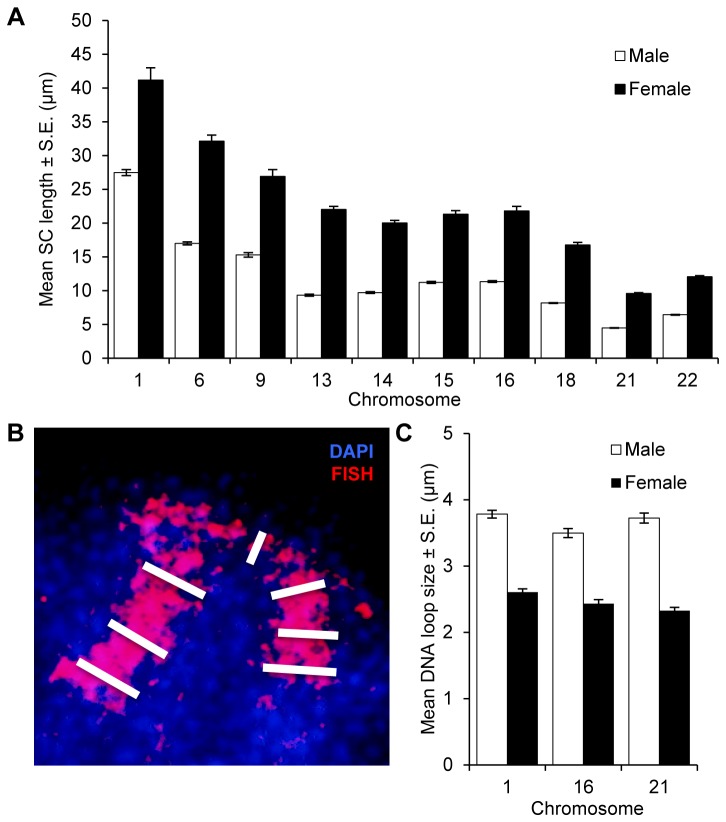
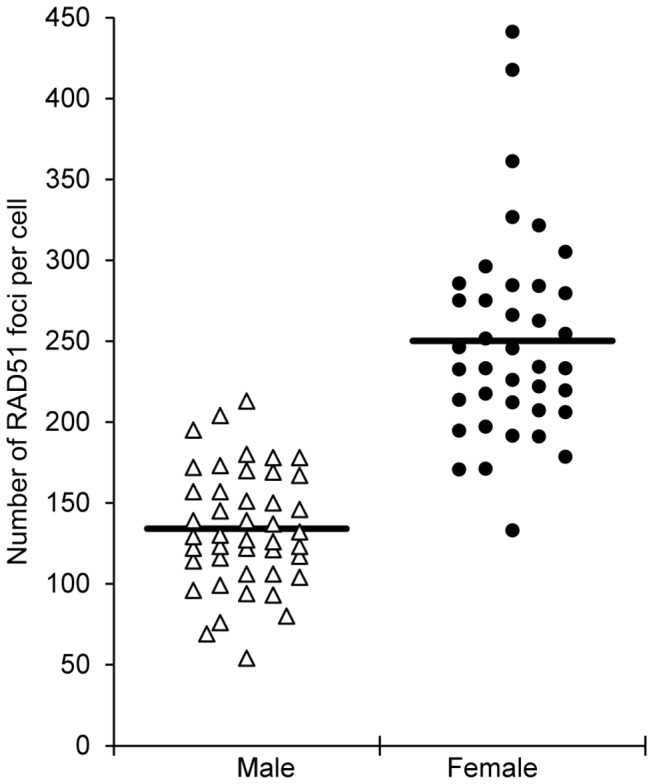
Meiotic recombination is sexually dimorphic in most mammalian species, including humans, but the basis for the male:female differences remains unclear. In the present study, we used cytological methodology to directly compare recombination levels between human males and females, and to examine possible sex-specific differences in upstream events of double-strand break (DSB) formation and synaptic initiation. Specifically, we utilized the DNA mismatch repair protein MLH1 as a marker of recombination events, the RecA homologue RAD51 as a surrogate for DSBs, and the synaptonemal complex proteins SYCP3 and/or SYCP1 to examine synapsis between homologs. Consistent with linkage studies, genome-wide recombination levels were higher in females than in males, and the placement of exchanges varied between the sexes. Subsequent analyses of DSBs and synaptic initiation sites indicated similar male:female differences, providing strong evidence that sex-specific differences in recombination rates are established at or before the formation of meiotic DSBs. We then asked whether these differences might be linked to variation in the organization of the meiotic axis and/or axis-associated DNA and, indeed, we observed striking male:female differences in synaptonemal complex (SC) length and DNA loop size. Taken together, our observations suggest that sex specific differences in recombination in humans may derive from chromatin differences established prior to the onset of the recombination pathway.
在包括人类在内的大多数哺乳动物物种中,减数分裂重组存在性别差异,但男女差异的基础仍不清楚。在本研究中,我们使用细胞学方法直接比较人类男性和女性之间的重组水平,并研究双链断裂(DSB)形成和突触起始上游事件中可能存在的性别特异性差异。具体而言,我们利用DNA错配修复蛋白MLH1作为重组事件的标志物,RecA同源物RAD51作为DSB的替代物,以及联会复合体蛋白SYCP3和/或SYCP1来检查同源物之间的联会。与连锁研究一致,全基因组重组水平在女性中高于男性,并且交换位点在两性之间有所不同。随后对DSB和突触起始位点的分析表明存在类似的男女差异,这提供了强有力的证据,证明重组率的性别特异性差异在减数分裂DSB形成时或之前就已确立。然后我们询问这些差异是否可能与减数分裂轴和/或轴相关DNA的组织变化有关,事实上,我们观察到联会复合体(SC)长度和DNA环大小存在显著的男女差异。综上所述,我们的观察结果表明,人类重组中的性别特异性差异可能源于重组途径开始之前建立的染色质差异。