Juvany Marta, Müller Maren, Pintó-Marijuan Marta, Munné-Bosch Sergi
Departament de Biologia Vegetal, Facultat de Biologia, Universitat de Barcelona, Avinguda Diagonal, 643, E-08028 Barcelona, Spain.
J Exp Bot. 2014 Mar;65(4):1039-49. doi: 10.1093/jxb/ert446. Epub 2013 Dec 30.
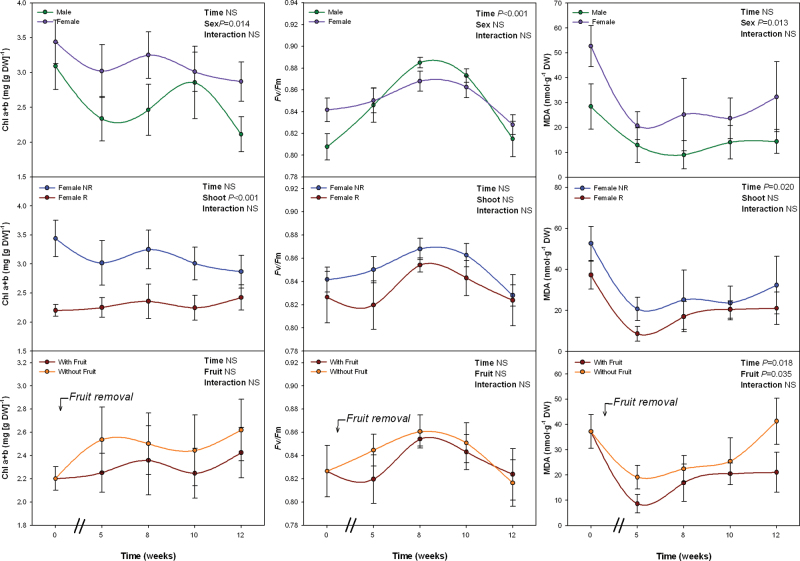
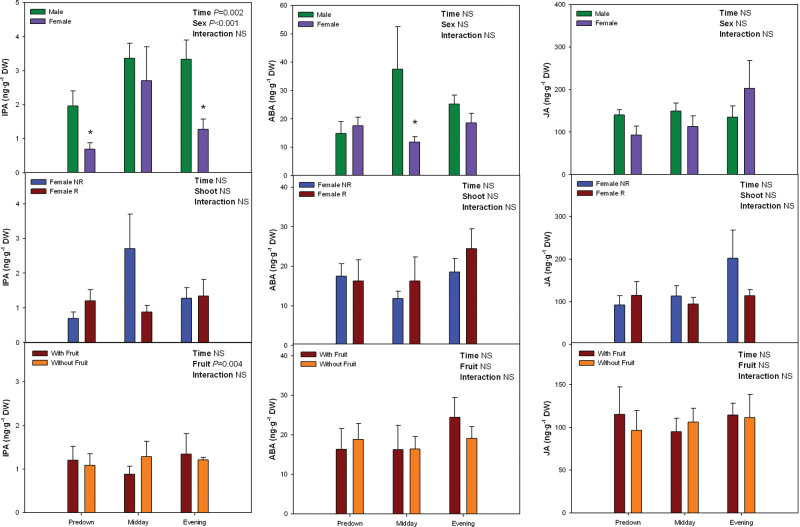
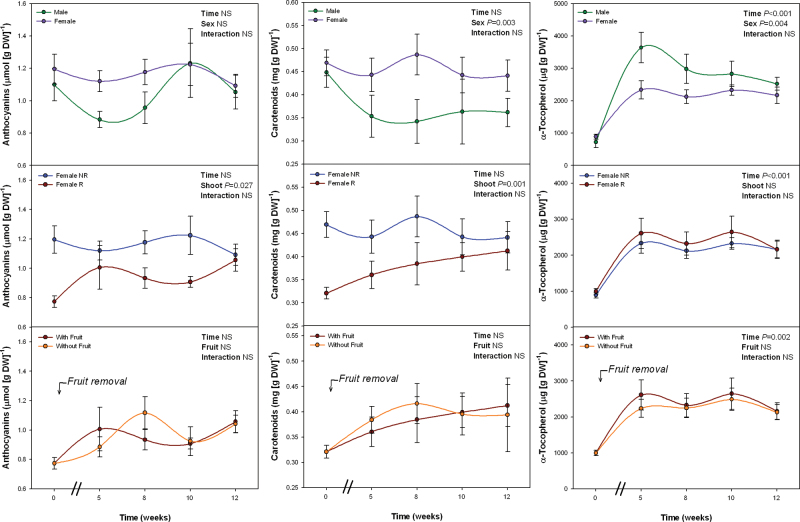
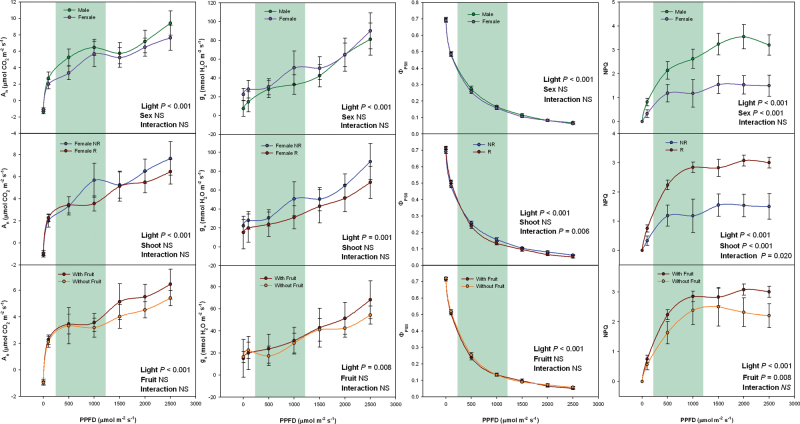
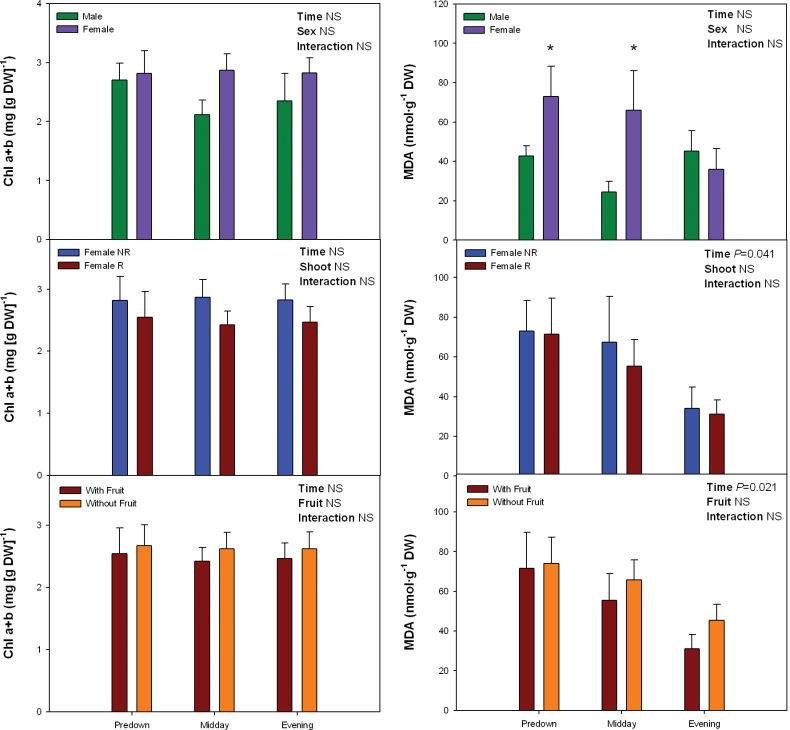
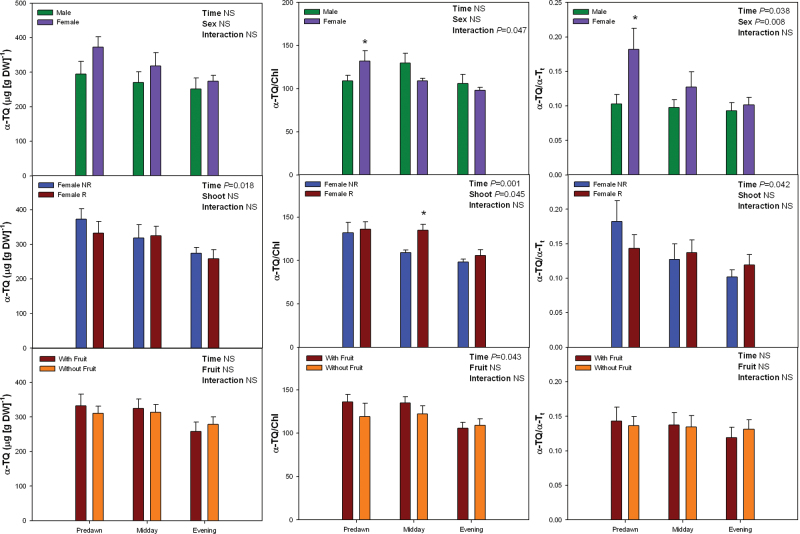
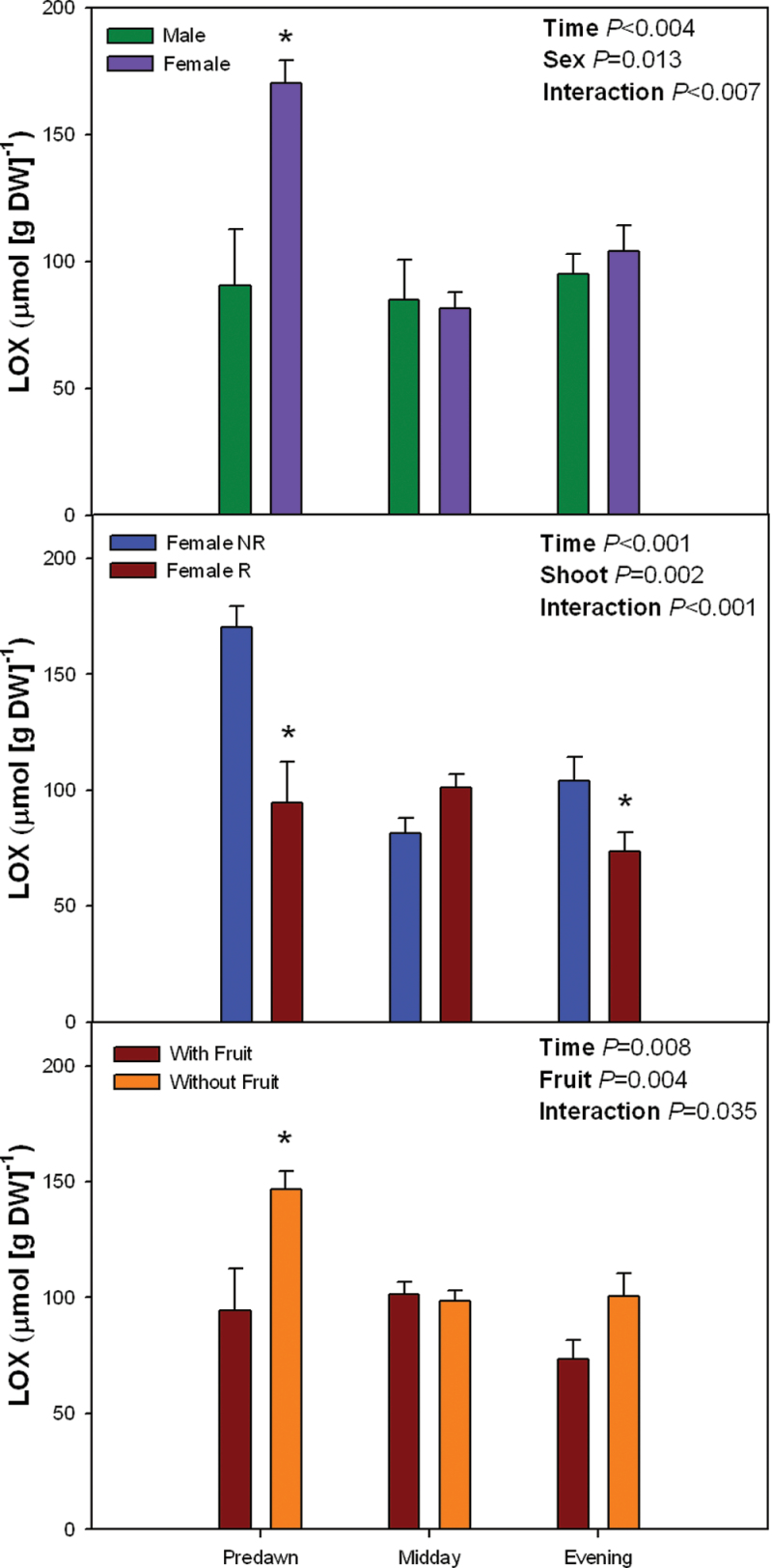
Sex-related differences in the response of dioecious plants to abiotic stress have been poorly studied to date. This work explored to what extent sex may affect plant stress responses in Pistacia lentiscus L. (Anacardiaceae), a tree well adapted to Mediterranean climatic conditions. It was hypothesized that a greater reproductive effort in females may increase oxidative stress in leaves, particularly when plants are exposed to abiotic stress. Measurements of oxidative stress markers throughout the year revealed increased lipid peroxidation in females, but only during the winter. Enhanced lipid peroxidation in females was associated with reduced photoprotection, as indicated by reduced tocopherol levels and nonphotochemical quenching (NPQ) of chlorophyll fluorescence. Enhanced lipid peroxidation in females was also observed at predawn, which was associated with increased lipoxygenase activity and reduced cytokinin levels. An analysis of the differences between reproductive (R) and nonreproductive (NR) shoots showed an enhanced photoprotective capacity in R shoots compared to NR shoots in females. This capacity was characterized by an increased NPQ and a better antioxidant protection (increased carotenoid and tocopherol levels per unit of chlorophyll) in R compared to NR shoots. It is concluded that (i) females exhibit higher lipid peroxidation in leaves than males, but only during the winter (when sex-related differences in reproductive effort are the highest), (ii) this is associated with a lower photoprotective capacity at midday, as well as enhanced lipoxygenase activity and reduced cytokinin levels at predawn, and (iii) photoprotection capacity is higher in R relative to NR shoots in females.
迄今为止,对于雌雄异株植物对非生物胁迫响应中的性别差异研究甚少。本研究探讨了性别在多大程度上可能影响乳香黄连木(漆树科)的植物胁迫响应,乳香黄连木是一种非常适应地中海气候条件的树木。研究假设雌性更大的繁殖投入可能会增加叶片中的氧化应激,特别是当植物暴露于非生物胁迫时。全年对氧化应激标志物的测量显示,雌性植物的脂质过氧化增加,但仅在冬季出现。雌性植物脂质过氧化增强与光保护作用降低有关,这表现为生育三烯酚水平降低和叶绿素荧光的非光化学猝灭(NPQ)减少。在黎明前也观察到雌性植物脂质过氧化增强,这与脂氧合酶活性增加和细胞分裂素水平降低有关。对生殖(R)和非生殖(NR)枝条之间差异的分析表明,与雌性NR枝条相比,R枝条具有更强的光保护能力。这种能力的特征是与NR枝条相比,R枝条的NPQ增加,抗氧化保护更好(每单位叶绿素的类胡萝卜素和生育三烯酚水平增加)。研究得出以下结论:(i)雌性植物叶片中的脂质过氧化高于雄性,但仅在冬季(此时生殖投入的性别差异最大);(ii)这与中午较低的光保护能力以及黎明前脂氧合酶活性增强和细胞分裂素水平降低有关;(iii)雌性植物中R枝条相对于NR枝条的光保护能力更高。