Department of Urology, Seoul National University Bundang Hospital, Seongnam, Korea.
Prostate Int. 2013;1(4):139-45. doi: 10.12954/PI.13020. Epub 2013 Dec 30.
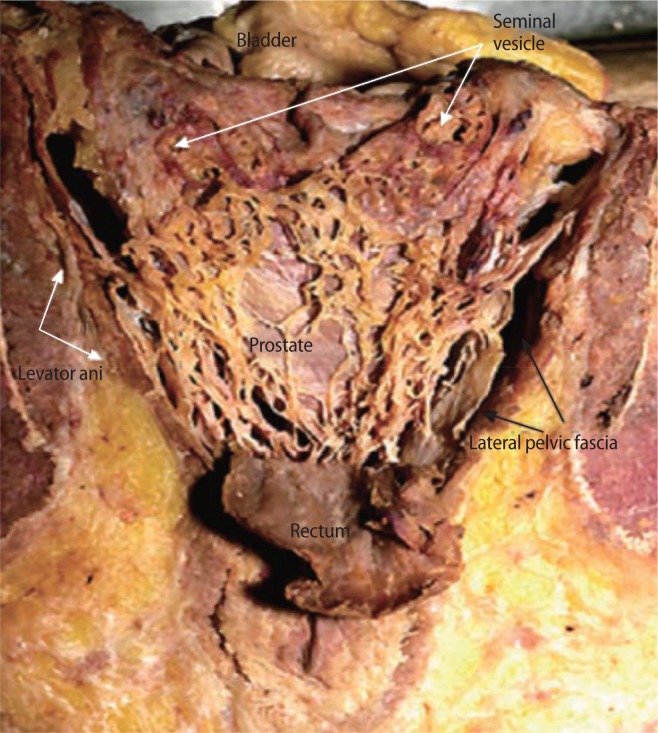
Although oncologic efficacy is the primary goal of radical prostatectomy, preserving potency and continence is also important, given the indolent clinical course of most prostate cancers. In order to preserve and recover postoperative potency and continence after radical prostatectomy, a detailed understanding of the pelvic anatomy is necessary to recognize the optimal nerve-sparing plane and to minimize injury to the neurovascular bundles. Therefore, we reviewed the most recent findings from neuroanatomic studies of the prostate and adjacent tissues, some of which are contrary to the established consensus on pelvic anatomy. We also described the functional outcomes of radical prostatectomies following improved anatomical understanding and development of surgical techniques for preserving the neurovascular bundles.
尽管根治性前列腺切除术的主要目标是肿瘤学疗效,但考虑到大多数前列腺癌的惰性临床病程,保留勃起功能和尿控能力也很重要。为了在根治性前列腺切除术后保留和恢复术后勃起功能和尿控能力,需要详细了解盆腔解剖结构,以识别最佳的神经保留平面,并最大限度地减少对神经血管束的损伤。因此,我们回顾了前列腺和相邻组织的神经解剖学研究的最新发现,其中一些与已确立的盆腔解剖共识相矛盾。我们还描述了在解剖学理解得到改善和神经血管束保护的手术技术发展之后,根治性前列腺切除术的功能结果。