Department of Hematology and Medical Oncology, Winship Cancer Institute, Emory University School of Medicine, 1365 C Clifton Road, Atlanta, GA 30322.
Cancer Prev Res (Phila). 2014 Jan;7(1):65-73. doi: 10.1158/1940-6207.CAPR-13-0230.
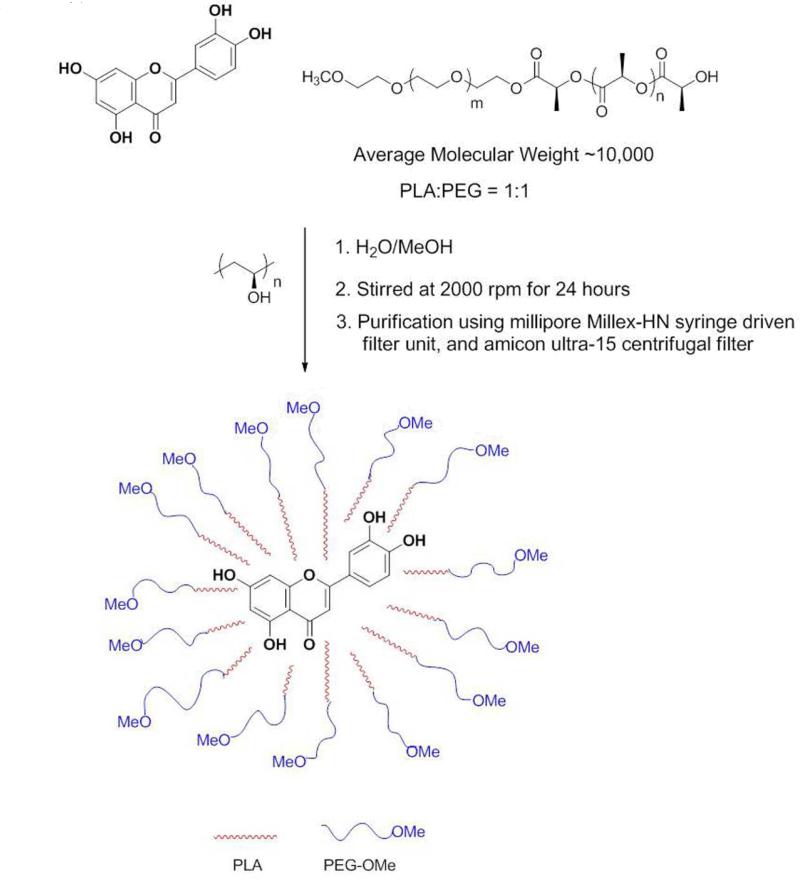
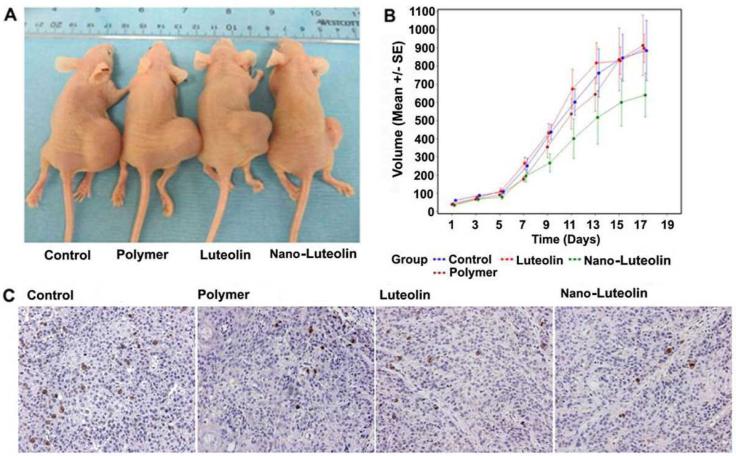
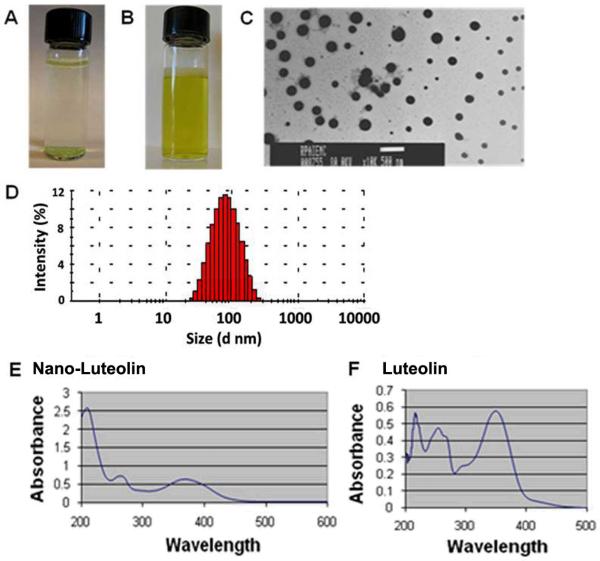
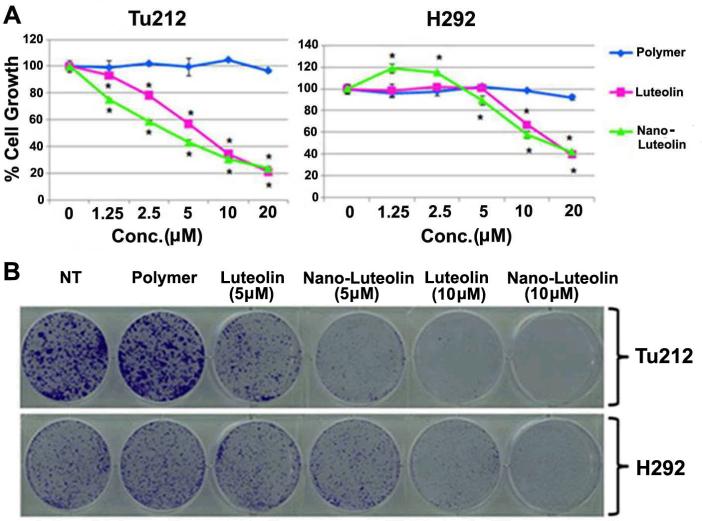
Cancer prevention (chemoprevention) by using naturally occurring dietary agents has gained immense interest because of the broad safety window of these compounds. However, many of these compounds are hydrophobic and poorly soluble in water. They frequently display low bioavailability, poor systemic delivery, and low efficacy. To circumvent this problem, we explored a novel approach toward chemoprevention using nanotechnology to deliver luteolin, a natural compound present in green vegetables. We formulated water-soluble polymer-encapsulated Nano-Luteolin from hydrophobic luteolin, and studied its anticancer activity against lung cancer and head and neck cancer. In vitro studies demonstrated that, like luteolin, Nano-Luteolin inhibited the growth of lung cancer cells (H292 cell line) and squamous cell carcinoma of head and neck (SCCHN) cells (Tu212 cell line). In Tu212 cells, the IC50 value of Nano-Luteolin was 4.13 μmol/L, and that of luteolin was 6.96 μmol/L. In H292 cells, the IC50 of luteolin was 15.56 μmol/L, and Nano-Luteolin was 14.96 μmol/L. In vivo studies using a tumor xenograft mouse model demonstrated that Nano-Luteolin has a significant inhibitory effect on the tumor growth of SCCHN in comparison to luteolin. Our results suggest that nanoparticle delivery of naturally occurring dietary agents like luteolin has many advantages and may have potential application in chemoprevention in clinical settings.
利用天然存在的饮食因子进行癌症预防(化学预防)因其化合物具有广泛的安全窗而引起了极大的兴趣。然而,许多这些化合物是疏水性的,在水中溶解度差。它们经常表现出低生物利用度、差的全身递送和低功效。为了克服这个问题,我们探索了一种使用纳米技术来传递叶黄素的新型化学预防方法,叶黄素是一种存在于绿色蔬菜中的天然化合物。我们从疏水性叶黄素中制备了水溶性聚合物包封的 Nano-Luteolin,并研究了其对肺癌和头颈部癌症的抗癌活性。体外研究表明,与叶黄素一样,Nano-Luteolin 抑制肺癌细胞(H292 细胞系)和头颈部鳞状细胞癌(SCCHN)细胞(Tu212 细胞系)的生长。在 Tu212 细胞中,Nano-Luteolin 的 IC50 值为 4.13 μmol/L,而叶黄素的 IC50 值为 6.96 μmol/L。在 H292 细胞中,叶黄素的 IC50 值为 15.56 μmol/L,而 Nano-Luteolin 的 IC50 值为 14.96 μmol/L。使用肿瘤异种移植小鼠模型的体内研究表明,与叶黄素相比,Nano-Luteolin 对 SCCHN 的肿瘤生长具有显著的抑制作用。我们的结果表明,像叶黄素这样的天然饮食因子的纳米粒子递送具有许多优势,并可能在临床环境中的化学预防中具有潜在的应用。