School of Biological Sciences, Nanyang Technological University, Singapore, Singapore.
PLoS One. 2014 Jan 7;9(1):e78494. doi: 10.1371/journal.pone.0078494. eCollection 2014.
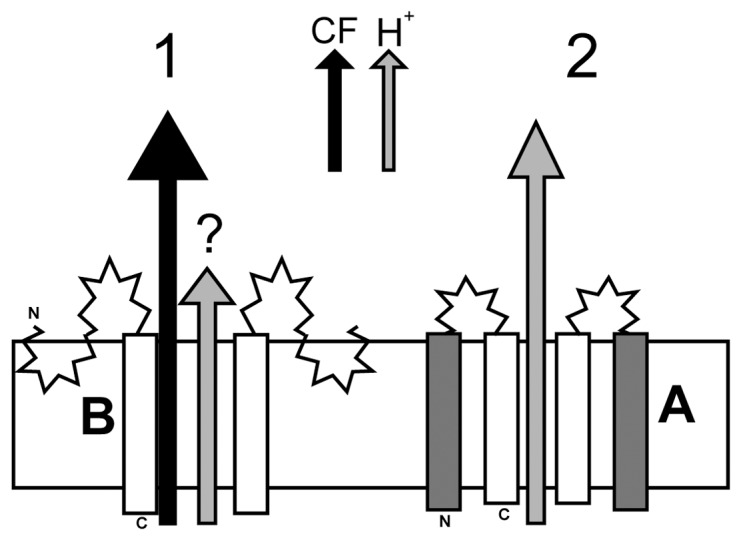
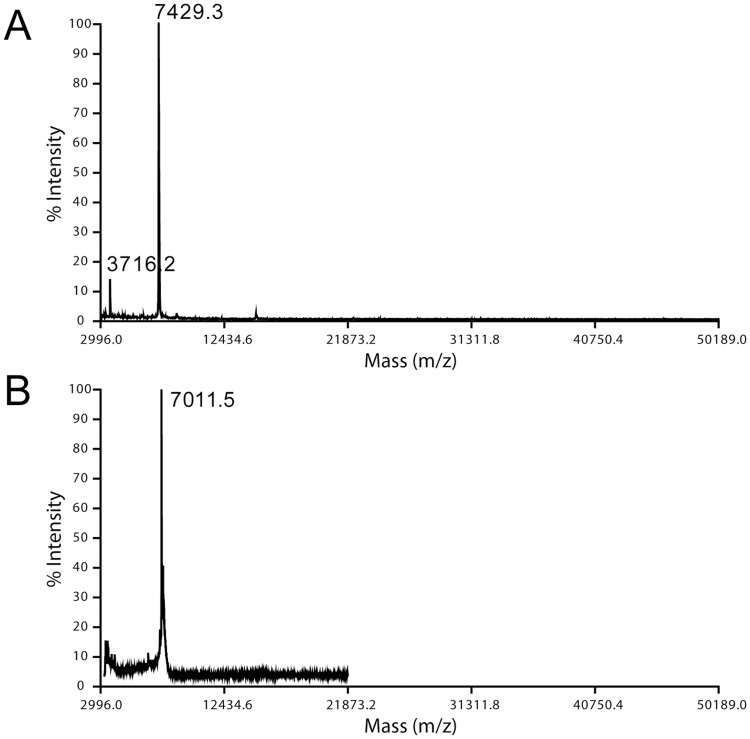
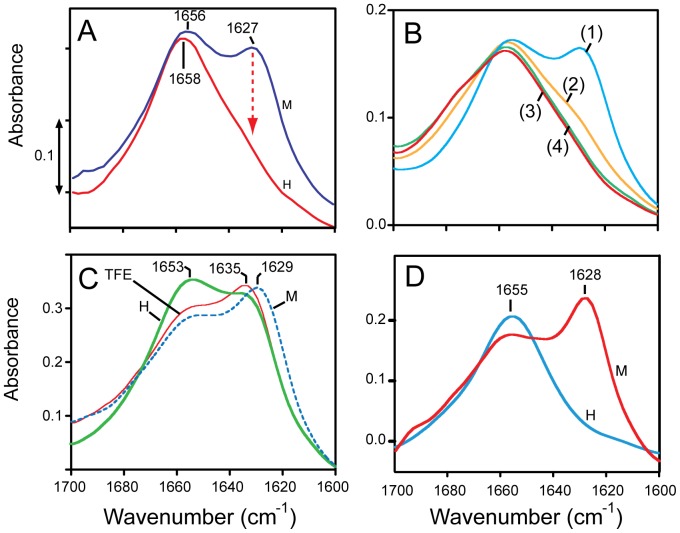
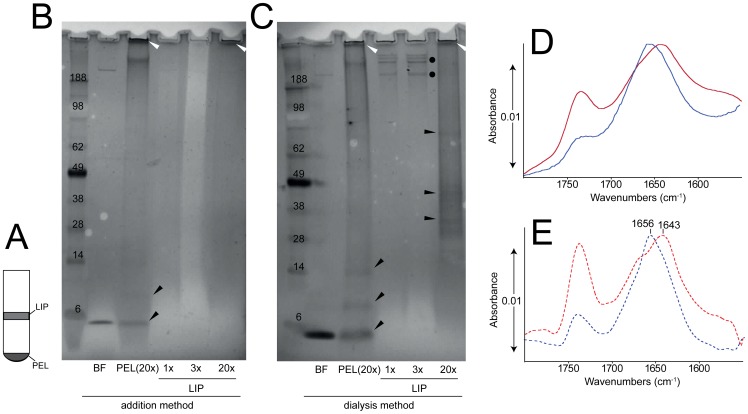
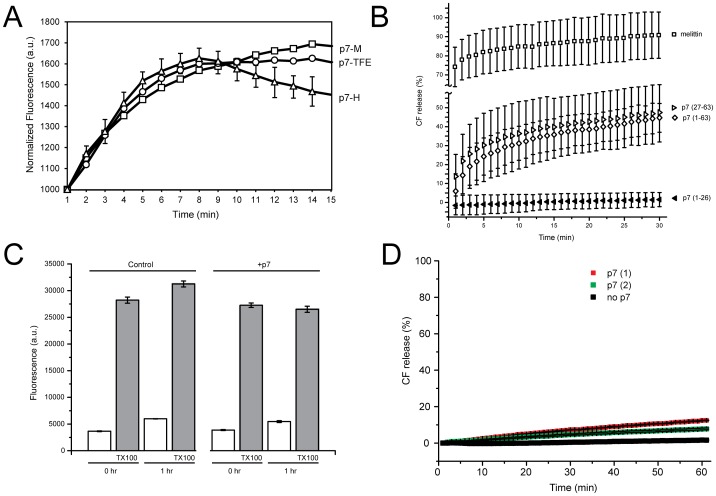
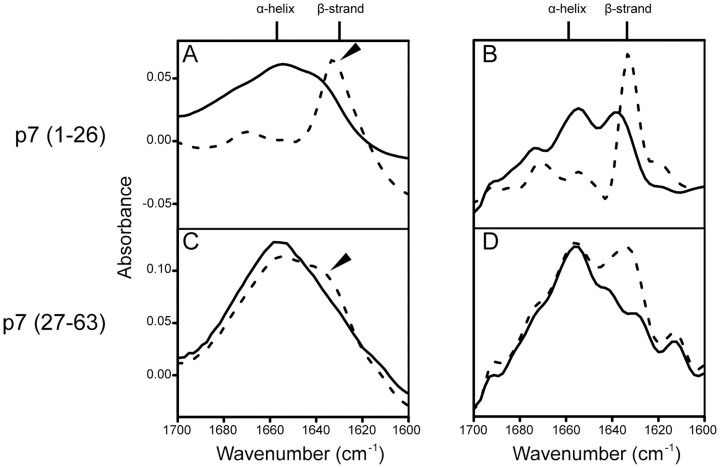
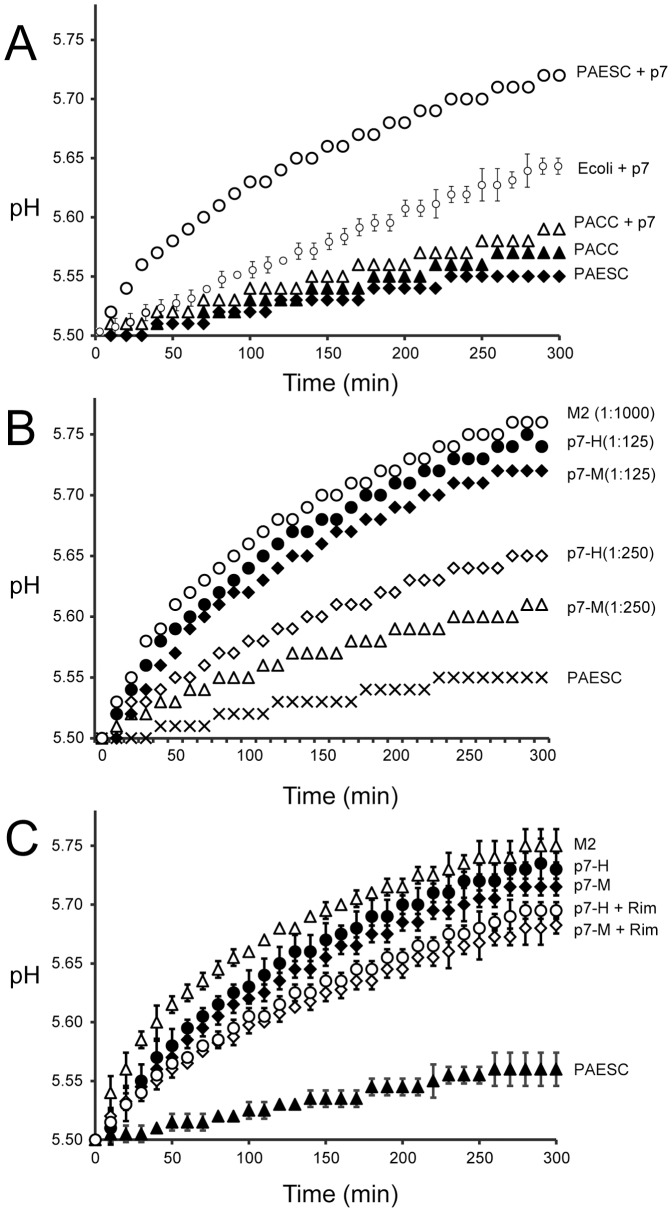
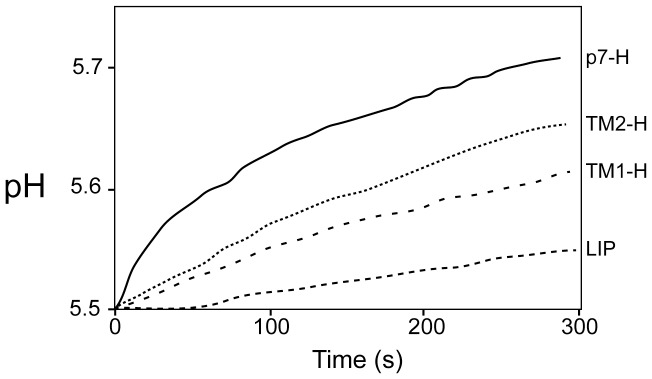
The p7 protein from the hepatitis C virus (HCV) is a 63 amino acid long polypeptide that is essential for replication, and is involved in protein trafficking and proton transport. Therefore, p7 is a possible target for antivirals. The consensus model for the channel formed by p7 protein is a hexameric or heptameric oligomer of α-helical hairpin monomers, each having two transmembrane domains, TM1 and TM2, where the N-terminal TM1 would face the lumen of this channel. A reported high-throughput functional assay to search for p7 channel inhibitors is based on carboxyfluorescein (CF) release from liposomes after p7 addition. However, the rationale for the dual ability of p7 to serve as an ion or proton channel in the infected cell, and to permeabilize membranes to large molecules like CF is not clear. We have recreated both activities in vitro, examining the conformation present in these assays using infrared spectroscopy. Our results indicate that an α-helical form of p7, which can transport protons, is not able to elicit CF release. In contrast, membrane permeabilization to CF is observed when p7 contains a high percentage of β-structure, or when using a C-terminal fragment of p7, encompassing TM2. We propose that the reported inhibitory effect of some small compounds, e.g., rimantadine, on both CF release and proton transport can be explained via binding to the membrane-inserted C-terminal half of p7, increasing its rigidity, in a similar way to the influenza A M2-rimantadine interaction.
丙型肝炎病毒(HCV)的 p7 蛋白是一种 63 个氨基酸长的多肽,对复制至关重要,并且参与蛋白质运输和质子转运。因此,p7 是抗病毒药物的一个可能靶点。p7 蛋白形成的通道的共识模型是六聚体或七聚体α-螺旋发夹单体的寡聚物,每个单体具有两个跨膜结构域 TM1 和 TM2,其中 N 端 TM1 将面向该通道的腔。一种报道的高通量功能性测定方法,用于搜索 p7 通道抑制剂,是基于 p7 加入后从脂质体中释放羧基荧光素(CF)。然而,p7 在感染细胞中既能作为离子或质子通道,又能使 CF 等大分子通透细胞膜的双重能力的原理尚不清楚。我们在体外重现了这两种活性,使用红外光谱检查这些测定中存在的构象。我们的结果表明,能够转运质子的 p7 的α-螺旋形式,不能引起 CF 的释放。相比之下,当 p7 包含高比例的β-结构时,或使用包含 TM2 的 p7 的 C 端片段时,观察到 CF 对膜的通透性。我们提出,一些小分子化合物,如金刚烷胺,对 CF 释放和质子转运的报道抑制作用,可以通过与插入膜的 p7 的 C 端半部分结合来解释,这类似于流感 A M2-金刚烷胺相互作用,增加其刚性。