• 文献检索
  • 文档翻译
  • 深度研究
  • 学术资讯
  • Suppr Zotero 插件Zotero 插件
  • 邀请有礼
  • 套餐&价格
  • 历史记录
应用&插件
Suppr Zotero 插件Zotero 插件浏览器插件Mac 客户端Windows 客户端微信小程序
定价
高级版会员购买积分包购买API积分包
服务
文献检索文档翻译深度研究API 文档MCP 服务
关于我们
关于 Suppr公司介绍联系我们用户协议隐私条款
关注我们

Suppr 超能文献

核心技术专利:CN118964589B侵权必究
粤ICP备2023148730 号-1Suppr @ 2026

文献检索

告别复杂PubMed语法,用中文像聊天一样搜索,搜遍4000万医学文献。AI智能推荐,让科研检索更轻松。

立即免费搜索

文件翻译

保留排版,准确专业,支持PDF/Word/PPT等文件格式,支持 12+语言互译。

免费翻译文档

深度研究

AI帮你快速写综述,25分钟生成高质量综述,智能提取关键信息,辅助科研写作。

立即免费体验

从健康从业者角度看为抑郁症患者治疗设计消费级健康技术

Designing Consumer Health Technologies for the Treatment of Patients With Depression: A Health Practitioner's Perspective.

作者信息

White Ginger, Caine Kelly, Connelly Kay, Selove Rebecca, Doub Tom

机构信息

School of Informatics and Computing, Indiana University, Bloomington, IN, United States.

出版信息

Interact J Med Res. 2014 Jan 10;3(1):e2. doi: 10.2196/ijmr.2368.

DOI:10.2196/ijmr.2368
PMID:24413087
原文链接:https://pmc.ncbi.nlm.nih.gov/articles/PMC3906692/
Abstract

BACKGROUND

The consumer health technologies used by patients on a daily basis can be effectively leveraged to assist them in the treatment of depression. However, because treatment for depression is a collaborative endeavor, it is important to understand health practitioners' perspectives on the benefits, drawbacks, and design of such technologies.

OBJECTIVE

The objective of this research was to understand how patients and health practitioners can effectively and successfully influence the design of consumer health treatment technologies for treating patients with depression.

METHODS

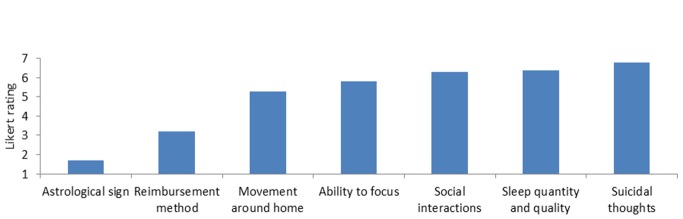
A group of 10 health practitioners participated in individual semistructured contextual interviews at their offices. Health practitioners rated an a priori identified list of depression indicators using a 7-point Likert scale and generated a list of depression indicators. Finally, health practitioners were asked to rate the perceived usefulness of an a priori identified list of depression treatment technologies using a 7-point Likert scale.

RESULTS

Of the 10 health practitioners interviewed, 5 (50%) were mental health practitioners, 3 (30%) nurses, and 2 (20%) general practitioners. A total of 29 unique depression indicators were generated by the health practitioners. These indicators were grouped into 5 high-level categories that were identified by the research team and 2 clinical experts: (1) daily and social functioning, (2) medication, (3) nutrition and physical activity, (4) demographics and environment, and (5) suicidal thoughts. These indicators represent opportunities for designing technologies to support health practitioners who treat patients with depression. The interviews revealed nuances of the different health practitioners' clinical practices and also barriers to using technology to guide the treatment of depression. These barriers included (1) technology that did not fit within the current practice or work infrastructure, (2) technology that would not benefit the current treatment process, (3) patients forgetting to use the technology, and (4) patients not being able to afford the technology.

CONCLUSIONS

In order to be successful in the treatment of depression, consumer health treatment technologies must address health practitioners' technology concerns early on in the design phase, account for the various types of health practitioners, treatment methods, and clinical practices, and also strive to seamlessly integrate traditional and nontraditional depression indicators within various health practitioners' clinical practices.

摘要

背景

患者日常使用的消费者健康技术可有效用于协助他们治疗抑郁症。然而,由于抑郁症治疗是一项协作性工作,了解医疗从业者对这类技术的益处、缺点及设计的看法很重要。

目的

本研究的目的是了解患者和医疗从业者如何有效且成功地影响用于治疗抑郁症患者的消费者健康治疗技术的设计。

方法

一组10名医疗从业者在其办公室参加了个人半结构化情境访谈。医疗从业者使用7点李克特量表对预先确定的抑郁症指标清单进行评分,并生成了一份抑郁症指标清单。最后,要求医疗从业者使用7点李克特量表对预先确定的抑郁症治疗技术清单的感知有用性进行评分。

结果

在接受访谈的10名医疗从业者中,5名(50%)是心理健康从业者,3名(30%)是护士,2名(20%)是全科医生。医疗从业者共生成了29个独特的抑郁症指标。这些指标被分为由研究团队和2名临床专家确定的5个高级类别:(1)日常和社交功能,(2)药物治疗,(3)营养和身体活动,(4)人口统计学和环境,以及(5)自杀念头。这些指标代表了设计技术以支持治疗抑郁症患者的医疗从业者的机会。访谈揭示了不同医疗从业者临床实践的细微差别以及使用技术指导抑郁症治疗的障碍。这些障碍包括:(1)不符合当前实践或工作基础设施的技术,(2)对当前治疗过程无益处的技术,(3)患者忘记使用技术,以及(4)患者无力承担技术费用。

结论

为了成功治疗抑郁症,消费者健康治疗技术必须在设计阶段尽早解决医疗从业者对技术的担忧,考虑各类医疗从业者、治疗方法和临床实践,并且努力在各类医疗从业者的临床实践中无缝整合传统和非传统的抑郁症指标。
https://cdn.ncbi.nlm.nih.gov/pmc/blobs/1091/3906692/79c8bced6594/ijmr_v3i1e1_fig1.jpg

相似文献

1
Designing Consumer Health Technologies for the Treatment of Patients With Depression: A Health Practitioner's Perspective.从健康从业者角度看为抑郁症患者治疗设计消费级健康技术
Interact J Med Res. 2014 Jan 10;3(1):e2. doi: 10.2196/ijmr.2368.
2
General practitioners' management of patients with mental health conditions: the views of general practitioners working in rural north-western New South Wales.全科医生对心理健康状况患者的管理:新南威尔士州西北部农村地区全科医生的观点。
Aust J Rural Health. 2008 Dec;16(6):363-9. doi: 10.1111/j.1440-1584.2008.01017.x.
3
Health Care Provider Perceptions of Consumer-Grade Devices and Apps for Tracking Health: A Pilot Study.医疗保健提供者对用于跟踪健康的消费级设备和应用程序的看法:一项试点研究。
JMIR Mhealth Uhealth. 2019 Jan 22;7(1):e9929. doi: 10.2196/mhealth.9929.
4
To use or not to use--practitioners' perceptions of an open web portal for young patients with diabetes.使用还是不使用——从业者对糖尿病青少年患者开放网络门户的看法。
J Med Internet Res. 2012 Nov 9;14(6):e154. doi: 10.2196/jmir.1987.
5
Designing an over-the-counter consumer decision-making tool for older adults.为老年人设计一种非处方消费者决策工具。
J Biomed Inform. 2015 Oct;57:113-23. doi: 10.1016/j.jbi.2015.07.006. Epub 2015 Jul 13.
6
Characterization of Patient Interest in Provider-Based Consumer Health Information Technology: Survey Study.基于医疗机构的消费者健康信息技术的患者兴趣特征:调查研究
J Med Internet Res. 2018 Apr 19;20(4):e128. doi: 10.2196/jmir.7766.
7
Developing Internet-based health interventions: a guide for public health researchers and practitioners.开发基于互联网的健康干预措施:公共卫生研究人员和从业者指南。
J Med Internet Res. 2015 Jan 23;17(1):e28. doi: 10.2196/jmir.3770.
8
User profiles and personas in the design and development of consumer health technologies.用户画像和角色在消费者健康技术的设计和开发中的应用。
Int J Med Inform. 2013 Nov;82(11):e251-68. doi: 10.1016/j.ijmedinf.2011.03.006. Epub 2011 Apr 9.
9
Designing an Electronic Patient Management System for Multiple Sclerosis: Building a Next Generation Multiple Sclerosis Documentation System.设计用于多发性硬化症的电子患者管理系统:构建下一代多发性硬化症文档系统。
Interact J Med Res. 2016 Jan 8;5(1):e2. doi: 10.2196/ijmr.4549.
10
General practitioners' views on (long-term) prescription and use of problematic and potentially inappropriate medication for oldest-old patients-A qualitative interview study with GPs (CIM-TRIAD study).全科医生对老年患者长期开具和使用有问题及潜在不适当药物的看法——一项针对全科医生的定性访谈研究(CIM-TRIAD研究)
BMC Fam Pract. 2017 Feb 17;18(1):22. doi: 10.1186/s12875-017-0595-3.

引用本文的文献

1
Primary Care Provider Views About Usefulness and Dissemination of a Web-Based Depression Treatment Information Decision Aid.初级保健提供者对基于网络的抑郁症治疗信息决策辅助工具的有用性和传播的看法。
J Med Internet Res. 2016 Jun 8;18(6):e153. doi: 10.2196/jmir.5458.

本文引用的文献

1
An offline mobile nutrition monitoring intervention for varying-literacy patients receiving hemodialysis: a pilot study examining usage and usability.离线移动营养监测干预在不同文化程度血液透析患者中的应用:一项考察使用情况和可用性的试点研究。
J Am Med Inform Assoc. 2012 Sep-Oct;19(5):705-12. doi: 10.1136/amiajnl-2011-000732. Epub 2012 May 12.
2
Anxiety online: a virtual clinic: preliminary outcomes following completion of five fully automated treatment programs for anxiety disorders and symptoms.线上焦虑:虚拟诊所:针对焦虑症及症状完成五个全自动治疗项目后的初步结果
J Med Internet Res. 2011 Nov 4;13(4):e89. doi: 10.2196/jmir.1918.
3
Harnessing context sensing to develop a mobile intervention for depression.
利用情境感知技术开发针对抑郁症的移动干预措施。
J Med Internet Res. 2011 Aug 12;13(3):e55. doi: 10.2196/jmir.1838.
4
Towards personalised ambient monitoring of mental health via mobile technologies.通过移动技术实现心理健康的个性化环境监测。
Technol Health Care. 2010;18(4-5):275-84. doi: 10.3233/THC-2010-0590.
5
Geriatric depression assessment by rural primary care physicians.乡村初级保健医生对老年抑郁症的评估。
Rural Remote Health. 2009 Oct-Dec;9(4):1180. Epub 2009 Nov 17.
6
Effectiveness of a novel integrative online treatment for depression (Deprexis): randomized controlled trial.一种新型抑郁症综合在线治疗方法(Deprexis)的有效性:随机对照试验。
J Med Internet Res. 2009 May 11;11(2):e15. doi: 10.2196/jmir.1151.
7
Patients' and health professionals' views on primary care for people with serious mental illness: focus group study.患者与健康专业人员对严重精神疾病患者初级保健的看法:焦点小组研究
BMJ. 2005 May 14;330(7500):1122. doi: 10.1136/bmj.38440.418426.8F. Epub 2005 Apr 20.
8
Cognitive therapy vs medications in the treatment of moderate to severe depression.认知疗法与药物治疗中度至重度抑郁症的比较。
Arch Gen Psychiatry. 2005 Apr;62(4):409-16. doi: 10.1001/archpsyc.62.4.409.
9
A user-centered framework for redesigning health care interfaces.一个以用户为中心的重新设计医疗保健界面的框架。
J Biomed Inform. 2005 Feb;38(1):75-87. doi: 10.1016/j.jbi.2004.11.005.
10
Barriers to the effective management of depression in general practice.基层医疗中抑郁症有效管理的障碍。
Aust N Z J Psychiatry. 2004 Oct;38(10):795-803. doi: 10.1080/j.1440-1614.2004.01464.x.